12 cases of permanent blindness: Internal medicine doctor explains risks behind popular GLP-1 drugs on 'Voz News'
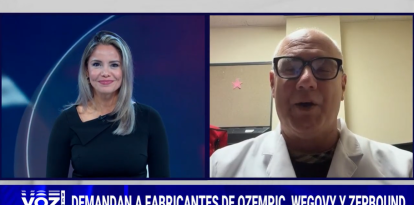
"These medications can cause inflammation of the optic nerve, reducing blood flow to the optic nerve — which is essential for vision — and as a result, the person loses their sight," said Dr. Alfredo Melgar, an internist and director of nursing homes in Miami-Dade County.
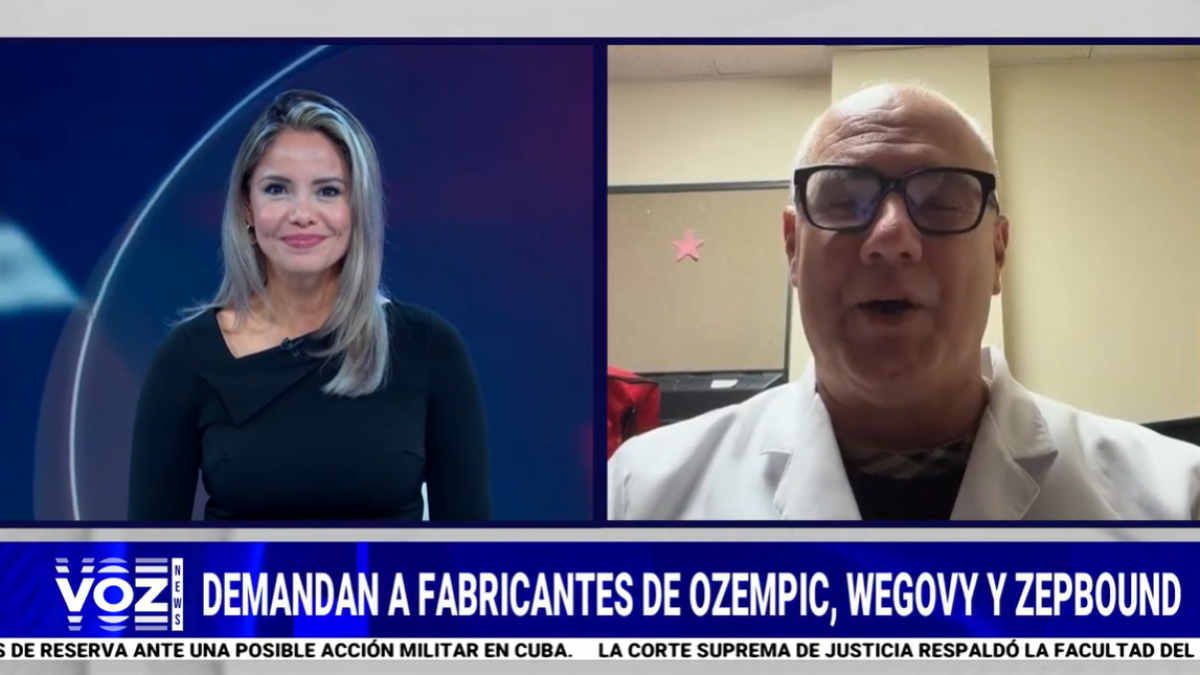
Karina Yapor interviews Dr. Alfredo Melgar on Voz News

Twelve people claim to have become completely blind after using Ozempic, Wegovy or Zepbound. The lawsuit filed this week against Novo Nordisk and Eli Lilly has reignited a question that millions of patients across the country and the region have been asking ever since these drugs became a global phenomenon: Just how safe are GLP-1s, really?
To address this concern, Dr. Alfredo Melgar, an internist and director of nursing homes in Miami-Dade explained in an interview with Voz the mechanism behind these drugs and the specific risk that has them under scrutiny today: possible inflammation of the optic nerve that can lead to irreversible vision loss.
"These medications have sparked a revolution in the treatment of obesity and diabetes," Melgar said in a conversation with Karina Yapor, executive producer at Voz. The doctor explained that their popularity stems from three specific effects: They improve insulin release from the pancreas, optimize liver metabolism to lower blood sugarand send a signal of satiety to the brain that reduces appetite. In addition, the FDA also approved them for their cardiovascular benefits, as they reduce the risk of heart attacks and strokes.


But the doctor was just as clear about the other side of the coin. "That's where I see the serious issue," he said, referring specifically to the link with blindness. As he explained, there are approximately 12 reported cases, and although pharmaceutical companies deny a direct link, he stressed that "we need to see what's going on." Melgar detailed the possible mechanism behind the damage: "These medications can cause inflammation of the optic nerve, reducing blood flow to the optic nerve — which is involved in vision — and then the person loses their sight" .
The doctor also pointed to a risk factor that often goes unnoticed but is very common, namely self-medication with incorrect doses. "There are people who want to lose weight immediately" and end up buying the medication "on the black market in Europe, Latin America or Canada," he warned, since in the United States health insurance coverage remains "extremely expensive."
That informal route often leads to the use of doses that are not appropriate for the patient, he pointed out.
For this reason, Melgar emphasized the need for strict medical monitoring before and during treatment, recommending prior evaluation of pancreatic, thyroid and kidney function, and now also a preliminary eye exam, especially in patients with a history of glaucoma or diabetic retinopathy. "What cannot be hidden cannot be hidden," the doctor said regarding the adverse effects of these drugs, noting that if a link to blindness is confirmed, some medications could be modified or withdrawn from the market altogether.
Ultimately, the specialist's conclusion is that any GLP-1 treatment must be administered under medical supervision. "Not what your gym trainer tells you, not what your neighbor does, not what you see on TikTok," he warned, "but under a doctor's supervision, because there may be some irreversible damage."
LATEST