OPINION
When a film becomes a language: Why Christopher Nolan already belongs among the greatest directors in history
The English director has redefined modern cinema for reasons ranging from the technical and philosophical to the purely commercial.
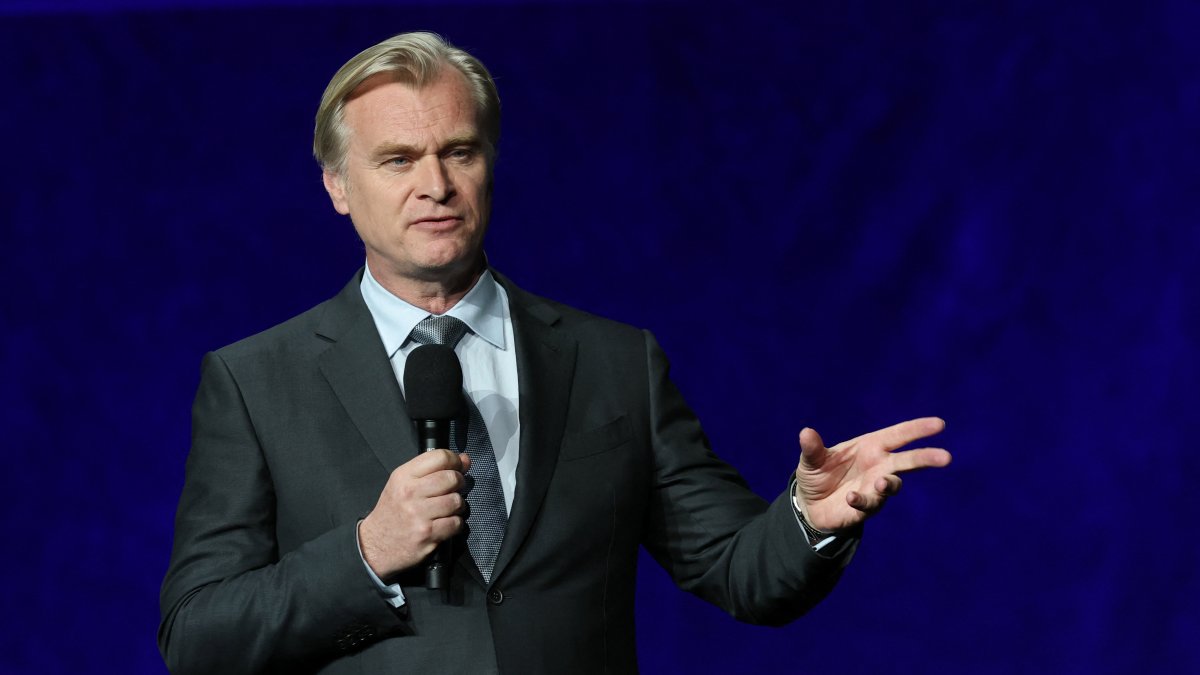
Christopher Nolan in a file photo.
Above all else, various characteristics surrounding the artist determine whether he has achieved transcendence, a pinnacle for which there are no formulas or paths marked on a map. And perhaps it is the existence of intermittent figures that makes it most difficult to determine such an achievement: film directors whose great works appear so sporadically that they end up seeming almost anecdotal within their own filmography. As if they were flashes of brilliance that demonstrate unquestionable talent, but not enough greatness to enter the realm of the timeless.
Not many have reached this Everest, which is why the list of those who can be considered the greatest of all time is as short as it is impossible to rank, with figures who, every so often, enter the debate over whether they belong in that group. The latest of these has been Christopher Nolan, who, following the success of The Odyssey, can easily be considered the best director of this century for redefining cinema for reasons ranging from the technical and philosophical to the purely commercial.
And yes. The fact that he has achieved this for twelve consecutive years with seven films means Nolan can already be considered part of that pantheon, even though his career is far from over.
Obsessions and parallels
Many characteristics make his films exceptional and almost unique. What sets the British director apart is not merely the quality of his films, but primarily the construction and ambition of a cinematic language of his own. Nolan's works are permeated by a structural obsession with the tyrannical rigor of time, manifested in a lack of linearity, dramatic conflicts, temporal inversions, and philosophical maelstroms.
Added to this is the deliberate use of shot scale as an expressive tool that goes beyond decoration- a crucial detail, given that Nolan understands the size of the image as a defining element in appreciating his work. All of this stems from the conceptual and emotional vertigo that these shots can generate.
Other distinctive elements in his filmography include not only the need to challenge the viewer and refuse to over-explain, but also his famous reluctance to use computer-generated imagery (CGI) except in cases where it is unavoidable, which makes him one of the leading exponents of rebellion and subversion against a tool that can now be considered the dominant feature of big-budget cinema.

Entertainment
'The Odyssey' debuts with $120 million and marks the best live-action opening of the year
Diane Hernández
In Nolan's poetics, content and form are indistinguishable. Far from being negatively affected by this stance, Nolan has achieved absolute success by maintaining an aesthetic conviction whose cornerstone is the power and credibility of the image. Although true works of art can contain digital imagery, filming what actually happened in front of the camera represents a more commendable aesthetic and offers the viewer a more realistic, visceral immersion.
On this last point, there is a clear parallel with Stanley Kubrick, who also opposed the idea that the various technological advances available for use in audiovisual works would ultimately prevail at the expense of the precision of the mise-en-scène. And undoubtedly, this is one of the elements that made Kubrick one of the greatest in history—and that allows Nolan to sit at the same table.
Reaching the masses without compromising his worldview
If we mention key similarities with Kubrick, it's impossible not to draw this same parallel with Steven Spielberg when addressing, once and for all, the elephant in the room regarding the analysis of Nolan's work and career: his almost unparalleled ability to connect with the masses without compromising the complexity of his worldview, a virtue that makes him one of the very few directors capable of blending the cinematic auteur with the box-office showman—a figure all too common today and one that provokes so much aversion (and generates so much money).
This monumental and underappreciated virtue has enabled the English director to make a profound impact on the industry, proving that a film can be both conceptually profound and a box-office success. He has shown everyone, insiders and outsiders alike, that auteur cinema can be on an industrial scale and that its home is not confined to cinephile gatherings or obscure festivals for those whose cinematic references aren't the most impressive.
This reality has created an audience willing to engage with complex narratives. And this is another compelling reason why Nolan can already be considered one of the greatest directors in the history of cinema: his drive to make his works a presentation of a problem rather than a simple telling of a story, to the point where many of his films generate interpretive debates that require the work to be viewed more than once, preventing it from losing its appeal after a single viewing.
The evolution of his filmography speaks to the construction of an artistic body of work that has given rise to its own vocabulary: today, the adjective "Nolanian" is part of cinematic terminology—which, for a director, is a form of canonization while still alive. And, as with almost everyone who achieves such recognition, Nolan has also sparked opposing views: while some consider him a genius, others believe his prestige has been exaggerated.
Placing Nolan at this moment among the greatest in the history of cinema is neither an exaggeration nor a passing fad. It recognizes how, before everyone's eyes, the English director created a cinematic universe significant enough to make a cultural impact and change how we understand what commercial, mass-market cinema can become.
LATEST