The Hispanic legacy in the US: Six Hispanic-American artists who helped transform the country's culture
Some were born on the mainland; others, such as several Puerto Ricans, were born in a U.S. territory. All of them, however, are part of a cultural history that has left a profound mark on the country.
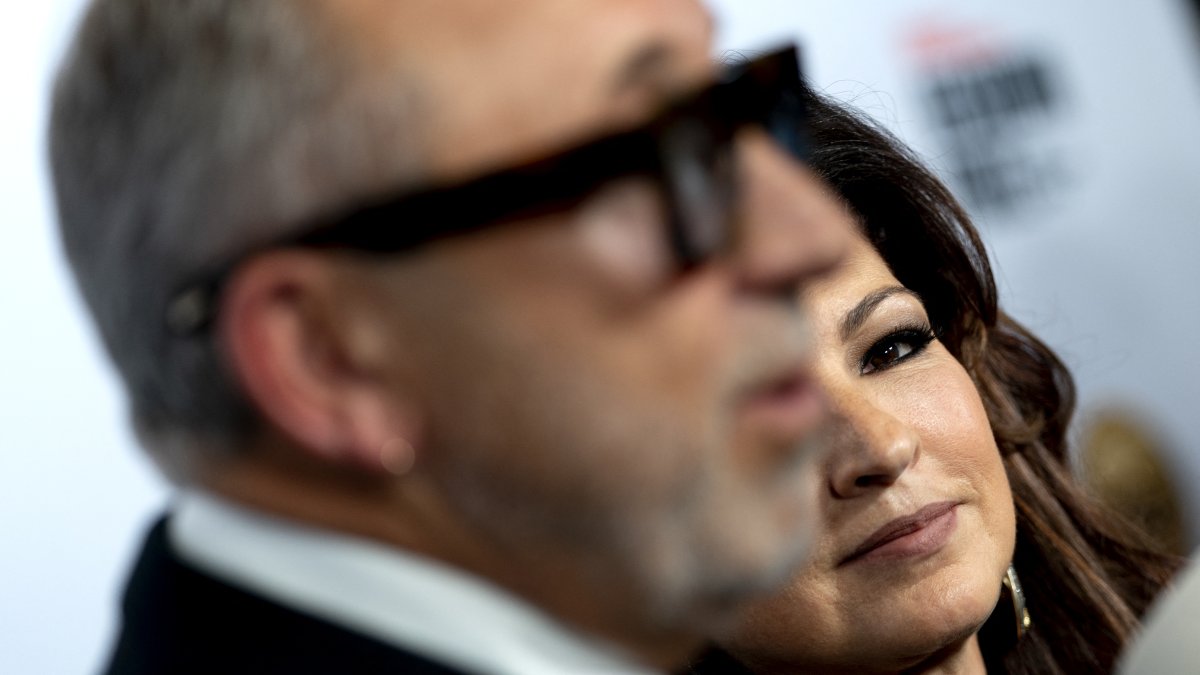
Cuban-American singer Gloria Estefan (R) and her husband, Cuban-American musician and producer Emilio Estefan.

The cultural history of the United States cannot be understood without the influence of Hispanic artists who, over several decades, have brought their roots, languages and traditions to stages, screens and cultural venues with national and international reach. From music and film to theater and acting, different generations of artists of Hispanic origin have managed to break down barriers and expand the presence of Hispanic culture in the United States. Some were born on the mainland; others, such as many Puerto Ricans, were born in a U.S. territory. All of them, however, are part of a cultural history that has left a profound mark on the country.
Among the vast number of those who managed to transcend and leave their mark on the U.S. cultural landscape, these are the most prominent.
Gloria Estefan: The Cuban-American voice that brought Caribbean rhythms to the mainstream
She is one of the key figures for understanding the expansion of Latin music in the country. The talented Cuban-American singer managed to turn sounds associated with Caribbean music into hits on the U.S. market, to the point where her impact goes far beyond having been the one who paved the way for subsequent generations of Latin artists who are successful today. Her international success with Miami Sound Machine, particularly with songs like "Conga," made Latin rhythms a regular part of the American pop repertoire.
Her influence was recognized even by U.S. cultural institutions, culminating in 2019 when she and her husband Emilio Estefan became the first Hispanics to receive the Gershwin Prize for Popular Song from the Library of Congress.
Selena: The phenomenon that transcended Tejano music
Before becoming an icon of Latin music, Selena Quintanilla was a young Mexican-American woman who helped bring Tejano music to much wider audiences.
Although her career ended abruptly in 1995, her influence did not fade. Her posthumously released album, “Dreaming of You,” became a commercial phenomenon and reached No. 1 on the Billboard 200, cementing her place in American music history.
Selena's legacy subsequently extended to film, fashion and popular culture, to the point where she eventually became one of the greatest Hispanic-American icons in history.
Robert Rodríguez: The filmmaker who brought his Mexican roots to Hollywood
In cinema, few names better represent the emergence of a new generation of Hispanic-American filmmakers than Robert Rodríguez. Born in San Antonio, Texas, Rodríguez gained international recognition with "El Mariachi," an independent production made on an extraordinarily small budget that went on to become a landmark of independent cinema and a cult classic starring the great Antonio Banderas.
Eventually, films such as "Desperado," "From Dusk Till Dawn," "Spy Kids" and the blockbusters "Sin City" and "Machete" would follow, cementing a career that blended Hollywood with elements of Mexican and Latino culture. In several of those films, Rodríguez collaborated with the legendary Quentin Tarantino, with whom he eventually struck up a friendship and even co-founded the production company A Band Apart.

Entertainment
Spanish-language music takes Spotify by storm: Fastest-growing musical genre in platform's history
Williams Perdomo
Rodríguez belongs to a generation of directors who helped reshape the presence of Hispanics behind the camera in the United States. The Library of Congress includes him among the prominent Latino filmmakers who emerged during the 1980s and 1990s.
Luis Valdez: From Chicano theater to Hollywood
He represents an influence that is as unique as it is monumentally important, given that his work was fundamental to the development of Chicano theater, to the point that he would later reach a national audience with his film "La Bamba." The film, released in 1987, told the story of Mexican-American musician Ritchie Valens and became a cultural and commercial success in the United States, with particular significance in placing a Mexican-American family and a story directly linked to Hispanic identity in the country at the center of Hollywood.
Valdez also wrote and directed "Zoot Suit," a seminal work on the Mexican-American experience. Both "La Bamba" and "Zoot Suit" are part of the Library of Congress's National Film Registry.
Bad Bunny: The artist who turned Spanish into a global language of pop
If Gloria Estefan helped open the doors of the U.S. market to Latin music and Selena turned Mexican-American identity into a national phenomenon, Bad Bunny represents a new era: that of the artist who reached the top of the global charts and conquered the U.S. market without abandoning Spanish.
Puerto Rican Benito Antonio Martínez Ocasio was the world's most-streamed artist on Spotify in 2025, with 19.8 billion streams. In addition, "Debí Tirar Más Fotos" was the most-streamed album globally that year and topped the Billboard 200. In fact, his impact also reached historic proportions in the United States, as the album won the 2026 Grammy for album of the year, becoming the first album entirely in Spanish to receive the Recording Academy's highest honor.
Far from being an unusual feat for him, the truth is that Bad Bunny had already broken another barrier in 2020 when "El Último Tour del Mundo" became the first album entirely in Spanish to reach No.1 on the Billboard 200.
His influence isn't limited to digital platforms either. In June 2026, he became the first Latin artist to surpass $1 billion in touring revenue, and also the first to reach that figure without performing music in English. More than simply representing the growth of reggaeton, Bad Bunny has proven that an artist can become one of the biggest stars on the planet without adapting his language to the English-speaking market.
Rita Moreno: A Hollywood pioneer
This legendary actress represents an earlier generation of artists who had to carve out a path for themselves in an industry where the roles available to Hispanic actors were considerably more limited. Born in Puerto Rico, Moreno built a career spanning decades in Hollywood and achieved one of the highest honors possible by becoming the first Hispanic actress to win an Oscar.
Her portrayal of Anita in "West Side Story" made her a legendary figure in American cinema. She later also won an Emmy, a Grammy and a Tony, becoming one of the few artists to achieve the so-called EGOT.
Her career is particularly significant because Moreno did not merely accumulate awards: she helped pave the way for subsequent generations of Hispanic actors in the American film industry, to the point that many believe that the large number of Hispanic actors who are prominent in Hollywood today owe a great deal to her pioneering work.
LATEST