







ANALYSIS
Brazil: Controversial Judge Alexandre de Moraes orders Flávio Bolsonaro's passports to be confiscated just seven minutes after Lula da Silva's contentious victory
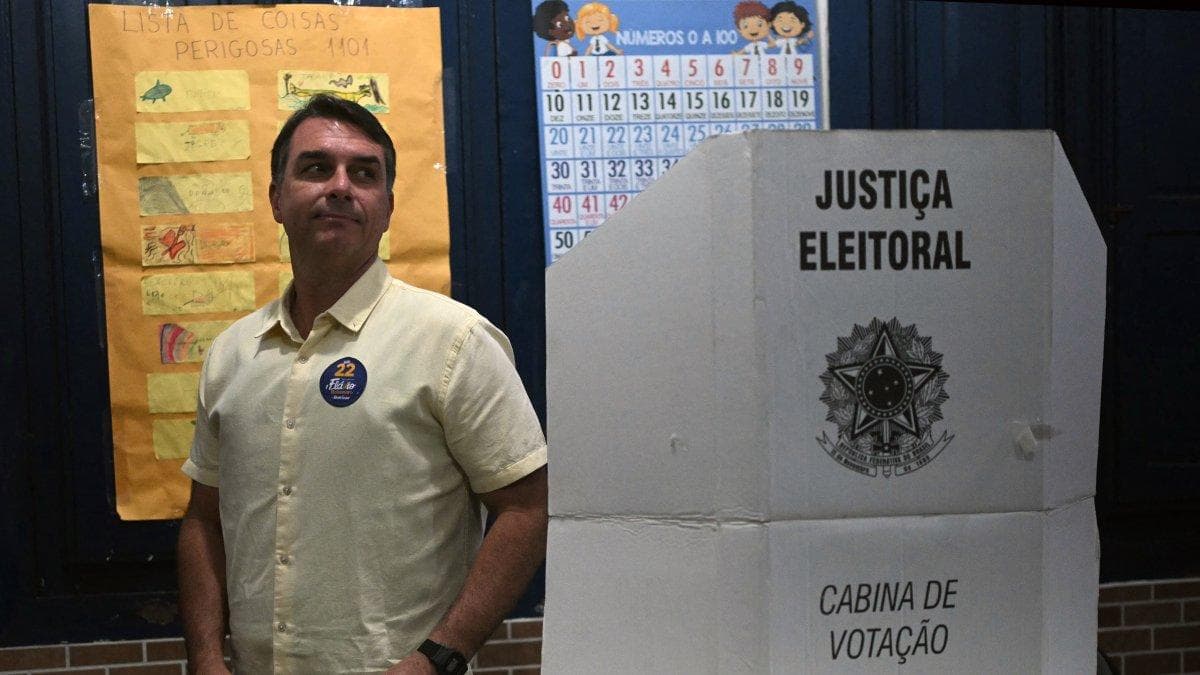
From the United States, Flávio Bolsonaro addressed the Brazilian people and the international community, presenting himself as "Brazil's true president-elect." The senator denounced a "mathematical impossibility" in the results of the runoff election and attributed Lula's victory to "illegitimate and illegal" actions.

Luiz Inácio Lula da Silva and Alexandre de Moraes

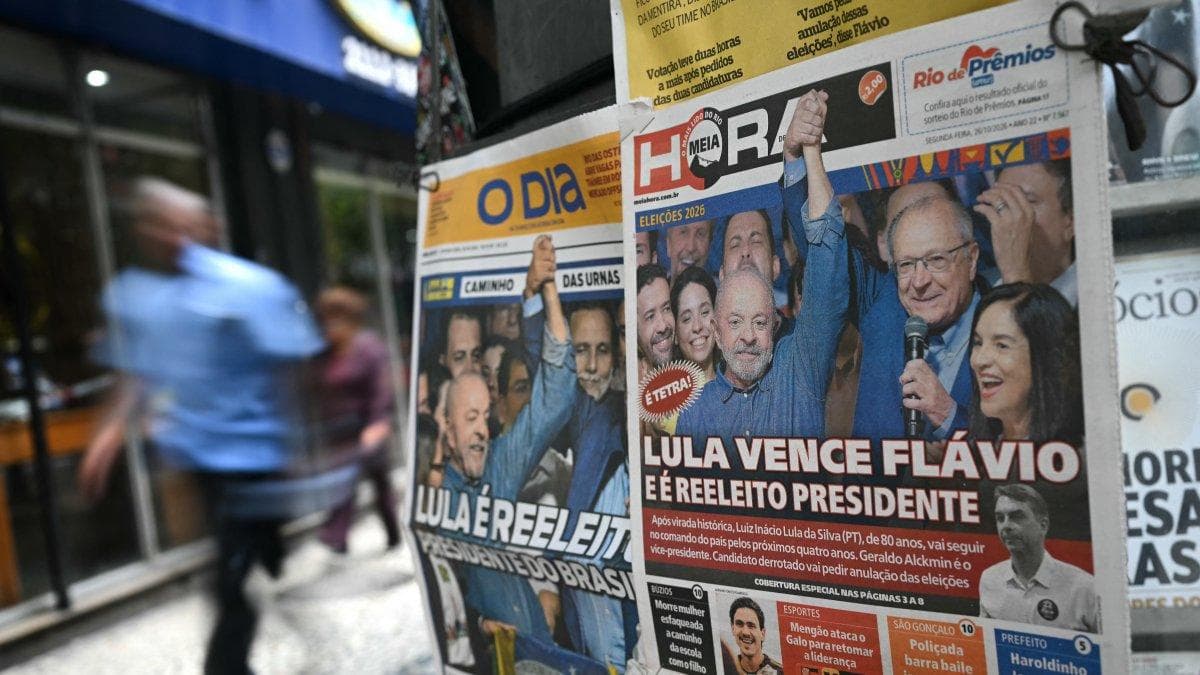
Just seven minutes after the Superior Electoral Court confirmed Luiz Inácio Lula da Silva's victory in the October 25 runoff election, the Brazilian Federal Police filed a 16-page request to seize Flávio Bolsonaro's passports. That same night, Supreme Federal Court Justice Alexandre de Moraes authorized the measure without consulting the Attorney General.
The next day, federal agents approached the senator on the street and demanded that he surrender his regular and diplomatic passports within 24 hours. The order also prohibited him from leaving the country and from contacting attorney Willer Tomaz.

Moraes' order and the seven-minute time limit
Flávio Bolsonaro, son of former President Jair Bolsonaro and a candidate who faced Lula in the runoff election, had not been convicted or formally charged at the time the order was issued. The ongoing investigations focus on possible links to Tomaz—who is under investigation for alleged large-scale transactions on betting platforms—and on the financing of a documentary about his father.
A few days later, Flávio was in Miami. As noted by the journalist Michael Shellenberger in Public, it is not only Flávio Bolsonaro who has fled Brazil to escape what he describes as persecution by Alexandre de Moraes and the pro-Lula wing of the Supreme Court. Glenn Greenwald stated on X that "there are dozens of Brazilian exiles who have done the same: dissident journalists, activists, bloggers, and politicians who fled to avoid a certain prison sentence for their political opposition."
The sequence of events is hard to ignore. Moraes took on Tomaz's case through the Supreme Court's random assignment system of the Supreme Court. The police request was signed at 9:16 p.m. on Sunday, immediately after the result was announced.
Members of the Federal Government and the Brazilian Federal Supreme Court deplored Moraes' decision to withhold Flávio Bolsonaro's passports, according to reports from BandNews FM columnist Mônica Bergamo.
Ongoing investigations and no conviction
For Shellenberger, the case against Flávio is "a blatant witch hunt riddled with irregularities." According to the journalist, it is not based on any evidence of his guilt, much less on an indictment or conviction.
According to the Federal Police (PF), there are emails and bank records linking Flávio Bolsonaro to attorney Willer Tomaz. In the documentation for opening a Santander account in the name of Alcazar Holdings—a company owned by Tomaz and based in Madeira (Portugal)— the senator was listed as the "master user." That status, in principle, gave him a high level of access and control over the account. On May 22, 2025, one of Tomaz's secretaries asked the bank to remove his name, and Santander did so the same day.
These elements are part of the investigation into alleged money laundering linked to online gambling and have been reported by media outlets such as G1 and Folha. However, they do not constitute a conviction or a formal charge, but rather the basis on which the investigation is proceeding.
Moraes' background and the Vorcaro case
Moraes is no stranger to controversy. Since 2019, he has been leading the "fake news investigation" launched by the Federal Supreme Court to investigate the spread of false news and attacks on institutions. In this context, he has ordered the removal of social media accounts and content that, according to his rulings, incited violence or threatened the democratic order. In 2024, he blocked X for several weeks after the platform, under Elon Musk, refused to comply with orders to remove profiles and appoint a legal representative in Brazil, and threatened fines against those who used VPNs to circumvent the block.
According to Michael Shellenberger, courts in Italy and Spain have rejected extradition requests related to warrants issued by Alexandre de Moraes, citing a lack of impartiality or political motivation. An Italian court refused to extradite a former advisor to the minister because Moraes was both the "aggrieved party" and the person leading the investigation; Spain's Audiencia Nacional rejected another extradition request on the grounds that it had an "obvious political connection and motivation."
Moraes has professional ties to Daniel Vorcaro, the banker whose Banco Master left a hole of 51.8 billion reais (about 9,700 million dollars) in the deposit insurance fund. Moraes's wife's law firm signed a legal services contract with Banco Master for 131 million reais (about $23 million). The minister himself acknowledged that the contract "legally exists." Investigators found edits to the metadata of documents under the username "Minister Alexandre de Moraes." Moraes and Vorcaro met at least nine times between March 2024 and August 2025.
The contrast with Lula's treatment
The contrast with the treatment Lula received is striking. In 2017, a judge sentenced him to nine years and six months in prison in connection with the Guarujá triplex case, in which he was accused of accepting renovations valued at approximately 3.7 million reais (1.2 million dollars). Two years later, another judge sentenced him to twelve years and eleven months in a separate case related to improvements made to a rural property. Lula was released from prison in November 2019, after 580 days in detention. In 2021, the Supreme Court overturned the convictions on grounds of territorial jurisdiction, and subsequently, the court's Second Panel ruled, by a 3-to-2 vote, that Judge Sergio Moro had been biased. No court found the evidence to be false.
Meanwhile, the Supreme Court and the government maintain that the investigations against Flávio Bolsonaro are legitimate. Lula called the senator's departure "shameful" and stated that "that's just how the Bolsonaro family is—they're kissing up to the United States."
Growing distrust and social media regulation
The order regarding passports comes amid growing distrust toward the Supreme Court. According to figures cited by Shellenberger, AtlasIntel found that 61% do not trust the judges of the Court. In an Indexa poll, 45% of Brazilians said that Moraes makes decisions primarily based on political criteria and only 16% based on legal criteria. Datafolha reported in September a 48% distrust toward the Supreme Court—the highest since the series began in 2012—and 34% want Moraes removed from the court. 59% considered it was wrong to prohibit Flavio from visiting his imprisoned father.
The Senate has received 55 impeachment requests against Moraes, although its president, Davi Alcolumbre, has said that he will not process them "even with 81 signatures." Lula, for his part, announced in his victory speech that "communication will change" and that he will regulate digital platforms, in line with Moraes' approach of treating crimes on social media as crimes in the real world.
Shellenberger concludes that by forcing Bolsonaro into exile through an order issued seven minutes after the election results were announced, Lula and Moraes are turning Brazil into a "banana republic." The verifiable facts, the timing of the measure, the absence of a prior conviction, and the history of censorship and the ongoing investigations all support this critical interpretation.
Whether it is a case of systematic political persecution or the strict application of the law remains a matter of debate. What is difficult to dispute is that the sequence of events has further eroded confidence in the independence of the Brazilian judiciary and has opened a new chapter of political exile in a country that presents itself as a democracy.
Flávio Bolsonaro declares himself "president-elect" from the U.S. and cites Venezuela as an example of resistance
Bolsonaro claims that seven minutes after he challenged the results, Minister Alexandre de Moraes tried to confiscate his passports and maintains that he would likely be in custody if he hadn't left the country. He asserts that there is no arrest warrant against him because "I did not commit any crime" and describes the case as a "politically motivated witch hunt."
The senator insists that he did not flee Brazil, but rather "left through Brazil" to escape what he describes as a "state of emergency." He states that he will not submit to the judicial process and that he will lead the opposition from abroad through "peaceful and legitimate" means.
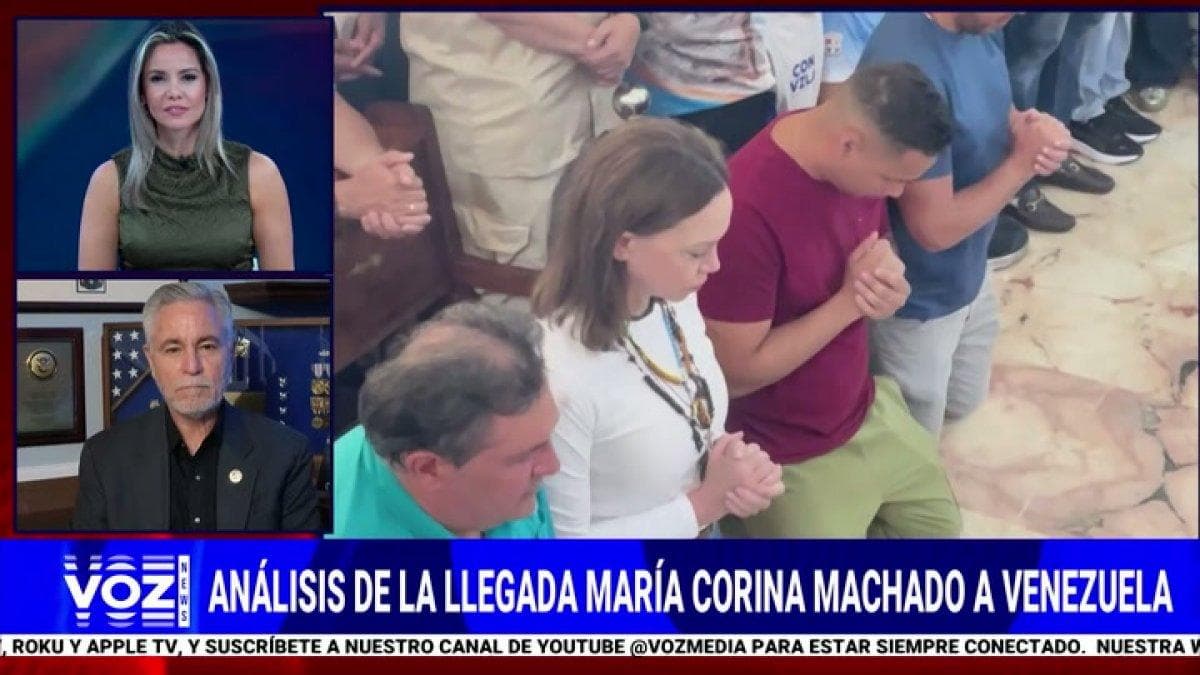
In his message, he cites the Venezuelan case as a precedent. He states that Juan Guaidó and Edmundo Gonzalez had to leave the country to confront the Chavista dictatorship and that Maria Corina Machado, "who was also persecuted, refused to legitimize a fraud and became a global symbol of democratic resistance." Bolsonaro maintains that all of them were treated as criminals by the regimes they opposed and that history has vindicated them.
He concludes by calling on Brazilian institutions and the international community not to normalize the situation and by asserting that "this struggle did not end on October 25."
🛠 Do you think there is an error in this article?
Recommendations


LATEST


