







Zelensky fears that a summit between the US, Russia and China could redraw the world map without taking Ukraine into account
"We really don't want this to turn into 'Yalta 2, 3, 4,' with a redistribution of influence," Zelensky told reporters, referring to the 1945 conference at which the Allied powers divided up their spheres of influence after World War II.

Ukrainian President Volodymyr Zelensky

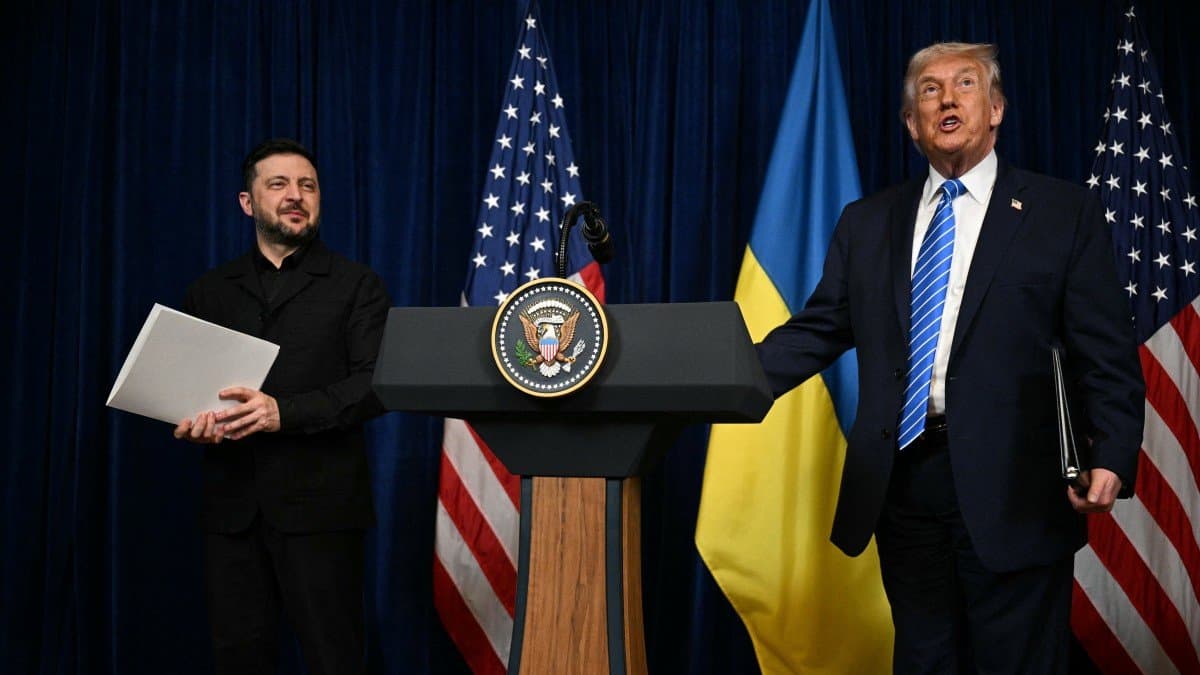
Ukrainian President Volodymyr Zelensky warned on Wednesday that a possible summit between the leaders of the United States, Russia and China could turn into a new "Yalta," a division of global influence in which Ukraine is left out of the picture.
"We really don't want this to turn into 'Yalta 2, 3, 4,' with a redistribution of influence," Zelensky told reporters, referring to the 1945 conference at which the Allied powers divided up their spheres of influence following the Second World War.
A summit that "Russia wants more than anyone else"
The Kremlin has confirmed that a meeting is being arranged between Russian President Vladimir Putin, and his counterparts from China and the United States, Xi Jinping and Donald Trump, on the sidelines of the Asia-Pacific Economic Cooperation (APEC) summit scheduled for November in Shenzhen.
"What China, Russia and the United States might discuss has not yet been clearly defined," acknowledged Zelensky, who sees that meeting as a diplomatic risk for Kyiv.
""Russia wants this meeting more than anyone else," said the Ukrainian president, warning that giving Moscow a high-level negotiating forum without Ukraine's participation could amount to "another major diplomatic advantage" for the Kremlin.
Russia has been seeking a comprehensive agreement with Washington on the European security architecture for years, particularly an end to the expansion of NATO near its borders. Moscow maintains that its invasion of Ukraine was a response to that alleged threat, a justification that Kyiv and its allies flatly reject.
The race against the clock before Shenzhen
Ukraine and Russia plan to meet in November in the United Arab Emirates with U.S. emissaries in an effort to revive peace talks. Although no date has been confirmed yet, Zelensky wants the meeting to take place before the Shenzhen summit, so that Ukraine does not arrive there with decisions already made by others.
At the same time, Kyiv has asked Washington to increase its supply of Patriot missiles, which are crucial for intercepting Russian attacks. According to Zelensky, Ukraine currently receives 12 Patriot systems per month, but it needs to shoot down 150 ballistic missiles each month, a shortfall that leaves Ukrainian cities vulnerable during bombings.
Kyiv is also seeking an agreement to halt attacks on energy infrastructure before winter sets in, as well as a maritime truce to protect its grain exports. Moscow, however, refuses to accept partial ceasefires until a definitive peace agreement is reached.
World
Zelensky announces that Ukraine has resumed intelligence sharing with the US following days of tension with Trump
Emmanuel Alejandro Rondón
A Yalta that Ukraine does not want to repeat
Ukraine fears that the Shenzhen summit will follow the same pattern: negotiations between Washington, Moscow and Beijing in which Ukraine's future is decided over its head. That is why Kyiv is committed to accelerating its own talks in Abu Dhabi and securing U.S. military support before the diplomacy of the major powers takes precedence.
🛠 Do you think there is an error in this article?
Recommendations




LATEST


