Seven failed attempts, three in 24 hours: How María Corina Machado has been denied return to Venezuela
This series of obstacles stands in stark contrast to the public assurances that high-ranking U.S. officials, including Donald Trump and Marco Rubio, gave Machado about her return home in recent speeches.
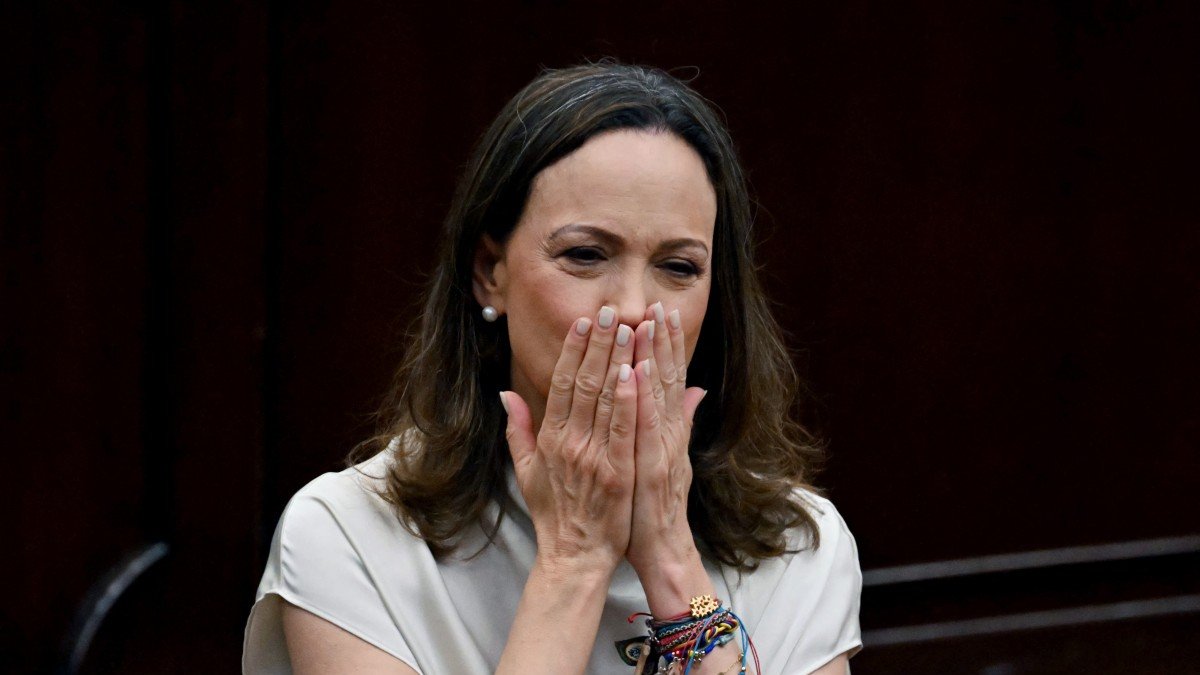
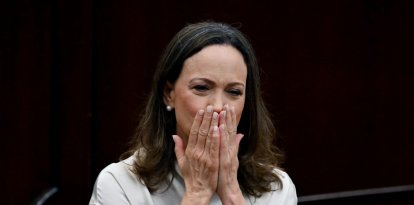
María Corina Machado in a file photo

In less than 24 hours, María Corina Machado, Venezuelan opposition leader and Nobel Peace Prize laureate, saw three doors in a row close on her attempts to return to her country: a ship that never set sail, a flight to Aruba that was unable to land, and a final attempt to reach Curaçao that also failed. These are Machado's fifth, sixth, and seventh failed attempts to return to Venezuela since she left clandestinely nine months ago. The sequence of events came to light when Delcy Rodríguez, Venezuela's interim leader who inherited the Chavista power structure after the capture of Nicolás Maduro, met behind closed doors with President Donald Trump in New York, on the sidelines of the UN General Assembly.
The news was confirmed exclusively by the ABC correspondent in Washington, David Alandete, who traveled this week to Panama City to accompany Machado on what was supposed to be the final leg of that long-awaited return to Venezuela, and ended up witnessing firsthand how that option, and the next two, were ruled out one after another. The most recent plan called for a roughly two-day sea voyage from Panama, crossing the canal to reach the Caribbean. Everything was practically ready, with the passengers' documentation submitted and the departure formalities completed, when the company that owns the vessel announced, just hours before the scheduled departure on Monday night, that one of the engines had a malfunction involving two cylinders. According to the report, the company did not offer another vessel or suggest waiting for repairs; it simply canceled the service and refunded the money.
Machado and her team didn't wait. That night, they began looking for a flight to Venezuela via one of the Dutch islands off the Venezuelan coast. Within hours, they secured a flight to Aruba for early Tuesday morning, but another obstacle arose, this time an administrative one, as questions arose about whether the flight should be classified as private or commercial. They secured a second plane, but the Aruban authorities ultimately denied permission to land. With Aruba ruled out, the team attempted a final route to Curaçao, the same island where Machado had arrived after fleeing Venezuela last December, with Bonaire as an alternative. Neither island authorized the landing, thus thwarting the seventh attempt to return and the third in the last few hours.
That episode was just the latest in a series that began three months ago. According to Alandete's account, on June 26, Machado departed on a private plane from Manassas, Virginia, bound for Curaçao. The flight was already in the air when the pilot received instructions to turn back, following a communication the airline received from the United States. Two days later, on her second attempt, she purchased a commercial ticket on Copa Airlines from Panama to Caracas; according to her own team's reconstruction of events, the airline received a warning from Venezuela that flying her there could jeopardize its operating permits in the country, and Machado was unable to board the flight. Between those incidents and this week's events, ABC confirmed two other attempts, one by land and another combining different routes, that also failed, and whose details remain confidential because, according to those involved, those routes "could still be used in the future."
Politics
Department of State spokesperson on Voz News: 'Trump stands by his goals for the three phases of transition in Venezuela'
Luis Francisco Orozco
The report also clarifies a point that fueled misinformation on social media. Panama granted Machado a special diplomatic passport for humanitarian reasons, not Panamanian citizenship. Venezuelan journalist Idania Chirinos, who also revealed the failed attempts, highlighted this in a message that went viral, describing the situation as follows: "The Nobel Peace Prize laureate is imprisoned in Panama." Chirinos clarified: "This does not imply any status, much less CITIZENSHIP. She is and remains VENEZUELAN," thanking Panama for "sheltering" and "protecting" her from those who, according to her, are indeed preventing her from returning.
"Why are they preventing her from reaching Venezuela? Why are they denying her flight authorization? Why do the ships 'break down' mechanically when everything is ready for boarding?" she asked.
This series of obstacles contrasts with the public assurances high-ranking U.S. officials have given Machado in recent statements about her return to her country. Secretary of State Marco Rubio said in a recent interview with journalist Sergio Novelli that the Nobel Peace Prize laureate could return at any time: "María Corina Machado is a Venezuelan citizen who has every right to enter her country whenever she wishes to return. We cannot prevent her from traveling." Rubio explained that Washington had only recommended that she postpone her return during the emergency caused by the earthquakes that shook Venezuela, out of concern for her safety, and warned about what might happen if she eventually crossed the border: "If she returns to Venezuela, we do not believe anything negative should be done against her."
President Donald Trump had already made a similar statement in July, following the NATO summit in Turkey: "I did not tell her not to go back. I think she's a good person."
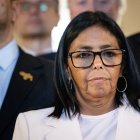
That contrast became even more apparent just this week. While Machado was stranded in Panama, unable to travel even to a Caribbean island, Delcy Rodríguez, who has a long-standing criminal record, traveled to New York without hindrance. She is the same official whose regime, according to human rights organizations, is holding more than 300 political prisoners, and under whose interim leadership the opposition itself continues to denounce repression and cruel treatment of dissidents.
LATEST