Paraguay: President Santiago Peña has resigned and faces impeachment and criminal charges following the collapse of UENO Bank. What really happened, and what lies ahead?
Peña, an economist with a master's degree in Public Administration from Columbia University, fell from grace after the Central Bank of Paraguay took over UENO Bank last Tuesday upon finding that it lacked the legally required minimum liquidity. Three million Paraguayans saw their funds frozen immediately.
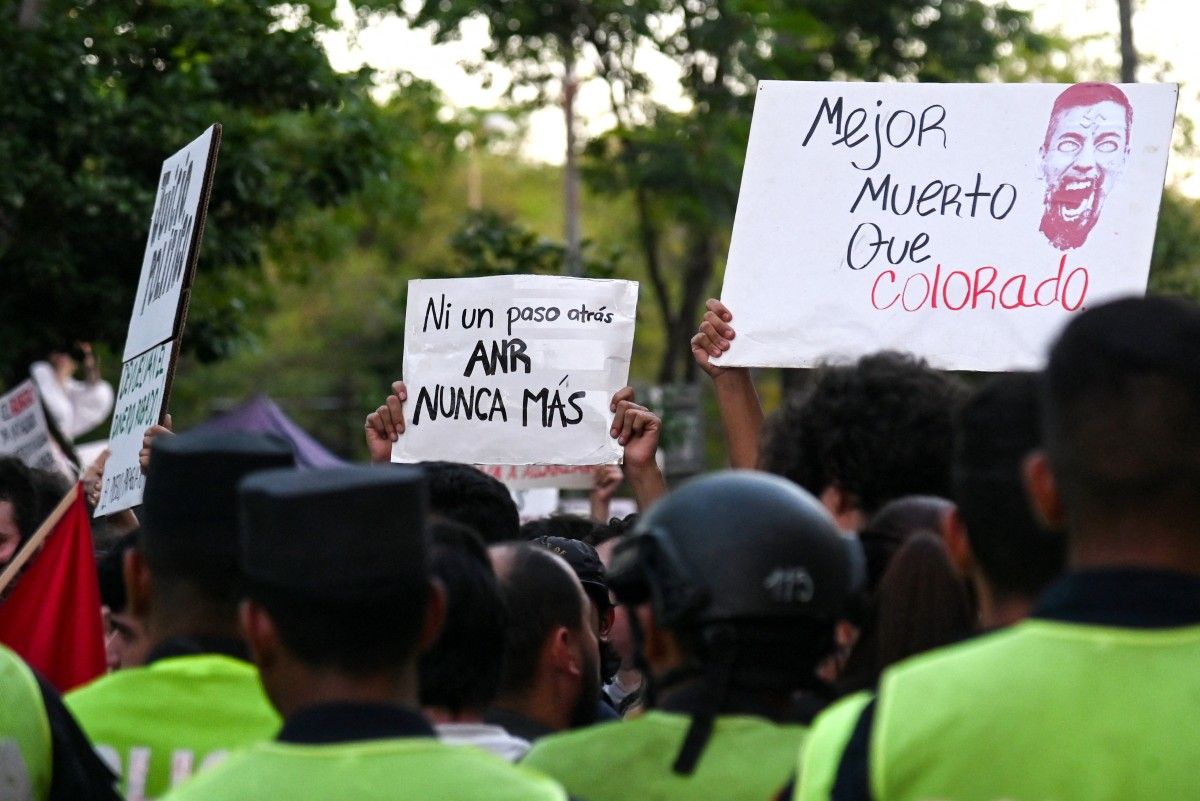
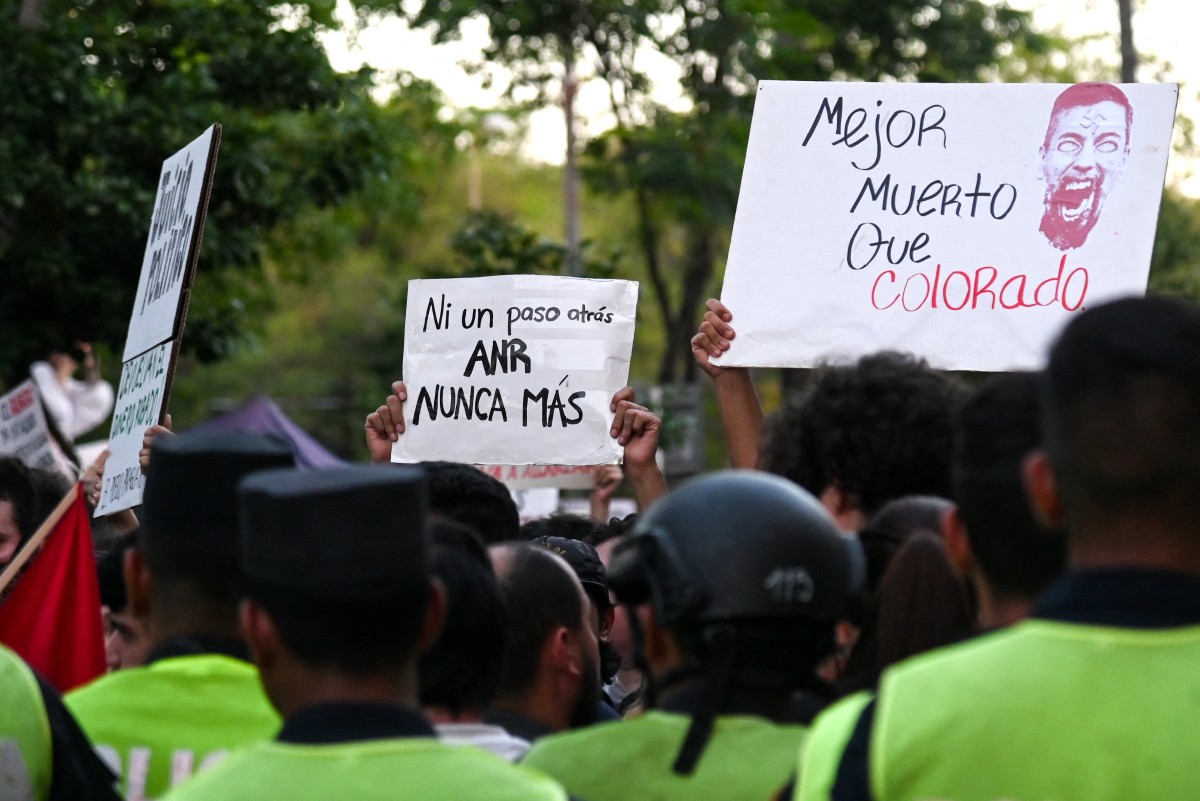
Protesters hold up signs against the ruling Colorado Party (ANR) during a protest over the banking crisis in Paraguay

Outgoing President Santiago Peña, who made a tremendous effort during his term to align himself with the White House and present Paraguay to the world as a stable, thriving country suitable for major investments, has fallen into disgrace after the country's Central Bank's intervention in UENO Bank, the bank that brought the most customers into the banking system in all of Paraguay. An institution that, in addition to a successful and innovative business model, grew largely thanks to the political favoritism it received during Peña's administration.
Now around three million Paraguayans have seen their funds and savings frozen as of early Tuesday morning, while waiting for the Central Bank's Guarantee Fund, which guarantees the sum of 75 times the minimum wage for all depositors. This fund, authorities say, guarantees 98% of the money in UENO and will begin paying out in the coming hours, after the Paraguayan Congress passed a law to prioritize savers with less than 10,000,000 guaraníes (less than $1,700) in their frozen bank accounts. However, while the government works to release the funds, millions of Paraguayans are waiting to get their money back to pay bills, buy groceries, and meet their daily obligations. Thousands more have lost everything, since 75 monthly salaries are equivalent to just over $38,000 at the current exchange rate. And many exceed that limit, especially legal entities, which will face a legal ordeal in an attempt to recover—if at all possible—the money from outside the guarantee fund.
Peña, an economist with a master's degree in Public Administration from Columbia University, is the main target of criticism from all of Paraguayan civil society. The press places him at the center of an influence-peddling scheme designed to benefit UENO Bank, a company in which he was a shareholder until March 2025. His own party, the Colorado Party, which has governed and controlled Paraguay's institutions for decades, has distanced itself from the president after the leader and one of the country's most powerful men, former President Horacio Cartes—once Peña's political mentor—supported his removal from office, aligning himself with the opposition alliance comprising a broad ideological spectrum.
The Peña administration is accused of amending key regulatory laws so that UENO could receive money from public institutions, including the Social Security Institute (IPS), Itaipú, the Ministry of Economy, and other key agencies.
Ultimately, UENO's closure triggered a political crisis almost unprecedented in the country's history that has been unfolding over the past few hours. Peña signed his resignation, which Congress must accept; after a tumultuous session, it just voted against it to proceed with impeachment.
What is happening right now
What happened this Thursday in the Paraguayan Congress was, to say the least, worthy of an episode of "House of Cards."
Both chambers met in a joint session to vote on Peña's resignation. Against all odds, everything seemed to indicate that the resignation would be rejected in order to proceed with the impeachment trial, after dissident Colorados backed the opposition. Hours earlier, the Chamber of Deputies unanimously approved, by a vote of 78, the indictment to initiate the process.
In the Senate, the resignation was rejected by a vote of 24 to 20. When the ruling party realized it did not have the votes to accept it in the Chamber of Deputies, the Colorado Party congressmen stood up and walked out of the chamber to deprive the session of a quorum.
The result is a state of limbo. Colorado Party senators who did not stand up, such as Gustavo Leite, and opposition leaders maintain that the impeachment proceedings remain in effect and will continue this Friday in the Senate. Peña remains, technically, the president of Paraguay, because his resignation was never accepted.
This issue is particularly critical for Peña, since, if he is removed from office through impeachment, he loses the right to become a senator for life and, with it, the immunity that would protect him from criminal prosecution. If, on the other hand, his resignation is accepted, he would occupy that seat with immunity, and Congress would have to strip him of it before the courts can take action against him. That is the real battle being waged in the capital, Asunción, at this very moment.
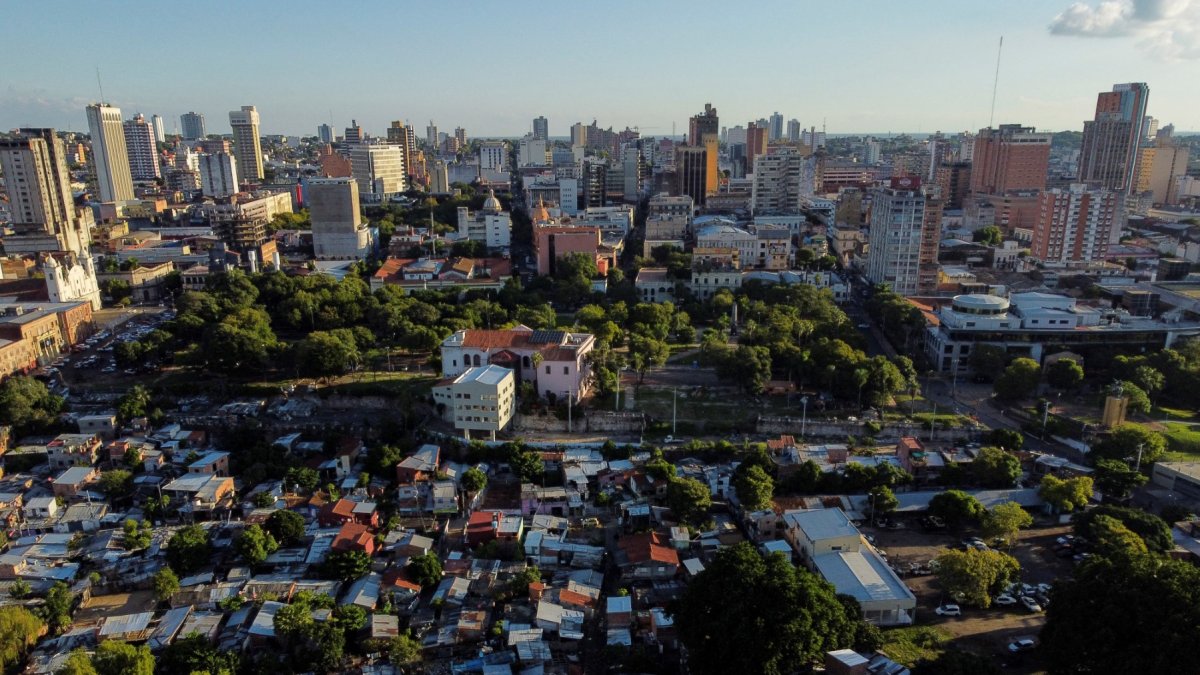
At times, the issue even escalated into a constitutional and political crisis because in the middle of a session Congresswoman Johanna Ortega denounced reports that Peña had left for Argentina without notifying Congress, as required by the Constitution. The Congressional secretariat confirmed that it had not received any notification, while sources close to the executive branch and the Casa Rosada denied that Peña had left Paraguay.
After the high-profile session and amid the uncertainty, Peña broke his silence and stated that he would appear before Congress to defend himself.
"In light of the ongoing impeachment proceedings, I will appear and exercise my right to a defense. I will do so with arguments and evidence, while respecting the Constitution and the institutions of the Republic. Even though they have already announced their decision, I will exercise that right. Not out of personal pride, but because being accountable and providing explanations is also a responsibility to the Paraguayan people. I will cooperate fully with the relevant institutions to ensure that what happened is clarified, that responsibilities are determined, and that those who have broken the law are held accountable by the justice system. I will provide any information that is requested of me. The public deserves to know the truth, without cover-ups and without anyone being above the law."
"But I want to make one thing very clear: payments to savers cannot be contingent on what happens to me. The debate over whether I remain in office cannot paralyze the solutions that affected families need," he added. "My priority was to promote, within the law and in coordination with the responsible institutions, the necessary measures so that savers can recover their savings. Clarifying the facts and resolving the payments are obligations that must proceed simultaneously."
What really happened: The UENO and Peña scandal
UENO began as a finance company in 1976, and its turning point came in 2021, when it was acquired by the Vásquez Group. The financial institution became a digital bank in November 2023, just three months after Peña took office, in a process that the Paraguayan press described as "swift."
Carlos Carvallo was already at the helm of the Central Bank, having served as president of the UENO financial institution until August of that same year.
Since then, the bank grew at an impressive and dizzying pace, largely with government money, according to investigations by the Paraguayan press.
As of August 2023, the financial institution did not manage a single guaraní of public funds. In 2024, it absorbed the long-standing Visión Banco, which was in a precarious situation, and, according to an investigation by ABC Color, by the end of 2025, government deposits at UENO—including those from the IPS—already exceeded its actual equity by 90%. In other words, the government had entrusted the bank with nearly twice the actual capital it had to absorb losses.
Journalist Sara Moreno of ABC Cardinal summarized in five points how this scheme was constructed: the alleged use of front men and shell companies, changes to the "Revolving Door" and "Conflict of Interest" laws, amendments to the IPS rules, an extension of the deadline for the takeover of Visión Banco, and doubts regarding the investment limits of pension funds.
Warnings had been circulating for months. In July, Fernando Rivarola, then manager of supervision at the Superintendency of Banks, stated in a memorandum that UENO had exceeded the limits on loans to affiliated companies, and that a portfolio sale to the firm Vinanzas might have been indirectly financed by the bank itself, something prohibited by regulations. The so-called "Rivarola report" was never released by the Central Bank. Thanks to the press, Santiago Peña removed Rivarola from his position by presidential decree and transferred him to the AFD agency.
Peña, meanwhile, defended the bank and labeled those who attacked UENO, the BCP, and his government as "financial terrorism." On Tuesday, when the bank's solvency ratio fell below half the legal minimum, there was no longer any way to prop it up. The Prosecutor's Office arrested eight executives, including founder Miguel Vázquez, and charged 27 people. The Prosecutor's Office is also investigating Peña.
How much money is at stake
The Deposit Guarantee Fund covers up to 75 minimum wages per person, about 228.3 million guaraníes, equivalent to about $38,000. The Central Bank first authorized an initial payment of up to 10 million guaraníes per saver and, after Congress passed the law, it expanded it to an advance of up to 40 times the minimum wage, about 121.7 million guaraníes.
The biggest shortfall, however, lies in public funds. Insured parties' associations estimate that state and pension funds deposited with UENO exceed $860 million, and the IPS alone—the pension fund for private-sector workers— has about $380 million tied up. The government's proposal to use the Guarantee Fund to cover those funds as well was met with strong opposition, because that money comes from contributions across the entire financial system and is intended to protect savers.
Is this a "corralito"? Is Paraguay going bankrupt? Have retirees been left without money?
Amid the financial and political crisis, a great deal of misinformation and information taken out of context has also emerged in the press and on social media. While the situation in Paraguay is complex, especially regarding the public funds at stake, the Paraguayan financial system, through the guarantee fund, is already up and running and promises the most urgent savers that they will recover their money. That, at least in theory, is far from being a "corralito," as happened in Argentina in 2001.
In fact, the Paraguayan financial system has been operating normally in recent days, except for a few exceptional hours when many Paraguayans went to other banks to open new accounts, overwhelming the SIPAP system, the official platform where local transfers are processed.
Another rumor that surfaced is that the IPS "went bankrupt" because of UENO, which is far from the truth. Although the institute invested $380 million in UENO, that amounts to just over 9% of its portfolio, spread across 14 different institutions. The loss is significant, but it does not mean bankruptcy. The authorities also guaranteed salaries and year-end bonuses despite the BCP's resolution process.
Furthermore, citizen protests have been mostly peaceful, with only a few instances of repression, no injuries and few arrests. Life, in general, has continued with a certain degree of normalcy, with Paraguayans going to work and awaiting updates from the authorities.
The political war
While Peña's downfall is inextricably linked to the UENO crisis, a shadow extends beyond what is publicly known. As the case gained greater media exposure, even in international outlets, a power struggle unfolded in Paraguay that was practically a knife fight.
The rift within the Colorado Party widened following the municipal elections on October 4. According to Infobae, although the Colorados won a record 187 mayoral seats, the defeat in Asunción and Ciudad del Este—the country's two most important cities—called Cartes' leadership into question and emboldened those seeking to oust him, including Peña and Vice President Pedro Alliana. According to reports cited by that media outlet, during a heated argument, Peña demanded that Cartes step aside, especially in light of his recent health problems. The former president reportedly responded with a warning that took Peña by surprise: "Get your own house in order."
At the same time, the country's large private conglomerates, owners of banks, media outlets, the livestock sector, and major companies, began to lash out at UENO, Peña, and the BCP at a rather peculiar moment, with the guaraní strengthening against the dollar, bucking the global trend. The Chamber of Exporters put rather blatant pressure on Peña to intervene in the economy and weaken the currency. He refused. That upset powerful interests, intensified criticism, and exposed him even further to certain sectors of the press.
But Peña was committed to UENO. And when the bank collapsed, Cartes, who had long since distanced himself from Peña, publicly supported the impeachment and dragged much of the ruling party along with him. The Colorados, led by Cartes and with the opposition in full force at their side, acted swiftly and began mapping out the transition within days.
Alliana, the vice president, was one of the first to speak out. A chat log released by Radio Monumental shows that the relationship had already broken down before the intervention. "Unfortunately, you didn't take into account the times I warned you and told you how I saw the situation and how serious things were," Alliana wrote to Peña. The president replied that "Well, neither you nor I can be held responsible for what Miguel and the BCP did."
Why it matters
Paraguay entered this institutional crisis at the peak of its recent macroeconomic prosperity. On July 26, 2024, the rating agency Moody's granted it investment-grade status, with a Baa3 rating. S&P Global followed suit on December 17, 2025, with a BBB- rating. Fitch is the only agency that has not yet taken that step, although it maintains Paraguay at BB+ with a positive outlook, one notch away from investment grade. These results culminate years of effort to demonstrate reliability and stability.
Investment-grade status means major agencies consider the country to have a low risk of defaulting on its debts, which allows it to secure financing at lower rates and enables it to attract capital from international funds which, under their own rules, can only invest in economies with that rating. Among the reasons cited by the rating agencies for maintaining that rating is, precisely, institutional stability. Last July, when confirming the rating, Moody's highlighted the credibility of monetary policy, a low-inflation environment, and the country's political stability.
Paraguay's real GDP grew by 6.6% in 2025, above the median of 3.8% for countries with similar ratings, and agencies project 4.5% growth for this year. Adding to this was a phenomenon uncommon in the region: the currency's strength. According to Fitch, the appreciation of the guaraní, which strengthened by 26% between March 2025 and September 2026, along with the country's reliance on hydroelectric power, helped keep inflation in check, bringing it down to 1.5% in August. On a continent accustomed to devaluations, Paraguay offered precisely the opposite.
That stability turned the country into a magnet for foreigners. In 2025, the National Immigration Directorate recorded a historic high of 47,687 residency applications, an increase of more than 63% compared to 2024, and the trend has accelerated this year. Between January and September 2026, 49,538 residency applications were already recorded, surpassing the total for all of 2025. Brazilians and Argentines top the list, but Americans and Europeans are also arriving, drawn by low taxes and a stable economy. In April 2026, the government even launched the Paraguay Investor Pass program, which offers direct access to permanent residency for investors who meet the requirements. A significant portion of these new residents chose Paraguay because they trusted its financial system.
But that is now in question, at least for now. UENO carries more weight than the collapse of just any bank. It is not a marginal institution, but one that, according to the rating agency FIX, was the country's fifth-largest private bank as of December 2025, holding 8.9% of the system's deposits. Its closure affected nearly 3 million customers and paralyzed much of e-commerce, and the Central Bank issued a statement denying rumors of further interventions to contain a possible contagion effect. The fiscal cost is also under discussion. If the Guarantee Fund ends up covering more than $860 million in public and pension funds deposited at the bank, the shortfall will be absorbed by a mechanism created to protect savers across the system.
The crisis is also a litmus test for the institutions. So far, the government's response was swift, though it came at the last minute. The Central Bank took over the bank and replaced its leadership, the Attorney General's Office arrested and charged those responsible, and Congress passed a law in record time to expedite the return of deposits, meaning most people's savings are guaranteed. The public, in turn, "have behaved in an exemplary manner," sources on the ground told VOZ, and the country continues to function normally, although mistrust has already taken hold. All of this, however, could have been avoided if regulators had acted in time on warnings that had been mounting for months.
Many are also concerned about the day after UENO, a bank known for innovating in technological infrastructure, providing a good user experience, offering fast customer service, and streamlining the system so that millions of people and thousands of startups could access banking services.
"Many of us switched to UENO because the other banks simply won't serve us," a Paraguayan woman told VOZ while trying to open an account at Banco Familiar after waiting for more than an hour.
"Itaú, Continental, Sudameris, and GNB are solvent, major banks, but their customer service is, to put it mildly, deficient. That's why UENO also grew exponentially in just a few years. Traditional banks shouldn't condemn UENO's customer service model—they should copy it—leaving aside, of course, the issues of corruption and political favors," an Argentine investor told VOZ on condition of anonymity.
The Senate will decide the outcome. That vote will determine whether Peña becomes a senator for life, protected by parliamentary immunity, or faces prosecution. How the crisis is resolved will also determine whether Paraguay retains the credibility that earned it investment-grade status, or whether Fitch, the only agency that has not yet granted it, sees this episode as yet another reason to wait.
🛠 Do you think there is an error in this article?
Recommendations





LATEST