Nod to conservatives: Pope Leo XIV reauthorizes traditionalist mass at the Vatican
Traditionalists appreciate this ancient and cryptic form of mass that prevailed before its modernization in the late 1960s: performed in Latin by a priest who does not officiate in the direction of the faithful. It is also characterized by the use of incense and Gregorian chants.
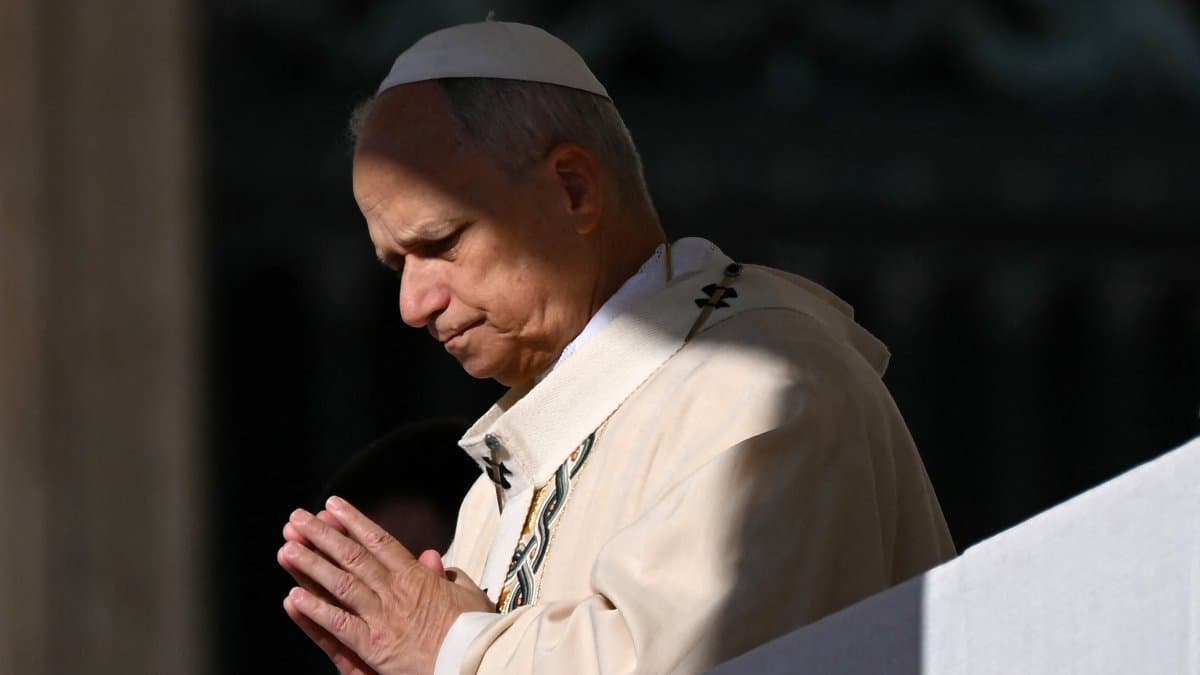

Pope Leo XIV reauthorized the celebration at the Vatican of the "traditionalist" mass in Latin and with the priest's back turned, in a gesture to appease divergences in the Catholic Church following the restriction imposed by his predecessor Francisco.
For the first time since 2021, the so-called "Tridentine" ceremony will return Saturday afternoon to St. Peter's Basilica from the hands of ultraconservative American Cardinal Raymond Burke, one of the fiercest opponents of the late Argentine pope.
Traditionalists cherish this ancient and cryptic form of mass that prevailed before its modernization in the late 1960s, performed in Latin by a priest who does not officiate in the direction of the faithful. It is also characterized by the use of incense and Gregorian chants.
But by the end of 2021, AFP recalled, Francis restricted it under strict conditions, worried about seeing it weaponized to reject the legacy of the Vatican II Council (1962-1965) that reformed and modernized the church.
Despite the hesitations in its application, this papal decree, called "Traditionis Custodes," provoked the anger of a part of the Catholics attached to this liturgy, who claimed it was unjustified marginalization.
In this context, the green light given by Leo XIV is "a very strong signal addressed to the conservative sector," François Mabille, director of the Geopolitical Observatory of Religion, explained to AFP.
"Perhaps tensions within the Catholic Church are stronger than could have been imagined a few months ago," he added.
Strategy of balance
Elected pope on May 8, American Robert Francis Prevost has inherited a delicate mission of unifying an institution deeply divided on issues such as the reception of migrants.
In the 12 years prior, his Argentine predecessor irritated conservatives with his decisions, sometimes considered political, especially within the American episcopate.
He was openly criticized by Cardinal Burke, who will preside at Saturday's Mass, to the point of disciplinary action.
Since his election, Leone XIV has followed the Bergoglian line with a markedly social character.
In September, the Vatican's hosting of an LGBT+ pilgrimage as part of the Jubilee, the Church's "Holy Year," rekindled criticism of the Holy See's "ideological drift" as rainbow flags were seen under the gold of St. Peter's Basilica.
But, at the same time, Leo has given assurances to conservative circles, such as the choice of Guinean Cardinal Robert Sarah as special envoy for a pilgrimage to Brittany.
Line between liturgy and politics
But the boundary between liturgy and politics is often blurred.
In an interview published in September, the pope acknowledged that the issue was "very complicated" and that, "unfortunately, it was part of a process of polarization."
"Some have used the liturgy as a pretext to promote other issues. It has become a political tool, and that's very unfortunate," he said.
🛠 Do you think there is an error in this article?
Recommendations


LATEST