






UN's 'irrational obsession' with Israel denounced
The UN Watch report notes that repressive regimes are routinely elected to lead bodies charged with protecting human rights, while more condemnations are issued against Israel than against all other countries combined.
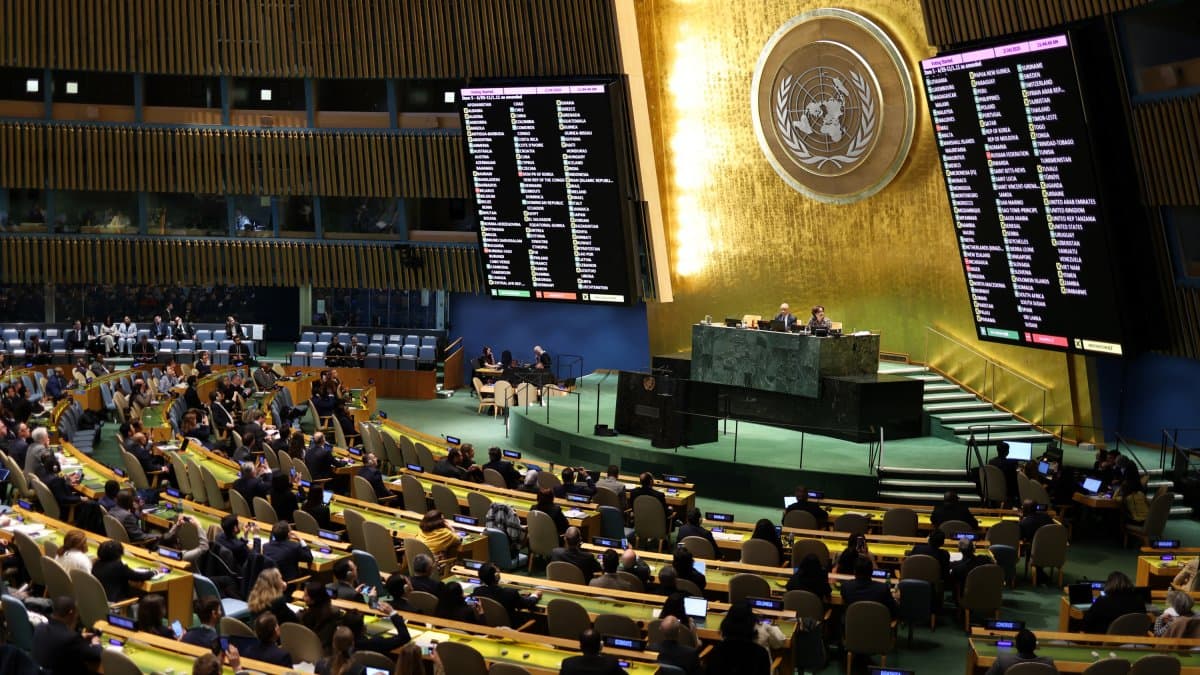

A recent report by UN Watch, a non-governmental organization dedicated to monitoring compliance with the founding principles of the United Nations, calls into question the integrity of the international organization. The UN Watch database reveals two critical problems: the presence of authoritarian regimes in leadership positions in key UN bodies and an "irrational obsession" with condemning Israel, which diverts attention from millions of victims of human rights abuses around the world.
The report details specific problems in five UN bodies: the Human Rights Council, the Commission on the Status of Women, the Committee on NGOs, UN Women and UNESCO.

Dictatorships in key UN bodies
The UN Watch report notes that repressive regimes are routinely elected to lead bodies charged with protecting human rights, promoting gender equality, and advancing education and culture. This contradicts the UN's principles of universality and impartiality. The specific problems of each body are detailed below, based on data provided by UN Watch:
The Human Rights Council: with 45 members, 58% are non-democracies, including countries such as China, Cuba, Qatar, Sudan and Algeria. This body, charged with addressing gross human rights violations, faces seven key problems:
- The obsession with demonizing Israel: it has a permanent item on its agenda only for Israel (item 7), while other countries are assessed in general discussions. The Jewish State receives at least four condemnatory resolutions annually, compared to one or none for countries such as Iran or North Korea. In addition, it has been the subject of nine special sessions and nine commissions of inquiry, more than any other country.
- Impunity for oppressive regimes: it does not adopt resolutions against serious abuses in countries such as China, Cuba or Zimbabwe.
- Human rights violating members: includes countries such as China, Cuba and Eritrea, which use their position to legitimize themselves.
- The appointment of biased experts: experts such as Alena Douhan defend regimes such as Venezuela, while Jean Ziegler created an award in honor of the late Libyan dictator Muammar Gaddafi.
- The manipulation of periodic reviews: regimes such as China and Cuba submit fake NGO reports praising their records.
- The leadership given to dictatorships: in 2023, Iran chaired the Social Forum, and China and Saudi Arabia have been part of the Advisory Group that selects human rights experts.
- A platform for dictators: leaders such as Venezuelan dictator Nicolas Maduro and Russian Foreign Minister Sergei Lavrov have used the Council for propaganda.
The Commission on the Status of Women: with 45 members, 50% are non-democracies, such as China, Cuba, Egypt and Saudi Arabia. Its three main issues are:
- The election of misogynist regimes: in 2019, Iran, which arrests women for not wearing a hijab, was elected to the Working Group on Communications, and Iraq, with a dismal record on gender equality, was vice-chair.
- Ignores the worst abusers: it has never adopted resolutions against Saudi Arabia, Yemen (worst on gender equality globally), the Democratic Republic of Congo or Pakistan, despite serious violations such as child marriages and domestic violence.
- Condemns only Israel: it adopts an annual resolution against Israel, misrepresenting the Arab-Israeli conflict as a women's rights issue, while ignoring Palestinian violations such as honor killings and gender-based violence.
The Committee on NGOs: with 19 members, 74% are non-democracies, such as China, Cuba, Eritrea and Pakistan. Its problems include:
- The accreditation of bogus groups: in 2015, it accredited the Hamas-linked Palestine Return Center and Chinese government front NGOs spying on activists.
- The blockade of credible NGOs: countries such as China and Cuba use tactics to deny consultative status to organizations such as the Human Rights Foundation, accusing them of "terrorism."
- Harassment of accredited NGOs: organizations such as Freedom House face frivolous questions and punitive suspensions for criticizing member governments.
UN Women: its 41-member Executive Board has 54% non-democracies, such as China, Eritrea and Saudi Arabia. Its problems are:
- The election of abusers: in 2019, Yemen, the worst country in gender equality, was vice-president of the Executive Board.
- The collaboration with rapists: in 2015, it co-hosted an event with China following the arrest of feminist activists. It also signed agreements with groups linked to misogynist Islam.
- Politicization: UN Women ignored for weeks the rapes of Israeli women by Hamas in October 2023 and has hired staff with anti-Israel stances, even supporting a Palestinian center named after a female terrorist who participated in the 1978 massacre of 38 civilians in Israel.

UNESCO: its 58-member Executive Board has 61% non-democracies, such as China, Cuba and Qatar. Its problems include:
- The obsession with Israel: between 2009 and 2017, it adopted 60 resolutions against Israel, compared to few or none against other countries. It also denies the Jewish heritage in Jerusalem and Hebron.
- It grants leadership to dictatorships: in 2011, it elected Syria to its human rights committee, and countries such as Burundi and Cuba make up cultural committees.
- The glorification of violence: In 2013, it included Che Guevara's work in its 'Memory of the World' registry, ignoring his history of violence.
The bias against Israel: A disproportionate focus
The report accuses the UN of violating its principles of equality by issuing a disproportionate volume of resolutions against Israel. In the General Assembly, from 2015 to 2023, 154 resolutions were adopted against the Jewish state, compared to 71 against the rest of the world combined. In 2024, the figure was 17 against Israel and six against other countries. In the Human Rights Council, from 2006 to 2022, 99 resolutions were adopted against Israelis, surpassing Syria (41), North Korea (19) and Iran (10). The World Health Organization (WHO) also annually condemns only Israel, ignoring countries such as Iran or Syria.
The tone of the resolutions against Israel is hyperbolic, with phrases such as "condemns in the strongest terms" or "deplores the difficult situation," while resolutions on countries such as Sudan or Eritrea include praise, such as "commends the welcome" or "welcomes progress." This disparity, according to UN Watch, reflects a systematic bias that undermines universal standards.
A call to action
UN Watch concludes that the presence of authoritarian regimes and bias against Israel weaken the legitimacy of the UN. The organization urges citizens to pressure their governments to promote fairer and more equitable votes. The UN Watch database provides detailed data on how each country votes and its participation in these bodies, inviting global reflection on the future of multilateralism.
🛠 Do you think there is an error in this article?
Recommendations







LATEST