Alive and Well Episode 82
Signs of narcissism you shouldn't ignore
Part Two of our conversation with Dr. Annie Borges: practical tools for identifying narcissism and protecting your emotional well-being.
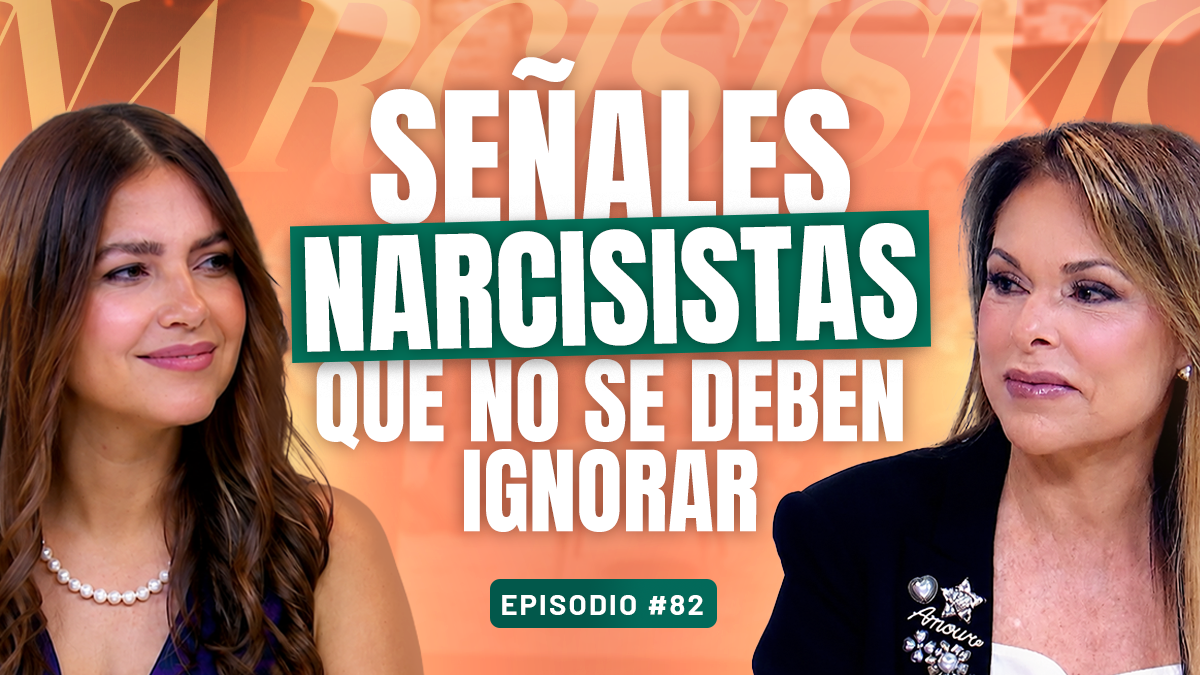
"Vivas y Plenas"
In this episode of "Vivas y Plenas," we resume our conversation with Dr. Annie Borges on a topic that can profoundly affect emotional health, self-esteem and relationships: how can we protect our well-being when dealing with a narcissistic person? Often, those caught in this type of dynamic end up questioning their worth, their emotions and even their own perception of reality.
In this second part, Dr. Borges shares practical tools for setting healthy boundaries, strengthening our identity, regaining self-confidence and learning to live with greater clarity, strength and emotional peace.
Two types of narcissism: Behavior and personality disorder
Dr. Borges makes a key distinction: there is narcissism as a behavior—a pattern that a person can "turn on or off like a switch"—over which they have some self-control and the ability to recognize it and seek help to change. And then there is narcissism as a personality disorder, a much deeper mental health condition. In the latter cases, the person lacks empathy, is unable to validate others, is extremely self-sufficient and does not seek help because they feel perfect. "It's much deeper, more dangerous and much harder to control," she explained.
Why they're so good at manipulation
"The more intelligent a person is, the greater their ability to persuade and manipulate..."
According to Dr. Borges, many people with narcissistic traits are also extremely intelligent, and that intelligence often goes hand in hand with manipulation: the more intelligent a person is, the greater their ability to persuade and manipulate, which ultimately has a significant impact on their romantic relationships, work and daily life.
Warning signs at the start of a relationship
One of the most practical points of the conversation was how to spot early warning signs, especially in young women who lack the experience to discern them. At first, Dr. Borges explains, there's usually "love bombing": the narcissistic person treats you like a princess, opens the door for you and showers you with attention. For this reason, her specific recommendation is to wait four to six months into the relationship before fully trusting the other person, since that is when people "let their guard down" and their true nature begins to emerge, gradually.
This gradual change manifests as constant self-doubt, feeling inferior, feeling unvalidated, anxiety, and comments from close friends or family (a friend, a mother) who notice red flags that the person involved sometimes downplays or refuses to acknowledge.
Boundaries are for you, not to change the narcissist
Dr. Borges was emphatic: none of these tools is designed to change the narcissist, "because no one changes anyone else." The goal is to protect yourself from victimization and emotional abuse. Communicating clearly and setting specific boundaries is essential, but Dr. Borges clarifies an important nuance: a boundary isn't a message delivered to the narcissist to let them know what bothers you (that only gives them more information to manipulate you with), but rather a personal, internal decision about what you will and won't accept—which you then simply enforce consistently.
"The narcissist cannot change even if they want to," if they've been diagnosed with a personality disorder, since that would require years of therapy that the person is often not even willing to seek out. The only thing the narcissist truly understands isn't verbal boundaries, but consistent action: withdrawing from the conversation when the tone is disrespectful, and doing so every single time, without putting on a show or losing control (something that, Dr. Borges points out, the narcissist deeply enjoys, because it gives them the opportunity to make it seem like the problem lies with the other person).
Don't depend on their validation
Another essential point is not to depend on validation from a narcissist, since they don't know how to offer genuine validation. Their need to feel superior stems from a deep-seated insecurity. That's why Dr. Borges recommends working on your inner dialogue: who you are shouldn't depend on how that person reacts—whether it's your mom, husband, boss or child.
How to tell the difference between a narcissist and someone who needs healing
The conversation included an important caveat: not everyone who reacts in a difficult way is a narcissist. There's a very fine line between actual narcissism and someone who, for example, has been abused and needs emotional healing—not a label. "All this information we're sharing isn't to say that everyone is a narcissist; it may simply be that they need healing," the doctor clarified, noting that confusing the two can end up causing even more harm to someone who actually needs therapeutic help.
The importance of a strong sense of self
In Dr. Borges' opinion, having a solid sense of self (knowing who you are, what you think and what your values are) is one of the best defenses against narcissism. Often, when someone chooses or is chosen by a narcissist, it's because their identity wasn't yet well-formed: the narcissist studies the person and knows exactly what to say to attract them, but they don't choose someone whose identity is too strong for them to control.
Isolation: The most dangerous warning sign
One of the most important tools Dr. Borges shared is maintaining a support network: trusted friends, balanced and objective family members, and community activities (church, a gym, a book club) that help break out of isolation. Gradual isolation, she warns, is one of the clearest red flags: the narcissist gradually distances their partner from friends and family to maintain greater control, because an isolated person is more vulnerable to relying solely on the narcissist's validation.
Recognizing the body language of those close to you is also key: many women endure this situation in silence out of shame or fear, and sometimes it's only noticeable in gestures such as looking down or distancing themselves from family. That's why the doctor urges people not to hesitate to reach out to someone showing these signs, rather than assuming that "you shouldn't get involved."
How to recognize gaslighting
Gaslighting, explains Dr. Borges, is "doubting oneself and one's own reality." The narcissistic person denies with such certainty something that actually happened that the person who experienced it ends up questioning their own memory. The key to distinguishing it from a simple difference of opinion lies in the certainty of what was experienced: "I clearly remember saying that, and you're not going to tell me I didn't say it, because I did say it," she illustrates, noting that being assertive and firm usually causes the narcissist to back down.
Practical tools: Keeping a journal and choosing Your battles
Among the most concrete tools Dr. Borges shares is keeping a record or journal of important conversations, so you don't doubt what was actually said. "At first it's a lot of work, but it's going to save you a lot of emotional and mental strain," she explained. Another key tool is learning to pick the battles that are truly worth fighting, and letting go of the ones that aren't, comparing the dynamic to a "tug of war." Whoever lets go of the rope is actually the winner, because they're protecting their own emotional well-being rather than wearing themselves out in a conflict that isn't worth it.
Is it possible to regain self-esteem after years of manipulation?
In response to this question, Dr. Borges was clear: yes, it is possible, although it is a very courageous step for someone who has been belittled for a long time. The key lies in trusting one's own perception of reality once again, since narcissism seeks precisely to pull a person out of their reality in order to control them, stripping them of their autonomy, their identity and, often, their hope.
A closing message: The freedom that no one can take away from you
Dr. Borges concluded the conversation with a spiritual message: God made you free—in body, soul and spirit—and no human being can go against the purpose God has for your life. She invited those who are going through this situation to draw closer to God and also to seek professional help from Christian psychologists or coaches, clarifying that seeking help is not a sign of madness, but rather of a genuine need to rediscover the identity that God has already given to each person.
Listen to the full conversation
Watch the full episode with Dr. Annie Borges on our YouTube channel.
Follow us on social media as well:
Instagram: @vivasyplenas
TikTok: @vivasyplenas
Facebook: Vivas & Plenas
LATEST