Federal judge halts construction of border wall in Big Bend National Park, Texas
Outside the courthouse, river guides and activists celebrated. "We dodged a bullet today," Billy Miller, a local guide and one of the plaintiffs, said in remarks quoted by the NYT. "It means that we can continue to introduce people to the wildness. Their plan was going to ruin the experience of anybody going out there."

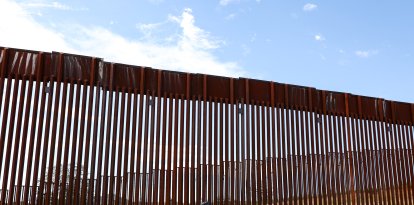
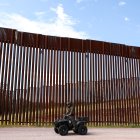
Border wall in Nogales, Arizona / Charly Triballeau

A federal judge in El Paso on Friday halted construction of the border wall throughout the Big Bend region, a blow to the Trump administration's plans to erect hundreds of miles of barriers along the border with Mexico.
Big Bend is a remote, rugged area in southwestern Texas, famous for its canyons and desert landscape, and home to one of the country's least-visited national parks. Because of the terrain's isolation, it has the fewest recorded illegal crossings of any stretch of the Texas-Mexico border, a fact that ultimately proved central to the legal challenge against the project.
Politics
Trump moves forward with border wall in Arizona despite objections from indigenous tribe
Williams Perdomo
Judge Kathleen Cardone ordered that the federal government "shall not build border barrier or related infrastructure, or engage in any construction or ground disturbing activities" in the area, according to a report by The New York Times. In her two-page ruling, she also blocked the government from continuing to use the exemptions from environmental laws it had granted itself to expedite the work, finding that the plaintiffs have a real chance of winning the case on its merits.
The lawsuit was filed by a group that includes a boat tour guide, a local historic church preservation group, and environmental organizations, challenging the plans of the U.S. Customs and Border Protection (CBP) to build barriers along a stretch of more than 500 miles, part of which is within Big Bend National Park itself.
CBP said in a statement that it is evaluating next steps in consultation with the Department of Justice, and emphasized that it remains confident in its "legal authorities to secure the border while preserving the unique landscape of the Big Bend region." Just days before the ruling, the agency had already announced that it would resume construction in some areas, though not within the park, and that it would revise its plans for that area, where excavators and heavy machinery had already begun operating in August.
Outside the courthouse, river guides and activists celebrated. "We dodged a bullet today," Billy Miller, a local guide and one of the plaintiffs, said in remarks quoted by the NYT. "It means that we can continue to introduce people to the wildness. Their plan was going to ruin the experience of anybody going out there."
Federal officials defended the project, arguing that although crossings in the area are currently low, they would increase as walls are erected along other sections of the border and migrants seek alternative routes. Despite this, opponents celebrated the ruling as a resounding victory.
LATEST