Spain: Socialist Pedro Sánchez suffers setback in parliament as his measures to (further) intervene in the housing market fail
Pedro Sánchez's left-wing government failed to secure the necessary votes to pass its decrees on rent and evictions after the Catalan party Junts withdrew its support.
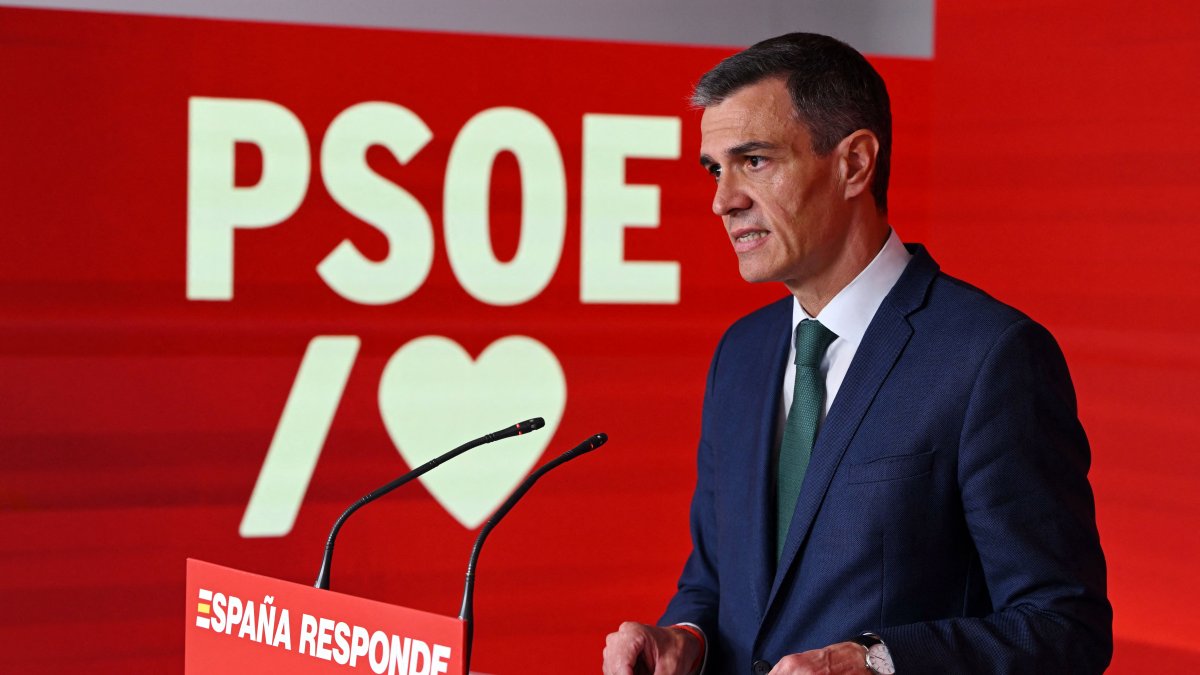
Pedro Sánchez during an appearance at the PSOE headquarters. June 2025

The Spanish government led by Socialist Pedro Sánchez suffered a parliamentary setback on Friday after the Congress of Deputies repealed his two decrees on housing, as they were rejected by a majority of the Chamber.
The first royal decree was defeated with 172 votes in favor and 178 against, while the second received 166 votes in favor and 184 against, with 350 votes cast in total. The defeat came after Junts, the Catalan pro-independence party with seven members in Congress, decided to vote against the measures.
For a government that does not have a majority of its own in parliament, the support of smaller parties is essential to passing its initiatives. In this case, Junts' decision left Sánchez without the votes needed to push the decrees through.
The measures proposed by the government included, among other provisions, the automatic renewal of rental contracts upon expiration and restrictions on the eviction of certain tenants.
They also included measures targeting investment firms that purchase properties.
Why is Junts important?
Junts is a Catalan pro-independence party led by Carles Puigdemont that currently has seven members in parliament. Although it is not part of Sánchez's coalition, its votes can be decisive in enabling the government to pass laws and decrees.
The government had negotiated the housing measures with Junts, but the party announced Thursday night that it would vote against both decrees unless they were withdrawn and new proposals were drafted.
Vote amid the housing crisis
The parliamentary standoff comes after weeks of protests over the cost of housing in Spain.
The situation took on particular significance following the eviction of Maricarmen Abascal, an 87-year-old woman who was forced to leave the apartment where she had lived in privileged circumstances for nearly seven decades.
Abascal, taking advantage of a law that originated during the dictatorship of General Francisco Franco, had been paying between 450 and 500 euros (about $507–$564) per month, an amount far lower than what is currently charged for similar housing in that area. In fact, it is similar to what is paid for a single room in much less desirable areas of Spain's capital.
These benefits were eliminated by various socialist governments.

Government defends its proposal
The Sánchez administration has defended the decrees as part of its response to the housing crisis.
During the parliamentary debate, Minister of Social Rights Pablo Bustinduy rejected the notion that the vote was simply a matter of negotiations between parties.
"Today's issue isn't about parliamentary arithmetic, nor is it about negotiations between political groups," he stated.
"Today's issue is a class conflict. It means defending an international oligarchy that is extracting rents from workers and turning your back on your people. Voting 'no' on these decrees is betraying your people to defend rent-seeking. They are not fully grasping the consequences of what they are doing."
General election in Spain?
The next general election in Spain is scheduled for 2027, and Sánchez has repeatedly ruled out the possibility of calling an early election. However, parliament's rejection of the housing measures comes amid growing speculation and rumors about a possible early election, although no official announcement has been made at this time.
The difficulty of accessing housing has emerged in recent years as one of the main social concerns in Spain, while protests and political debate surrounding this issue have intensified.
Alberto Ibáñez of left-wing party Sumar, one of the parties in the governing coalition, also defended the measures. Sumar Representative Tesh Sidi also criticized Junts during the debate: "What has to happen in Catalonia for them to vote 'yes'?"
Sergio Sayas, a member of the center-right People's Party (P.P.), called the government's housing measures a "scam" and questioned Pedro Sánchez's record.
"Your government's track record, Mr. Sánchez, on housing is devastating; all you've done is sell smoke," he stated. Sayas argued that the government's policies have made renting or buying a home "mission impossible" and also criticized the increasing difficulty in covering expenses such as groceries and gas. "They only remember the vulnerable during election season," he added.
"An expropriation of the right to property"
"Every regulation you have passed has been to the detriment of the interests of the Spanish people," he noted. Figaredo accused the government of raising taxes that affect housing construction and argued that, if the goal is truly to facilitate access to housing, social housing should have been built.
"You are stifling housing construction with taxes," he asserted. The congressman began his remarks by describing the administration as "the most dishonest government in the history of Spain and the one that has caused the most harm to the Spanish people."
LATEST