New 'public charge' rules take effect: What they entail and who may be affected
USCIS will be able to consider a broader range of public benefits received by certain immigrants applying for permanent residence. The measure takes effect on Sept. 18, although several categories—including those covered by the Cuban Adjustment Act—are exempt.
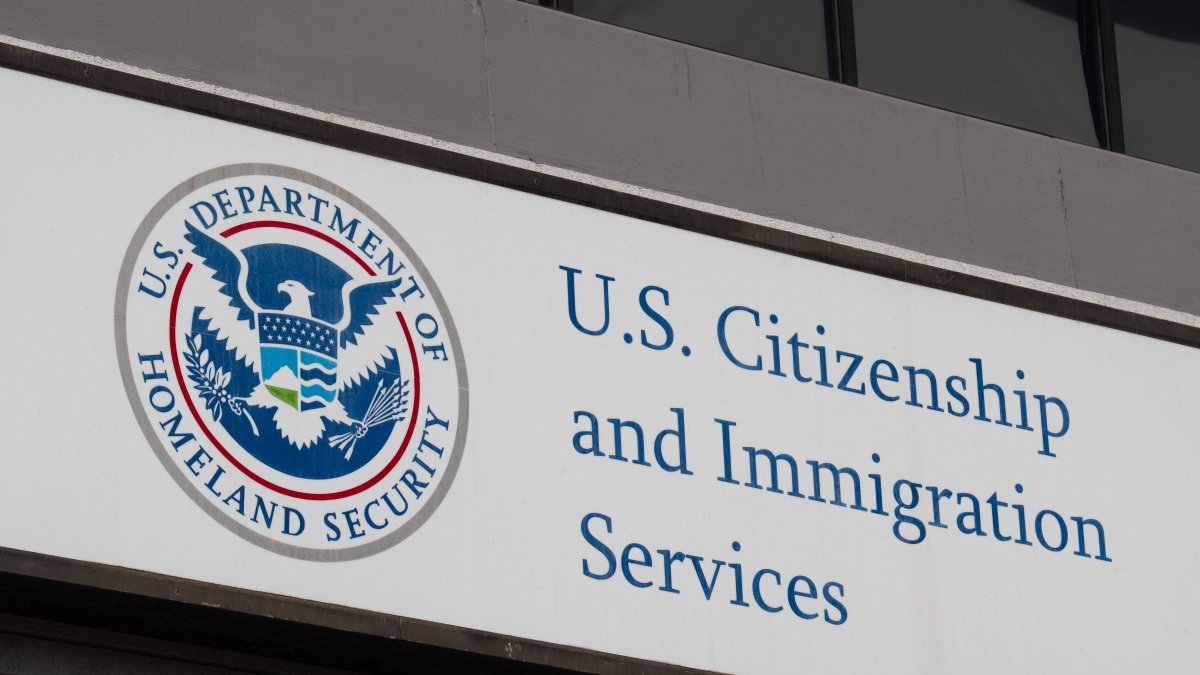
Regional office of U.S. Citizenship and Immigration Services (USCIS)

U.S. Citizenship and Immigration Services (USCIS) began enforcing new guidelines Friday to determine when a person applying for permanent residence may be considered inadmissible under the so-called "public charge" criterion.
The change expands the factors that immigration officers may consider when assessing whether an applicant might rely on certain government assistance in the future.
The new instructions accompany the entry into effect of a final rule from the Department of Homeland Security (DHS) that repeals the public charge regulation approved in 2022 during the Biden administration. The rule was published in July and aims to give immigration officials broader discretion when reviewing individual cases.
USCIS explained that the new guidelines apply to certain applications for adjustment of status filed or submitted electronically on or after Sept. 18, 2026.
What does it mean to be considered a "public charge"?
The Immigration and Nationality Act of the United States provides that certain foreign nationals may be declared inadmissible if the authorities determine that they are likely to become a public charge at some point.
The law does not provide a single definition of this concept, but it requires USCIS to consider at least five factors before making a decision:
- The applicant's age
- Their health
- Their family situation
- Their assets, resources and financial situation
- Their education and skills
Officials may also consider the existence of an Form I-864 or Affidavit of Support, through which another person commits to financially supporting the immigrant.
USCIS emphasizes that the decision must be made on a case-by-case basis, taking into account all of the circumstances of each applicant.

Politics
One Nation Under Fraud: Trump administration uncovers massive welfare, citizenship abuses
Just The News/Steven Richards
What changes as of Sept. 18?
One of the most significant changes affects the public benefits that may be considered during the evaluation.
For benefits received before Sept. 18, USCIS states that it will only consider certain cash public benefits intended to supplement income and government-funded long-term institutional care.
However, for means-tested benefits received on or after Sept. 18, officers may evaluate a broader range of benefits.
The guidance mentions, among others, cash assistance for income maintenance, housing assistance, food stamps and certain forms of financial aid for college.
This does not mean that receiving public assistance automatically results in denial of residency. USCIS must analyze the individual's total circumstances before determining whether there is a risk that they will become a public charge.
Who does this affect?
Among the categories subject to this evaluation are certain relatives of U.S. citizens or permanent residents, employer-sponsored workers, investors, some religious workers and immigrants selected through the diversity visa program.
However, there are important exceptions.
Cubans under the Cuban Adjustment Act are exempt
The USCIS guidance expressly states that applicants seeking to adjust their status under the Cuban Adjustment Act are not subject to the public charge ground of inadmissibility.
Also included among the exempt categories are refugees and asylees, certain Cubans and Haitians covered by other immigration provisions, TPS beneficiaries, victims of human trafficking with T visas, victims of certain crimes with U visas, special immigrant youth, and certain self-petitioners protected under the Violence Against Women Act, among others.
Therefore, the change taking effect this Friday does not alter the status of Cubans who obtain residency through the Cuban Adjustment Act with regard to the public charge ground.
USCIS may require a bond
The new policy also provides for the possibility that some immigrants found inadmissible solely on public charge grounds may submit a financial guarantee.
If an officer concludes that an applicant is likely to become a public charge, USCIS may invite the applicant to submit a public charge bond.
The purpose of this bond is to ensure that the immigrant does not subsequently rely on certain forms of government assistance.
To determine the amount of the bond, USCIS may assess how much public assistance that person could receive over the next five years.
The bond is filed using Form I-945, but it cannot be filed in advance. The immigrant may only file it if USCIS formally requests it through a Notice of Intent to Deny.
Reversal of the 2022 policy
The new rule restores greater discretion to evaluate "all relevant facts" in a case and determine whether there is a risk of future dependence on government assistance.
The new USCIS instructions replace previous guidance on this matter and apply to Form I-485 applications for adjustment of status submitted or filed electronically on or after Sept. 18, 2026.
For those subject to this provision, the change means that economic circumstances, available resources, and the use of certain public benefits will carry greater weight in the immigration analysis. For Cuban applicants who obtain residency through the Cuban Adjustment Act, however, USCIS explicitly maintains the exemption from the public charge determination.
LATEST