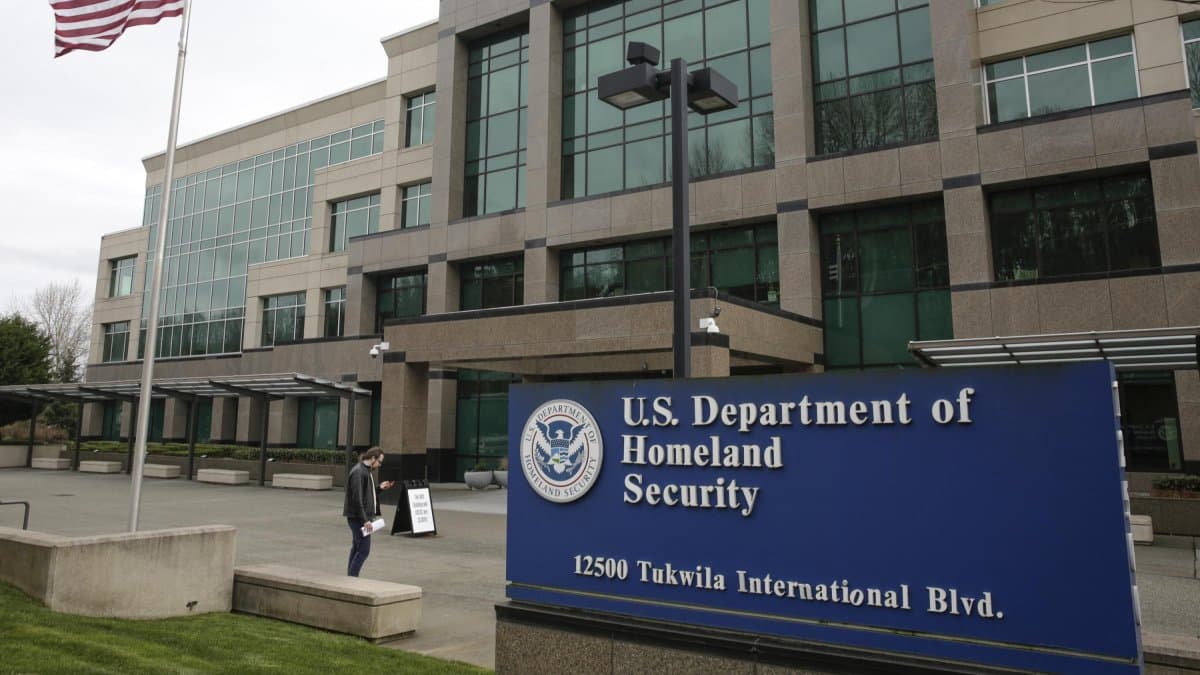
Official documents suggest that Department of Justice may have withheld classified material related to the Jeffrey Epstein case
An analysis of the released files reveals the existence of national security documents and the omission of thousands of pages of financial records and emails that contradict the government's statements.

Photo of Jeffrey Epstein on a smartphone - THIBAUT DURAND / HANS LUCAS / HANS LUCAS VIA AFP.

Despite Attorney General Todd Blanche's repeated assurances that the files released regarding Jeffrey Epstein did not contain classified information regarding national security, internal documentary evidence from the Department of Justice (DOJ) indicates otherwise.
A review of the case files themselves suggests the existence of classified material collected by the government that has not been made transparent to the public.
According to an investigation by CBS News, the records show that the Office of the Deputy Attorney General received classified material related to the Epstein case in March 2025, including two compact discs and a memo drafted by the FBI's National Security Classification Operations Unit.
Although the DOJ claimed to have released more than 3 million pages after removing duplicates and irrelevant material, the presence of these classified documents contradicts the official account that denied the existence of files withheld for national defense reasons.
An analysis of the numerical coding system known as Bates numbers—used by the Department of Justice to organize and assign page numbers to large volumes of court documents—revealed gaps in the page sequence. These inconsistencies confirm the removal of thousands of pages between the initial compilation phase and the final publication of the records.
Notable among the omitted material are pages of Epstein's financial records and bank statements from institutions such as JPMorgan and Deutsche Bank, which were originally collected for criminal proceedings.
Legal experts have pointed out that the provisions of the Epstein Archives Transparency Act did not authorize the arbitrary removal of financial records, raising serious questions about the criteria applied by prosecutors.
Deletion of emails and calls for transparency
Irregularities in page numbering also reveal gaps in email chains. In one of the preliminary review sequences, discrepancies were detected totaling up to 1.2 million missing pages compared to the final count. These gaps correspond to messages exchanged between Epstein, his assistants, business associates, and alleged victims.
Although the Department of Justice has attributed part of these omissions to a process of removing duplicate emails (de-duping), the persistence of inconsistencies and errors previously admitted by the agency—such as the temporary removal of photographs of public figures—have reignited calls for an audit.
Currently, ongoing lawsuits are seeking the appointment of a special master (special master) to review the entire case file and determine the scope of the material withheld by the federal government.
🛠 Do you think there is an error in this article?
Recommendations



LATEST