Republicans Abandoned Libertarian Principles… and Lost the Elections
Commentators will blame candidate quality, redistricting, or the president’s personality.
Election Coverage
Published
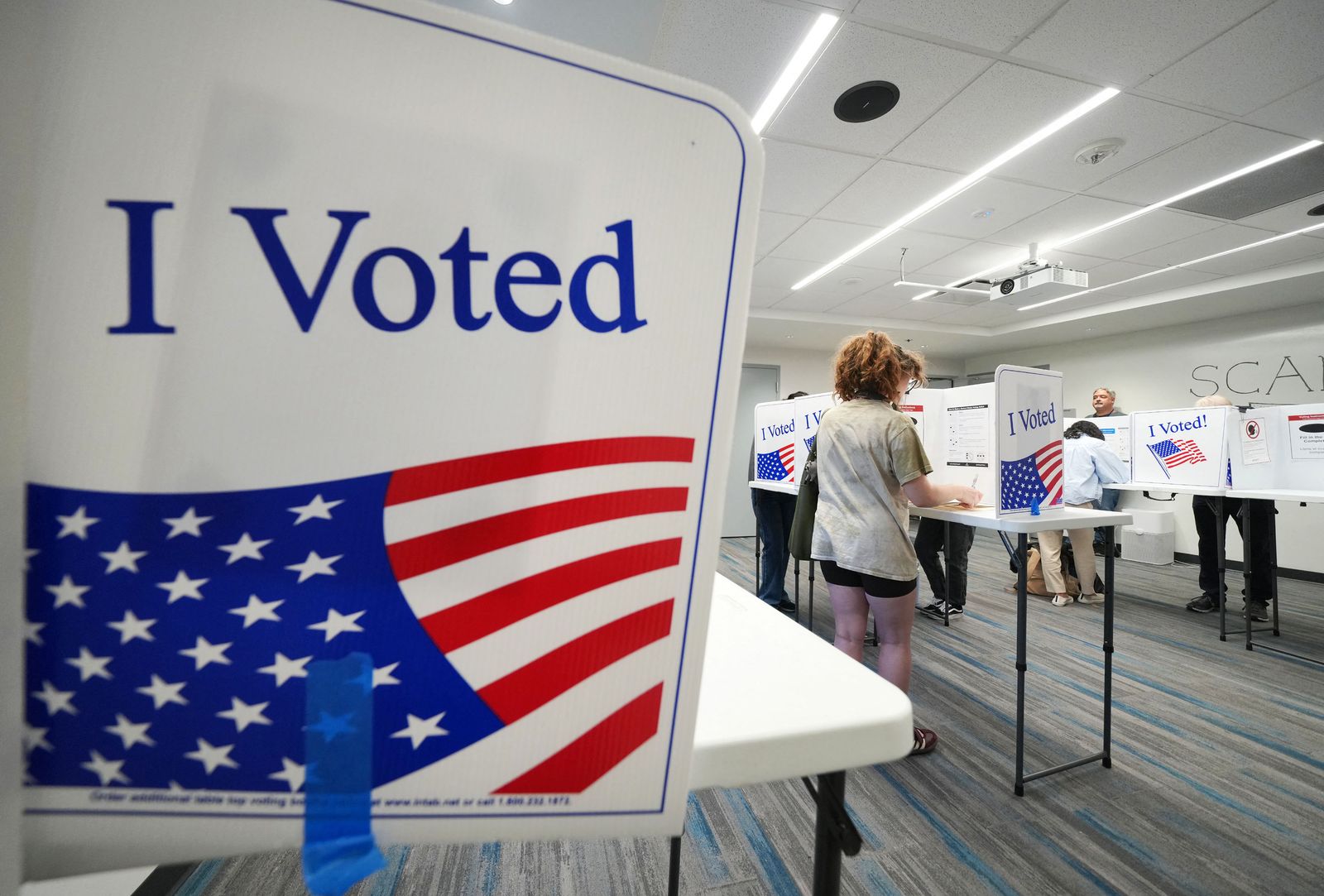
Tuesday’s midterm elections were a rout. Democrats picked up seven Senate seats, including Texas, Kansas, South Carolina, Iowa, and Ohio, and flipped more than forty House districts, some of which Donald Trump had carried by double digits only two years ago.
Commentators will blame candidate quality, redistricting, or the president’s personality. The real lesson is simpler, and the Republican establishment will not like it. A party that claims to defend limited government but chooses to tax imports, run two-trillion-dollar deficits, and fund expensive wars ends up judged on what big government delivers. This week voters judged it, and they didn’t like what they got.
A party that trades liberalization for government intervention and adopts part of the left’s populist agenda, including blaming businesses for price increases or promising money paid with more debt, immediately sees how voters shift to the radical left that promise 100% interventionism. It happened in Europe, and it is happening in America.
The exit polls make the point clearly. Nearly nine in ten voters said the cost of living was a crucial or major factor in their decision, and a majority believed the administration’s policies, including the Iran war and tariffs, had made their economic situation worse. Seven in ten said they wanted Congress to place more checks and balances on the president. Voters were asking for restraint on power, which used to be the Republican message.
The left is never blamed for their inflationism, but conservatives need to prove that they act on affordability the right way. Rejecting the libertarian and freedom values for an alleged electoral strategy backfires.
Start with the fiscal record. The federal deficit reached $2.0 trillion in fiscal year 2026, a reduction driven by tariff revenues, not budget control. Gross national debt crossed $40 trillion in August and now stands above $40.5 trillion, and debt held by the public exceeds annual GDP. With unified control of Washington, Republicans could have cut spending, closed programs, and reformed entitlements. Instead, they cut taxes without cutting spending more decisively. Granted that the biggest part of the spending problem comes from mandatory items, but the responsibility for discretionary spending, deregulation, and liberalization is entirely in the hands of the White House, Congress, and the Senate. Austrian economists have long warned that the true burden of government is what it spends, because whatever the state consumes must be paid for through taxes, borrowing, or inflation.
Tariffs gave the inflation narrative to the left. The blame game shifted from the destruction of purchasing power caused by the currency to individual prices, instead of reminding everyone that inflation is a monetary phenomenon resulting from the insanity implemented in 2020-2021. An administration that openly toyed with the idea of a dollar debasement and weakening the currency as a trade tool created the foundation of the boomerang effect of affordability in the elections. The same arguments that made Biden fall demolished Republicans in the midterms.

Just the News
Republican turnout slump in 2026 midterms opened door to Democrat Senate wins
Steven Richards
Then there is inflation. Consumer prices rose 3.7 percent in the twelve months to September, with energy up 20.4 percent and gasoline up 34.2 percent. Producer prices for final demand rose 6.3 percent. Money supply growth was never discussed. Sound money was never an option. Thus, the narrative was given to socialists in a silver plate.
War disrupts supply, but war is also the most significant government program of all, and someone always pays for it. An administration that rose to power on the promise of peace and non-intervention entered a war that it did not explain, with conflicting messages of deals, threats, and abandonment.
Many positive things have been done. Eliminating US aid that fuelled political radicalism all over the world, reducing federal employment, deregulating energy, healthcare, and housing, banning central bank digital currencies, reducing taxes, and attracting manufacturing back. Such progress was not enough because this is what the daily job entails, not something to cheer. No one rewards a government for doing what it should. Voters penalize governments for not doing what they said they would do.
Ludwig von Mises explained a century ago that interventionism creates the very problems it then claims to solve and that each failed intervention invites the next. The response to price pressure from conflict followed that pattern exactly. Washington offered checks, subsidies, and promises of more control when it should have deregulated, cut spending, and stepped back. Considering the alternatives, voters saw socialism as a logical step only because it promised even more ludicrous stuff.
People do not understand why socialism attracts citizens despite its obvious failure everywhere it is implemented. The reason is the same as why religious sects succeed despite outlandish beliefs. Precisely because the promises and beliefs are outlandish is because they succeed. Republicans should read Gramsci and Foucault and understand that whitewashing interventionism only makes the socialist nightmare more plausible.
Republicans won in 2024 by promising lower prices, smaller government, and an end to the previous administration’s fiscal recklessness and warmongering. Most of the voters who backed them were never asking for directed industrial policy, managed trade, currency debasement, or adventures abroad. They wanted to keep more of what they earn, pay less for energy and food, and be left alone. The party gave them persistent inflation and more executive power, and many of those voters stayed home or switched sides.
This is the biggest lesson for conservative parties globally. When you adopt 50% of the left’s policies, libertarian and nationalist voters abandon them, and the rest switch to full-blown interventionism.
Instead of reminding citizens that the best thing that government can do is to stop interfering, Republicans gave the extreme left the arguments to defend French-style interventionism, regardless of the evident consequences. As in France, part of the blame lies in conservatives who abandon the ideas of small government and non-intervention.
Democrats would be wrong to read this result as a mandate for more spending, more regulation, and more money printing. The same voters who punished Republicans over the cost of living will punish any party that makes life more expensive, and expanding the state is the surest way to do that. Republicans may have a double opportunity: reclaim the libertarian and freedom values while radical left governors make things worse. In Europe, the best way to get rid of the radical left had to be allowing them to rule in big cities and some national governments. Unfortunately, the economic outcome is negative for all, and the radical left does not abandon its policies just because they fail. However, conservatives and libertarians do not have the luxury of having a sectarian voter base that will accept anything as long as “their side” wins. They need to prove results to their voters. This can only be achieved by returning to the principles of sound money, fiscal discipline, liberalization, deregulation, and low taxes.
Many say that the best thing that can happen to America is to try socialism and see the failure, returning to mainstream conservatism. Europe tells you a different story. California does too. Socialists abandon the left-wing wreck but vote for socialists in the state they move to.
When socialism fails, as it always does, it resorts to repression, propaganda, and even more intervention. Republicans or any alternative should not hope to prove they are a lesser evil. They should prove that they are the only option to deliver more freedom. Americans want more freedom, not smarter interventionism.
The cultural battle is also essential. The ideas of freedom do not rise when the entire mainstream rejects them. The average voter believes that they are impossible utopian messages. Abandoning the cultural battle is losing to the Gramscian propaganda.
The lesson from Tuesday is not that you must be more socialist to win. It is that if you become mildly socialist, you are validating full-blown interventionism, and you will never win.
The lesson for Republicans should be clear. Never believe that your voters will accept the second worst. The way back to a majority runs only through the principles the party abandoned (some may say decades ago), and that means sound money, free trade, balanced budgets, real deregulation, and restraint abroad. Those ideas aren’t relics of a purist past. They are the only reliable way to deliver what voters asked for on Tuesday, which is a government that costs less and an economy that leaves families with more.
Reproducido con autorización del autor.
🛠 Do you think there is an error in this article?
Recommendations





LATEST