New Mexico joins Trump's school choice program despite criticism from teachers’ union
The decision was welcomed by Republicans in the state, including State Representative Rebecca Dow, who said the governor "did the right thing."


The Democratic governor of New Mexico, Michelle Lujan Grisham, announced that her state will join the Education Freedom Tax Credit (FSTC), the federal tax credit created by the Tax Cuts for Working Families Act that will take effect in 2027.
In this way, New Mexico became the 32nd state to join and the sixth Democratic governor to do so. The other Democratic states that have joined are Colorado, Virginia (which joined under Glenn Youngkin as governor), Kansas, North Carolina and New York.
The move marks a reversal for the Democratic governor, whose spokesperson had indicated in 2025 that she would not participate in the program.
"At a time of diminishing federal investment in education, New Mexico must take advantage of every dollar we can to bolster public education and continue our state’s upward trajectory in literacy and student achievement," said Lujan Grisham in a statement.
"By participating in the FSTC, we will give New Mexico taxpayers the chance to keep some of their federal income taxes in New Mexico to support New Mexico students," she added.

The decision was welcomed by state Republicans, including State Representative Rebecca Dow, who stated that the governor "did the right thing." State Senator Gabriel Ramos, the top Republican on the Senate Education Committee, considered the measure "common sense."
On the other hand, the teachers' unions AFT New Mexico and NEA New Mexico described the decision as "nothing short of a betrayal" to public school students.
The decision comes amid a push by former Governor Youngkin to promote the program. Since August, his organization, Empowering America's Parents, has invested several million dollars in an ad campaign across various states to raise awareness of the scholarships and pressure governors who had not yet joined the program.
In its fourth phase, the campaign targeted Hispanic families in Nevada, Arizona, Wisconsin and New Mexico, particularly women between the ages of 25 and 45. Lujan Grisham's announcement came just five days after VOZ exclusively revealed the details of that Spanish-language campaign.
How will Trump's school choice program work?
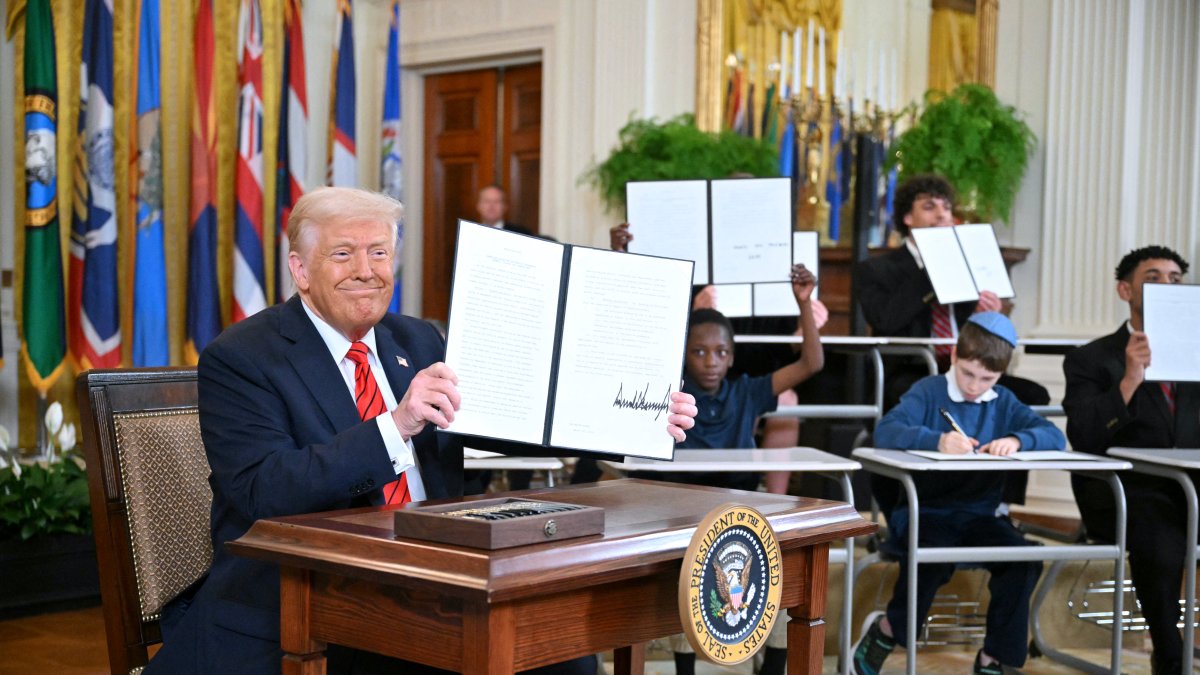
Specifically, the FSTC is a program that seeks to expand educational options for K-12 students through scholarships funded by private donations. Its goal is to use the tax system to channel private funds toward organizations that award educational scholarships and, in this way, expand the options available to families.
In practice, a taxpayer can donate up to $1,700 per year ($3,400 for married couples filing jointly) to a nonprofit organization dedicated to awarding educational scholarships, known as a Scholarship Granting Organization (SGO). For a donation, you may receive a federal tax credit equal to the amount contributed, subject to the conditions established by law.
The scholarships cover eligible educational expenses, including tutoring, online classes, services for students with disabilities, transportation, technology and private school tuition. Public school students can also receive scholarships for any of these eligible expenses. The complete list is available on the AFC Scholarship Fund.
According to the legislation, any federal taxpayer can donate to an IRS-listed SGO, regardless of which state they live in, and claim the credit. The condition is that the SGO must be located in a state that has decided to participate and has submitted its list of eligible organizations to the IRS.
Children, on the other hand, do depend on their state. The grants can only fund students who reside in a participating state. If the state does not join the program, its students are left out, even though local taxpayers may donate to organizations in other states.
You can find more information about the program here.
🛠 Do you think there is an error in this article?
Recommendations






LATEST