Trump eases regulations on heavy-duty transportation: The administration relaxes fuel efficiency standards for commercial trucks
The decision represents another step in the Republican administration's broader campaign to reduce federal regulations affecting the automotive and trucking industries.
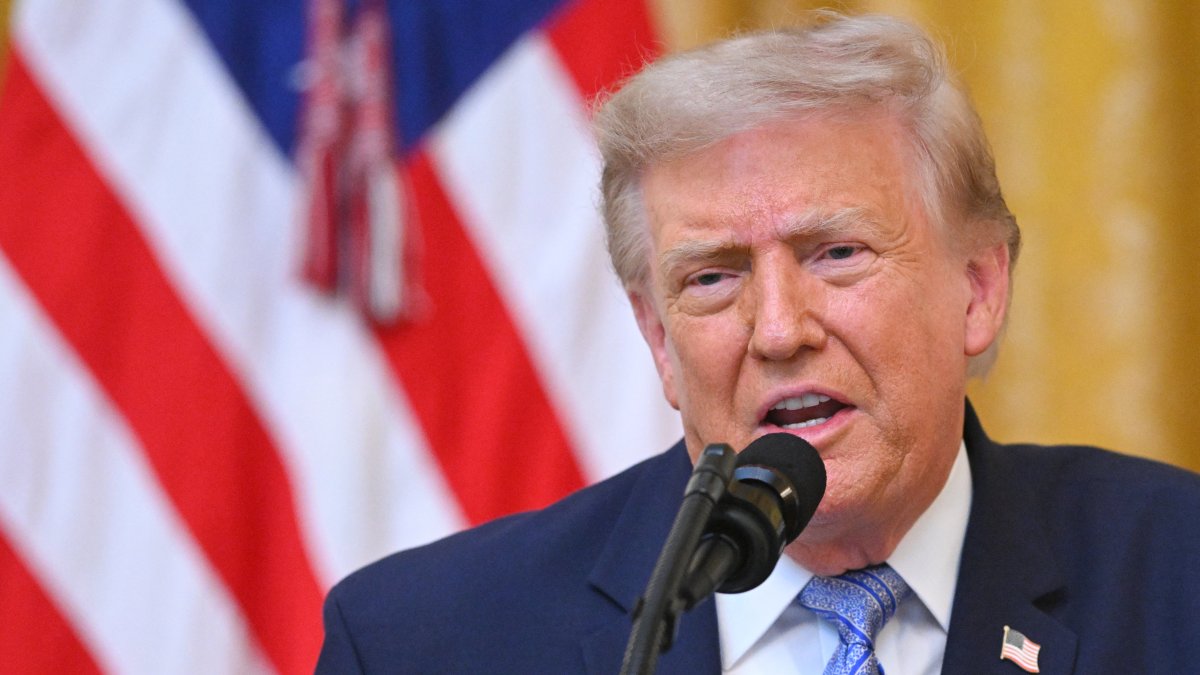
Donald Trump at the White House / Saul Loeb
President Donald Trump's administration announced on Friday a change in federal policy that would relax fuel efficiency requirements for medium- and heavy-duty commercial trucks, arguing that the current regulations grant the government powers it does not legally possess. The decision represents another step in the Republican administration's broader campaign to roll back federal regulations affecting the automotive and trucking industries. The government has pushed for changes related to fuel economy, emissions, climate policies, and pollution requirements.
The Department of Transportation specifically challenged the standards established during former Democratic President Barack Obama's administration, which covered both complete vehicles and their engines. Under the new interpretation, the Trump administration maintains that the federal government lacks authority to impose efficiency requirements directly on truck engines.
While this decision does not immediately eliminate the engine standards adopted during the Obama administration, the agency said in a press release that it does not intend to enforce those requirements while it works on a formal rule establishing the new interpretation. "American innovators—not Big Government—know how best to design vehicle engines. The Trump Administration is stepping aside so that manufacturers can decide how they want to meet fuel efficiency requirements," Jonathan Morrison, who heads the National Highway Traffic Safety Administration (NHTSA), said.

While the NHTSA also noted that the Energy Independence and Security Act (EISA) grants the agency authority to set fuel efficiency standards for commercial vehicles, the agency argued that the law does not specifically authorize it to impose those requirements on individual components, including engines, transmissions, or tires. The NHTSA contrasted the EISA with the Clean Air Act, which explicitly grants the Environmental Protection Agency (EPA) authority to regulate vehicle engine emissions.
The decision overturns the Chevron doctrine, which for decades allowed courts to defer to federal agencies when interpreting ambiguous laws.
LATEST