US, Canada fail to reach trade pact to avert Trump tariffs
The new tariffs affect goods valued at approximately $20 billion, equivalent to 5.5% of Canadian exports to the United States. The affected products range from hockey sticks to cement.
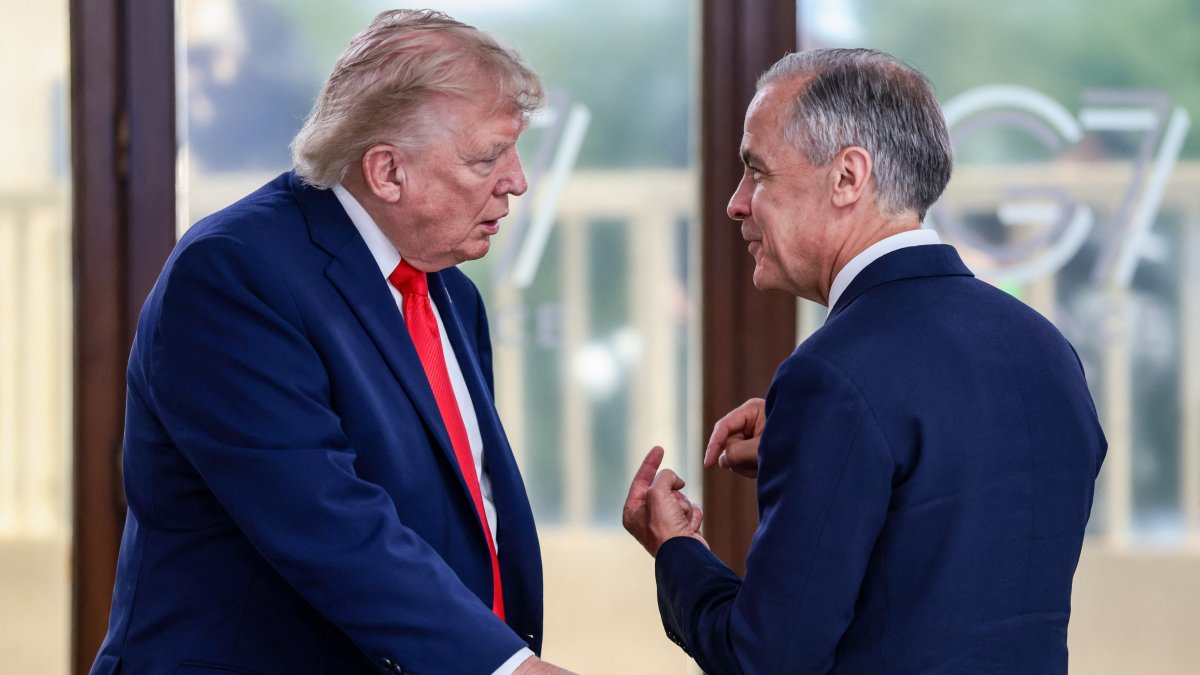
Donald Trump and Mark Carney at the G7 summit / EVELYN HOCKSTEIN

High U.S. tariffs on certain Canadian products took effect this Saturday, following days of negotiations that lasted until the last minute and failed to reach an agreement.
Canadian Prime Minister Mark Carney stated that Canada will respond with "dollar-for-dollar" tariffs to protect its workers and businesses, after officials from both countries confirmed on Friday that they had failed to reach a deal.
The new tariffs affect goods valued at about $20 billion, equivalent to 5.5% of Canadian exports to the United States. The affected products range from hockey sticks to cement.
U.S. Trade Representative Jamieson Greer stated on Friday that "Canada declined to finalize the trade deal under the terms agreed earlier this week."
Greer noted that the Trump administration had offered tariff reductions for sectors such as steel and aluminum in exchange for concessions from Canada. According to the official, as quoted by AFP, Washington had also put "significant tariff reductions on steel, aluminum, autos and lumber" on the table.
A senior U.S. official noted that, for the time being, no new meetings are scheduled between the two governments. The announcement came after President Donald Trump stated that the United States "should be able to reach an agreement with Canada" and highlighted his good relationship with Carney.
However, after several hours of talks on Friday, Canada's chief negotiator, Dominic LeBlanc, said that the parties still "have more work to do." LeBlanc and Greer also held a meeting lasting approximately three hours on Thursday.
Greer maintained that Canada was continuing its "long-standing retaliation" against the United States, which includes bans on certain U.S. products and services.
The failure of the negotiations
The Canadian prime minister acknowledged that Washington and Ottawa had made "significant progress" in recent weeks, but felt that this had not been sufficient to meet Canada's objectives.
The entry into force of the new tariffs once again puts U.S.-Canada trade negotiations on hold, with no new date set for resuming talks.
LATEST