Arizona, California and Nevada accept two years of Colorado River water cuts after months of negotiations with the federal government
The upper basin states—Colorado, Utah, Wyoming, and New Mexico—are not currently facing any mandatory cuts, a situation that has caused friction with their southern neighbors.
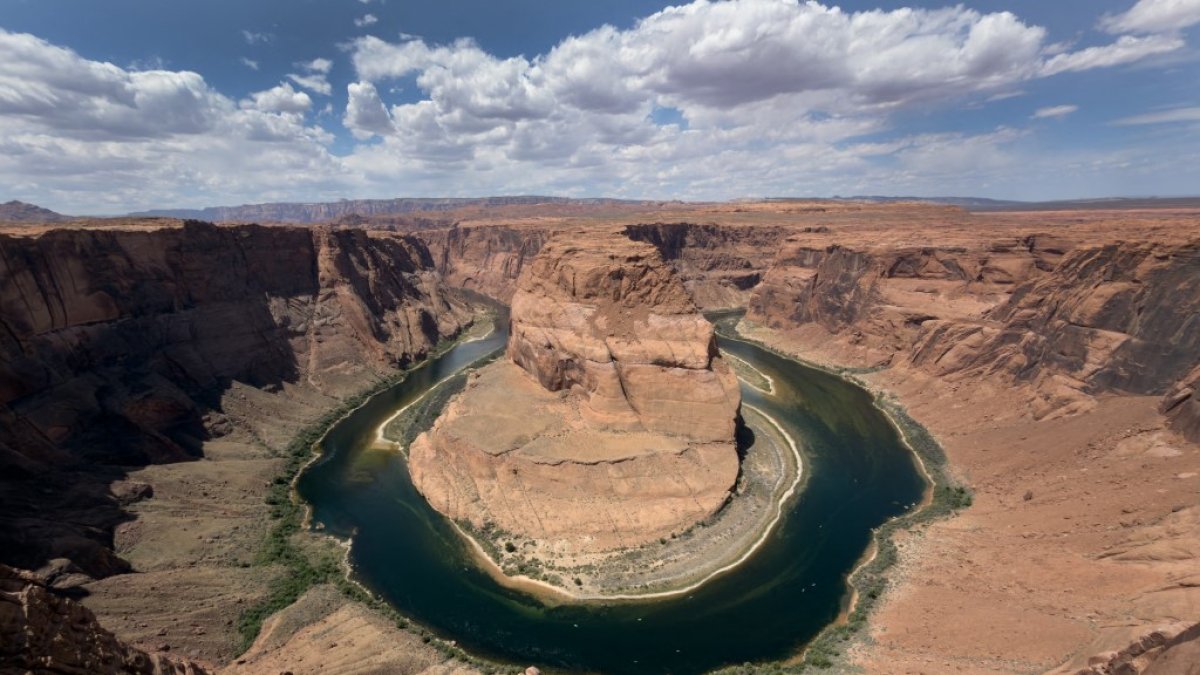
Horseshoe Bend on the Colorado River, near Page, Arizona

The federal government formalized drastic cuts to the Colorado River water supply for Arizona, California, and Nevada on Friday to stabilize a system on the verge of collapse after years of drought and overexploitation. The measure, announced by the Bureau of Reclamation, ends months of uncertainty about how water will be managed as current rules expire.
Under the plan, the three states in the lower river basin will collectively reduce their consumption by 1.25 million acre-feet per year—or about 1,540 million cubic meters—with the possibility of even greater cuts depending on conditions. Arizona will be the hardest-hit state, with a reduction of approximately one-third of its allocation, while Mexico, under a bilateral treaty, will cut its withdrawal by 250,000 acre-feet, or 310 million cubic meters. The upper basin states—Colorado, Utah, Wyoming, and New Mexico—are not currently facing any mandatory cuts, which has caused friction with their southern neighbors.
Today, @Interior finalized plans for 2027-2028 Colorado River operations.
— Secretary Doug Burgum (@SecretaryBurgum) August 21, 2026
Grateful for the Seven Basin States, thirty Basin Tribes, Mexico and many other basin stakeholders who provided the feedback and voluntary arrangements necessary to develop the Operating Guidelines.
"We've been in this 26-year prolonged drought period. We continue to see a prolonged drought in our future," Andrea Travnicek said, assistant secretary for Water and Science at the Department of the Interior, which oversees the Bureau of Reclamation. She emphasized that continuing to work collaboratively across the entire basin will be key in the coming years.
The agreement formalizes cuts that the states had already voluntarily offered to break the deadlock after months of stalled negotiations. Tom Buschatzke, Arizona's negotiator, welcomed the certainty the plan provides for 2027 and 2028, though he stressed that talks must continue toward a longer-term solution. Along those lines, JB Hamby, California's chief negotiator, described the plan as "a bridge, not a permanent solution" and called on the upper basin states to join in with their own "decisive actions."
Arizona's governor, Katie Hobbs, who is running for re-election, adopted a more combative tone and warned that her state is prepared to take the dispute to court.
"As long as I'm governor, Arizona will continue defending our right to our water by every legal means necessary and stand up to Upper Basin states who refuse to cut a drop of water in protection of the River," she wrote on social media.

On the other side of the dispute, the governor of Colorado, Jared Polis, expressed optimism about the chances of reaching a long-term agreement among the seven states involved in the coming months. Becky Mitchell, Colorado's negotiator, emphasized her state's commitment to continuing to build a joint solution. Officials from the upper basin have argued that their communities cannot afford fixed cuts, as their water supply depends largely on winter snowpack, which reached historic lows this year.
The crisis directly affects a river that supplies 40 million people, 5.5 million acres of farmland, and nearly two dozen Native American tribes, as well as two Mexican states. The country's largest reservoirs, Lakes Powell and Mead, both fed by the Colorado River, have fallen to historically low levels in recent weeks, with a combined storage capacity not seen in nearly seven decades.
Jennifer Pitt, director of the Colorado River Program at the National Audubon Society, warned of the system's fragility in the immediate future.
"If the next couple of years are dry, the risk to Colorado River water users is extraordinary. There is no buffer to rely on anymore," she said.
Buschatzke insisted that the real challenge now is to build "a longer-term, equitable, basin-wide outcome that includes shared sacrifices" among the seven states that depend on the river.
LATEST