Treasury Department eases sanctions on telecommunications operations in Venezuela
Despite the easing of sanctions, General License 61 establishes rigorous control frameworks to safeguard the legal interests of Western companies.
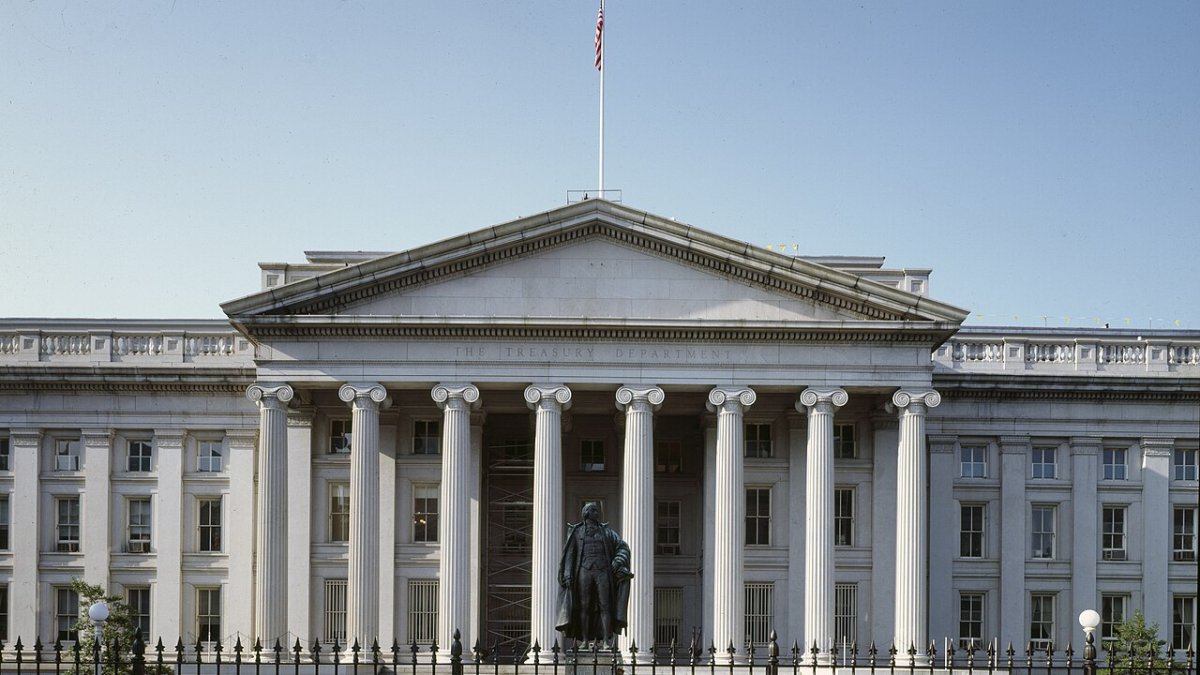
The Treasury Department building in Washington, D.C.

The U.S. Department of the Treasury, through the Office of Foreign Assets Control (OFAC), issued on Friday General License No. 61, a measure that eases the sanctions regime against Venezuela to authorize ordinary and essential transactions related to the telecommunications sector.
The provision, signed by OFAC Director Bradley T. Smith, allows entities and individuals under U.S. jurisdiction to supply goods, technology, software and services intended for the installation, repair, maintenance, upgrading and support of infrastructure in the Caribbean nation.
The scope covers data services, telephony, internet connectivity, radio, television, satellite transmissions and the laying of submarine cables.
The measure also authorizes key logistical arrangements, such as payment processing, air freight, capacity lease agreements, interconnection and roaming agreements, as well as the technical support necessary to ensure operational functionality.
General License No. 61
- Scope of service: Covers internet connectivity, telephony, data, television, radio, submarine cables and satellite communications.
- Permitted operations: Maintenance, installation, software updates, freight charges, roaming agreements and infrastructure leases.
- Local entities included: Allows incidental transactions with government entities such as CONATEL and CANTV under Anglo-Saxon contractual regulations.
- Strategic prohibitions: All transactions involving companies or citizens of China, Russia, Iran, Cuba and North Korea are excluded from the license.
- Financial restrictions: Prohibits payments in gold, cryptocurrencies such as the Petro or the formation of new joint ventures.
- Reporting mechanism: Requires initial notifications within 10 days and follow-up reports every 90 days to the State Department.
Judicial safeguards and exclusion of rival powers
Despite the easing of restrictions, General License 61 establishes rigorous control frameworks to safeguard the legal interests of Western companies.
Contracts entered into with Venezuelan state entities—including the National Telecommunications Commission (CONATEL) and the National Telephone Company of Venezuela (CANTV)—must be subject to the laws of a U.S. state, while legal disputes may only be resolved in courts in the United States, the United Kingdom, France or Singapore.
Furthermore, the document explicitly prohibits any transaction involving individuals or companies incorporated under the laws of the Russian Federation, the Islamic Republic of Iran, North Korea, Cuba or the People's Republic of China. Payments in digital currencies issued by the Venezuelan regime, debt swaps and the creation of new joint ventures for the development of the sector are also prohibited.
To maintain operational transparency, exporting companies must submit detailed reports to the State Department every 90 days, specifying the parties involved, the value of the transactions, and any taxes or fees paid within Venezuelan territory.

Society
US sends first group of deportees to Liberia: Among them were Venezuelans and Cubans
Diane Hernández


World
The Venezuelan government confiscates oil assets from an influential family and transfers them to a US company
Andrés Ignacio Henríquez
LATEST