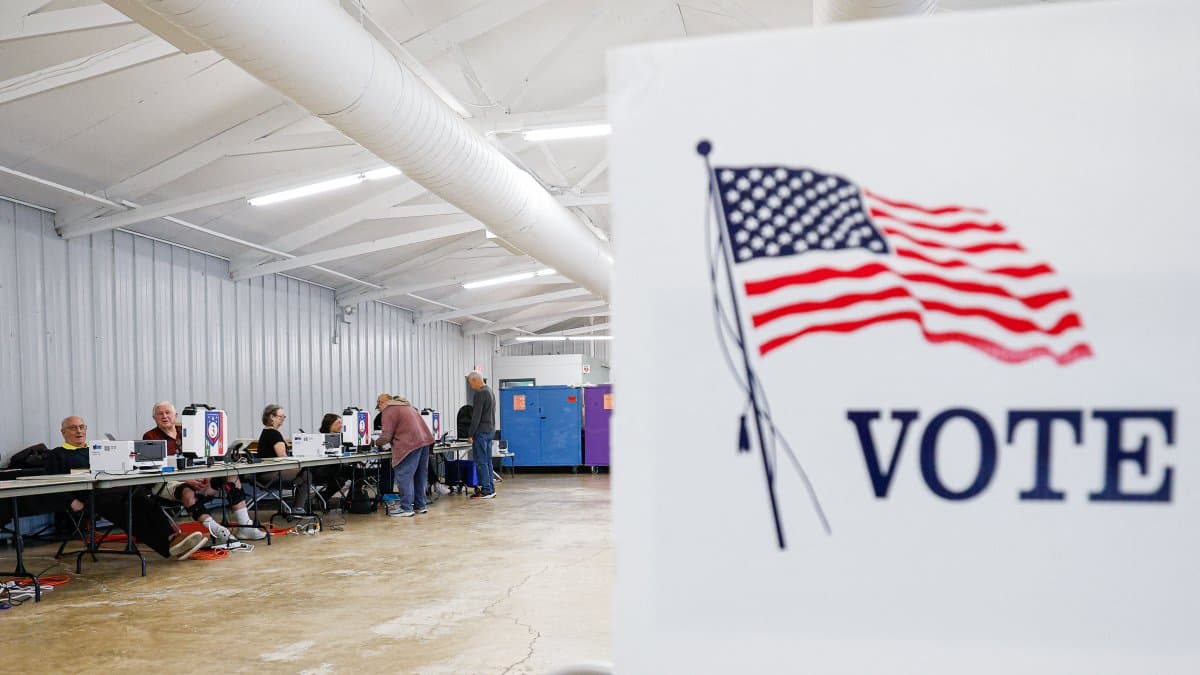
Mississippi makes illegal immigration a state crime
The bill also establishes procedures to remove undocumented individuals from the state who commit crimes. If enacted, the law would take effect on July 1.


The Mississippi Legislature approved a bill making illegal immigration a state crime, in a move that strengthens immigration policies at the local level in the country.
The state Senate approved SB2114 last week and sent it to Republican Gov. Tate Reeves, who had an April 13 deadline to sign or veto it.
According to the official summary, the legislation would "prohibit the illegal entry into or illegal presence in this state of a person who is an alien." It also provides for enforcement mechanisms, granting legal immunity to law enforcement officers who enforce the law.

Economic impact of illegal immigration
The bill also establishes procedures to remove undocumented individuals who commit crimes from the state. If enacted, the law would take effect on July 1.
In the context of the debate, figures on the economic impact of illegal immigration have been cited. According to data cited by California state Senate candidate Mike Netter, a report by the Mississippi state auditor estimates that illegal immigrants generate an annual cost of close to $100 million, distributed as $25 million in education, $77 million in health care and $1.7 million in incarceration costs.
🚨BREAKING: Mississippi just passed SB 2114 – making illegal immigration a state crime.
The bill criminalizes illegal entry into Mississippi under state law: aliens entering or attempting to enter directly from a foreign nation anywhere other than a lawful port of entry face… pic.twitter.com/XzPdSW09x3
Mississippi is not the only state to move forward with this type of legislation. In 2024, Iowa Governor Kim Reynolds enacted a similar law. A year earlier, Texas also adopted a regulation along the same lines, which was judicially challenged, although the U.S. Supreme Court allowed its application while legal proceedings continue.
Other states such as Louisiana and Oklahoma have also passed similar legislation, reflecting a growing trend in different regions of the country.
🛠 Do you think there is an error in this article?
Recommendations






LATEST