Pentagon redesigns media access after ruling overturned elements of its security policy
As part of the new policy, the historic workspace used by journalists inside the main building will be closed. In its place, a new area will be set up in an external annex within the complex.

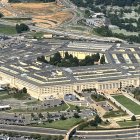
Aerial view of the Pentagon in Washington, DC.

The Department of Defense announced Monday an immediate overhaul of its press access rules after a federal judge invalidated key provisions of its policy adopted in 2025 in a case brought by The New York Times.
While the Pentagon confirmed that it will abide by the court order, it also made clear that it disagrees with the ruling and has already begun the appeal process, stressing that the changes are implemented without accepting the court's judgment.
Security and judicial compliance
The Department explained that the judicial decision eliminated mechanisms that allowed to evaluate security risks among accredited journalists, which forced them to rethink the access scheme. In that context, the Pentagon maintains that the new measures seek to balance legal compliance with the protection of a critical facility.
The ruling, issued by Judge Paul Friedman, also ordered the reinstatement of credentials to journalists affected by the previous policy, considering the excessive leeway given to the Department to restrict access.
End of unaccompanied access
As part of the new policy, the Pentagon will close the historic workspace used by journalists inside the main building. In its place, a new area will be set up in an off-site annex within the complex.
Also, all journalist access to the building will require an official escort. Reporters will continue to be able to attend press conferences and programmed activities but will no longer be able to move freely within the facilities.
The measures were communicated by Chief Spokesman Sean Parnell as part of an internal directive to the Department's leadership.
Rule adjustments and institutional messaging
In parallel, the Department reiterated its commitment to transparency and working with accredited journalists but insisted that the safety of personnel and operations remains a central priority, so "the revised policy reflects both commitments."
LATEST