Trump addresses the world's most powerful oil executives, saying he will meet with Maria Corina Machado and that she could be part of the transition in Venezuela
Machado's visit would have also generated fractures in the Venezuelan regime, given that Delcy Rodriguez, Nicolas Maduro's replacement, also requested to meet with Trump, something that did not go down well with the most anti-American faction, represented by Diosdado Cabello and Padrino Lopez.
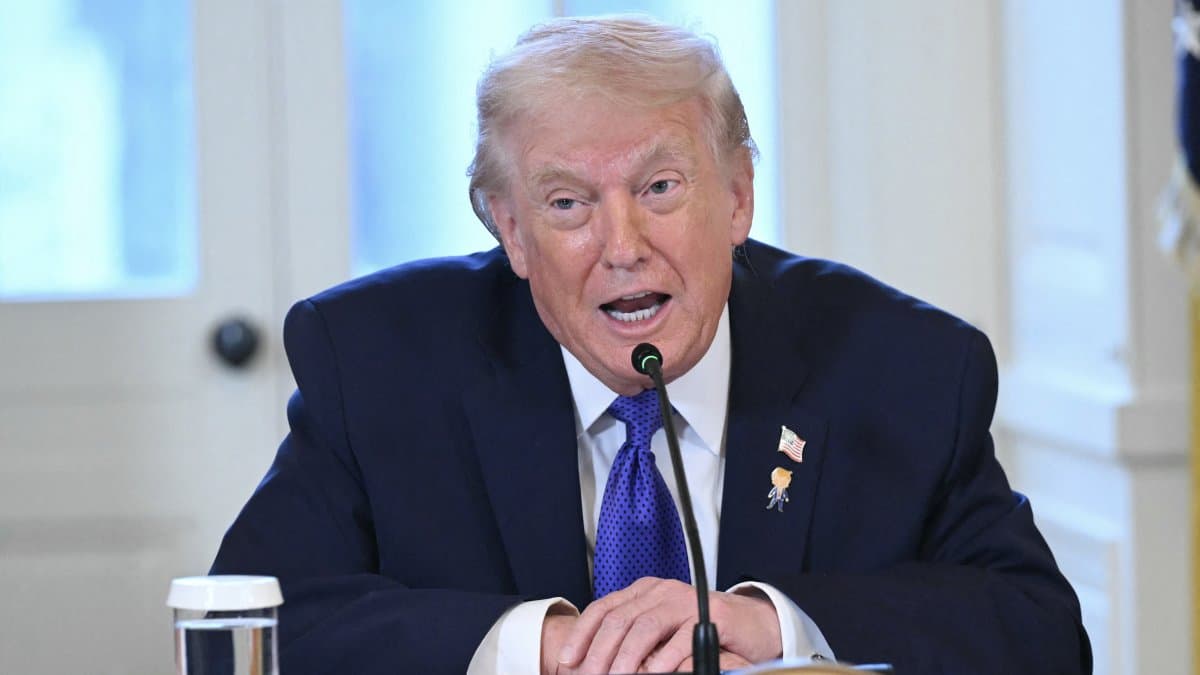

Donald Trump headed a meeting at the White House with dozens of oil company executives to discuss Venezuela. There, the president announced a historic private investment of at least $100 billion to "rebuild the capacity and necessary infrastructure" of the South American country. In addition, he noted that María Corina Machado,a Venezuelan opposition leader, could eventually have a place in the democratic transition.
At the start of the meeting, Trump assured that the main objective was to discuss "how these great American companies can help rapidly rebuild Venezuela's dilapidated oil industry," contributing in the process millions of barrels of oil production "to benefit the United States, the people of Venezuela, and the entire world."
He then announced that the companies would invest at least $100 billion in the project: "They don't need government money. But they need government protection and the government's security that when they spend all this money, it's going to be there. So they get their money back and make a very nice return. The plan is for them to spend at least $100 billion to rebuild the capacity and the infrastructure necessary."
.@POTUS: "Our giant oil companies are spending at least $100B of their money, not the government's money... to rebuild the capacity and the infrastructure necessary." https://t.co/ljAEb2mOO0 pic.twitter.com/g0kC5FWHkO
In turn, the president confirmed that Venezuela agreed that the United States will immediately begin refining and selling up to 50 million barrels of Venezuelan crude oil, which will continue "indefinitely."
Regarding 'Operation Final Resolution', which ended with the capture of Nicolás Maduro, the Republican acknowledged that he received calls from several world leaders who congratulated him for the execution.
The meeting was attended by executives from companies such as ExxonMobil, Chevron and Shell. Also present were important cabinet members, such as Secretary of State Marco Rubio, Secretary of Energy Chris Wright, and Secretary of the Interior Doug Burgum. They were joined by Vice President JD Vance and Chief of Staff Susie Wiles.
.@POTUS: "The departure of Maduro makes possible an incredible future for both nations — Venezuela, and the United States... One of the things the United States gets out of this will be even lower energy prices." pic.twitter.com/XyUED64yeW
Trump: Machado could be part of the transition process in Venezuela
Asked about María Corina Machado, the president confirmed a meeting in Washington DC for next Tuesday or Wednesday.
He was also asked about a possible role for Machado in the Venezuelan transition, to which he replied the following: "Well, I have to speak to her. I mean, I'm going to have to speak to her. She might be involved in some aspect of it. I will have to speak to her. I think it's very nice that she wants to come in. And that's my understanding."
If Machado gives President Trump her Nobel Peace Prize, will that change his view of whether she's capable of running Venezuela?
Trump: "Well, I have to speak to her...She might be involved in some aspect of it." pic.twitter.com/9cLD751ViK
Contacts with Chavismo
In turn, Trump referred to his relationship with Maduro's replacement, Delcy Rodriguez, whom he momentarily defined as an "ally", since he does not want the influence of China or Russia in the country.
"I don't think we're gonna have any don't think it's gonna be necessary to do the second wave. We were planning on a second wave, but the first wave was so powerful and so good and so strong. And frankly, the people in the country, they really, they did the right thing. They were smart. They did the right thing. They didn't wanna go through a second wave. But we've got a tremendous number of the most powerful ships in the world right there. I don't think we're gonna have to use that," the president continued.
As reported by the correspondent of Diario ABC, David Alandete, Machado's visit would have also generated fractures in the Venezuelan regime, given that Rodriguez would have also requested to meet with Trump, something that did not go down well with the most anti-U.S. faction, represented by the Minister of Popular Power for Internal Relations, Justice and Peace, Diosdado Cabello, and Padrino López, Minister of Defense.
🚨 BOOM! President Trump just called Venezuela an ALLY, says he doesn't want Russia or China there
"Right now, they seem to be an ALLY, I think it will continue to be an ally. We don't want Russia OR China there." pic.twitter.com/LsWEkfLJnL
Rubio explained the 'Donroe Doctrine'
During the event, Marco Rubio proceeded to explain why the Trump Administration decided to capture dictator Maduro and arrest him, relying on national security and the 'Trump Corollary.'
"It was NOT in the national interest or national security of the United States and of our people to have in our own hemisphere a country, not just with vast energy reserves, but controlled by an indicted narco trafficker who flooded our country with illegal immigration, including drug gang members—openly cooperated with drug gangs, and, by the way, stole the wealth of that country to fund a repressive regime and ultra-benefit adversaries such as Iran," Rubio explained.
.@SecRubio: "This is a reminder that everything @POTUS does is with the American people in mind. It was not in the national interest or national security of the United States, and of our people, to have, in our own hemisphere, a country... controlled by an indicted narco… pic.twitter.com/c3sRk4WfYi
🛠 Do you think there is an error in this article?
Recommendations
LATEST