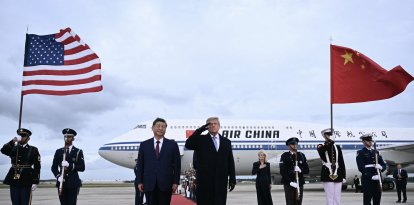
A report warns that Washington needs to triple its nuclear force to cope with China and Russia's expansion
The report, prepared by Robert Peters of the Heritage Foundation's Allison Center for National Security, recommends increasing the number of deployed warheads by 2050.
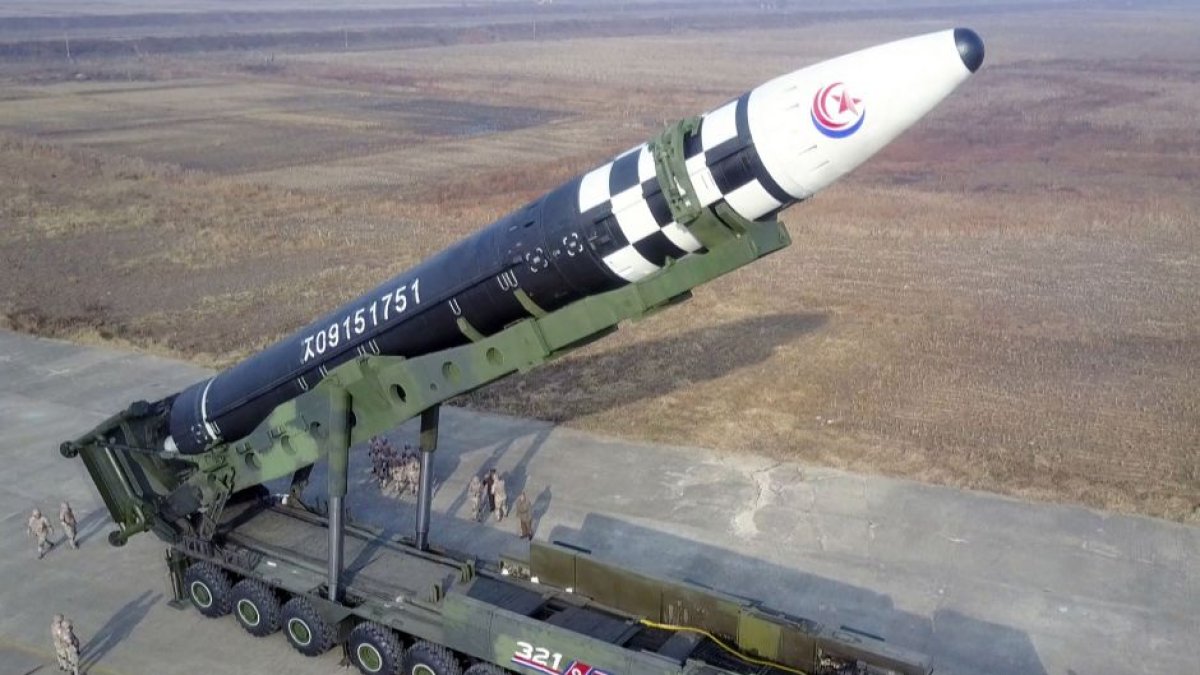
iNorth Korean intercontinental ballistic missile.

A new report from the national security warns that the U.S. nuclear arsenal is too small and obsolete to deal with growing threats from powers like Russia, China and North Korea. The paper, prepared by Robert Peters of the Heritage Foundation's Allison Center for National Security and obtained by Fox News Digital, recommends increasing the number of deployed warheads from the current 1,750 to more than 4,600 by 2050.
The warning comes against a backdrop of rapid nuclear expansion by strategic adversaries. According to the Pentagon, China produces about 100 new nuclear weapons each year and could reach parity with Washington by the mid-2030s. Moscow maintains thousands of tactical weapons in Europe, outnumbering U.S. weapons by as much as ten to one, while North Korea already possesses nearly 90 operational warheads and continues to develop missiles capable of reaching U.S. territory.
A nuclear force designed for a different world
The most recent warhead in the U.S. arsenal dates back to 1989, reflecting a decades-long lag in modernization. Peters argues that, if the current capability is maintained, the United States risks lacking credible strategic options in the event of a nuclear confrontation.
The proposal: More weapons and technological modernization
The study's central recommendation is to expand the nuclear force to approximately 4,625 operationally deployed warheads, of which about 3,500 would be strategic (carried by intercontinental ballistic missiles, submarines, and bombers) and about 1,125 would be non-strategic (bombs and regional-range missiles).
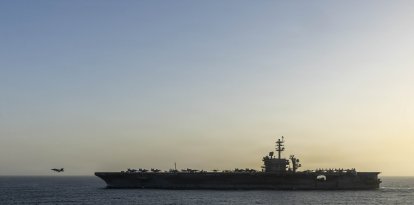
The plan includes replacing Minuteman III missiles with the new Sentinel system, incorporating Columbia class submarines, deploying nuclear-capable B-21 bombers, long-range cruise missiles and new hypersonic weapons.
The proposal also envisions a global distribution, with approximately 3,200 warheads under the Northern Command for national defense, 750 in Europe and 675 in the Indo-Pacific region.
In addition, the study recommends repositioning nuclear capabilities in Poland, Finland and South Korea, which would significantly reduce response times to an attack and reinforce the deterrence message in key regions.
The political debate and costs
The report comes at a time when the debate over nuclear policy divides Washington. President Donald Trump has reiterated his interest in pushing for denuclearization talks with Russia and China. However, previous experiences with Obama and denials from Moscow and Beijing have cast doubt on that possibility.
Currently, the United States spends approximately $56 billion annually on its nuclear arsenal, which represents about 7% of the defense budget. Peters argues that, despite the cost of expansion, the price of not doing so would be much higher in terms of national security.
LATEST