The Washington Post endorses the return of the War Department: ‘A clearer thinking about the military’s role’
The Post's Editorial Board noted that the change puts the value to the public that members of the military are not "policemen," but "soldiers."

Hegseth in the Oval Office/ Mandel Ngan

The Washington Post Editorial Board endorsed the return of the War Department. Through an article published Saturday, the newspaper described the name change as a blow against government "euphemisms" and remarked that it proposes a "clearer thinking about the military’s role at home and abroad."
Last Friday, Donald Trump signed an executive order authorizing the use of the term "War Department" in labels and communications. He also encouraged lawmakers to make the change effective in Congress, given that it was a law that gave birth to the Defense Department in 1949.
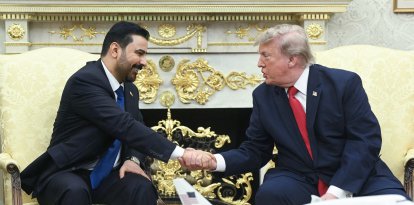
"I think it sends a message of victory... really a message of strength — we're very strong. We're much stronger than anyone would really understand," the president said in the Oval Office, accompanied by Pete Hegseth, now secretary of war.


Politics
Trump signed an executive order to sanction governments that unjustifiably detain US citizens
Luis Francisco Orozco
A day later, the Washington Post Editorial Board endorsed the president's move and discussed the symbolic effects of the name change.
"It is more delicate to say that the Pentagon's mission is defense than war. But the former depends on the latter. The extent to which the Pentagon can defend U.S. interests around the world is tied to the expectation that the United States can fight and win wars. It is that expectation that determines the calculations of rival states," it wrote.
"Concepts such as ‘defense’ and ‘security’ have a tendency for bureaucratic mission creep. The Biden administration’s 2022 National Defense Strategy mentioned ‘climate’ 19 times. Climate change is a problem, but fighting it is not the military’s job. Nor is nation-building," the board added.
For practical purposes, they noted that the change also serves as a reminder of legislative authority when declaring war. In addition, they stressed that it places value in the public's mind that members of the military are not "police officers," but "soldiers."
"Trump’s opponents complain about the aggressive connotations of the new name. But the United States is protected by the most lethal and vigilant fighting force ever assembled, no matter what it’s called. The new name could prompt more focused debate about how to use it," The Washington Post concluded.
LATEST