State Department begins restructuring process and lays off about 3,000 employees
The restructuring seeks to optimize regional bureaus and embassies, eliminate redundant or non-essential programs, and consolidate functions such as foreign assistance in regional bureaus, economic policy and security.

Secretary of State Marco Rubio

The U.S. State Department on Friday began laying off thousands of employees as part of a reorganization plan pushed by the Trump Administration to reduce its workforce by approximately 15%.
In this regard, a State Department source exclusively informed VOZ MEDIA that the reorganization involves a restructuring of "about 3,000 total, includes 1,107 civil service, 246 Foreign Service Officers, and the others were from voluntary departure."
The restructuring began this morning following a message from Under Secretary for Management and Resources, Michael Rigas, who thanked departing staff for their service. Some employees were instructed to report in person, return department equipment (such as computers and diplomatic passports), and collect personal belongings.
Now, the agency will enter a "transition period of several weeks" to implement the new organizational chart, according to a senior official quoted by CBS News.
For his part, Secretary of State Marco Rubio defended the cuts during a trip to Malaysia, saying the reorganization seeks to make the department "more efficient and more focused."
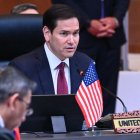
Rubio clarified that some cuts eliminate positions, not necessarily people, although layoff notices are already affecting specific employees.
The department also plans to close or merge several U.S. offices and reorganize its organizational structure in the coming weeks. These layoffs, called reduction-in-force (RIF), were anticipated as far back as March, when officials submitted a reorganization plan to Congress.
The details of the restructuring
Some offices considered by the Administration as "ideological capture and meaningless turf wars” will be eliminated, while new offices focused on "civil liberties" and "free market principles."
In addition, the functions of the United States Agency for International Development (USAID) will be integrated into the State Department after the official closing.

Politics
Rubio puts an end to USAID: 'Assistance programs will be administered by the State Department'
Diane Hernández
Legal framework
The layoffs come days after the Supreme Court lifted a lower court order that had halted similar plans at several federal agencies, paving the way for restructuring.
In that regard, the State Department posted on its X account regarding the decision by the Supreme Court, who endorsed the Trump Administration's restructuring process:
“Today’s near unanimous decision from the Supreme Court further confirms that the law was on our side throughout this entire process. We will continue to move forward with our historic reorganization plan at the State Department, as announced earlier this year. This is yet another testament to President Trump’s dedication to following through on an America First agenda.”
Today’s near unanimous decision from the Supreme Court further confirms that the law was on our side throughout this entire process. We will continue to move forward with our historic reorganization plan at the State Department, as announced earlier this year. This is yet another…
— Department of State (@StateDept) July 8, 2025
A new State Department, a new era
Rubio criticized the department's overgrowth, lack of accountability, and inability to perform basic diplomatic functions, highlighting the case of the Global Engagement Center (GEC), shut down for attempting to censor speeches, including that of the president.
The restructuring seeks to streamline regional offices and embassies, eliminate redundant or non-essential programs, and consolidate functions such as foreign assistance into regional offices, economic policy under the undersecretary for Economic Growth, Energy and Environment, and security under the undersecretary for Arms Control and International Security.
Rubio noted that offices such as Democracy, Human Rights, and Labor and Population, Refugees, and Migration have promoted ideological agendas contrary to national interests.
The functions of USAID and other bureaus will be overseen by a new coordinator for Foreign Assistance and Humanitarian Affairs, focusing on human rights and religious freedom, to ensure a more efficient State Department aligned with U.S. interests.
LATEST