SCOTUS rules that majority groups do not need to provide more evidence than minorities to allege employment discrimination
The nation's highest court ruled 9-0 that Title VII "focuses on individuals, not groups, and prohibits discrimination against 'any individual.'"
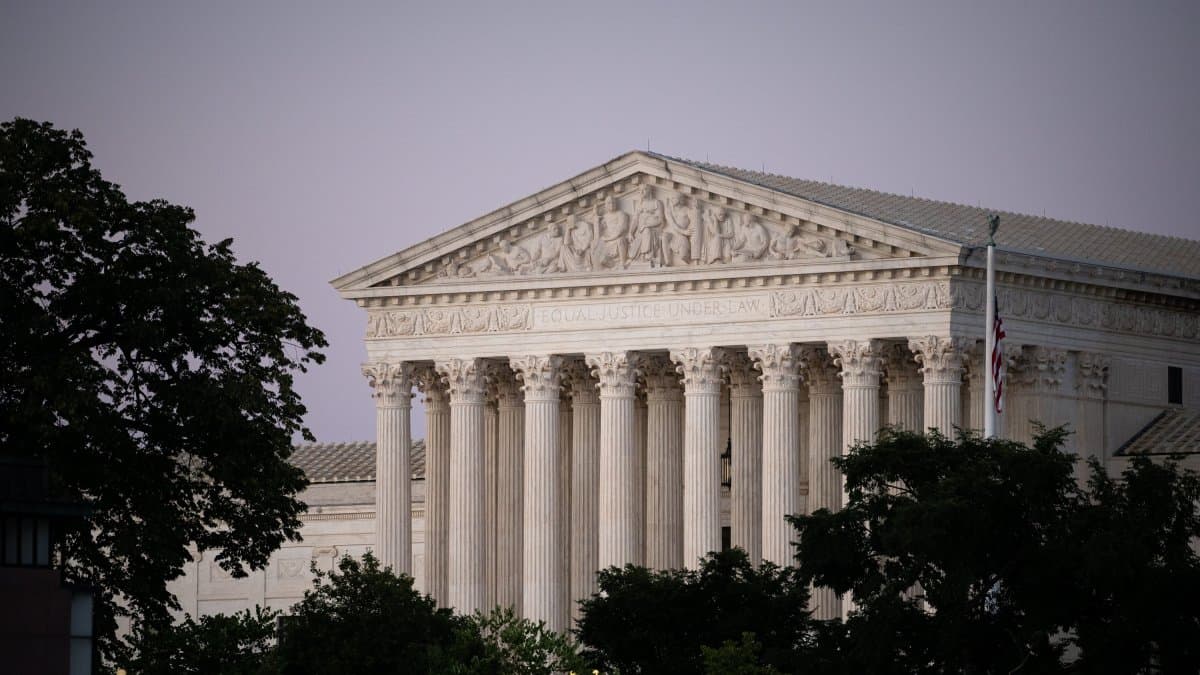

The Supreme Court (SCOTUS) struck down a lower court's ruling that required white women to provide extraordinary evidence to prove that they had suffered discrimination because they belong to a majority group.
Specifically, the Sixth Circuit Court of Appeals in Cincinnati had previously ruled that Marlean Ames had to provide evidence of "background circumstances" showing that her former employer was the "unusual" case of someone who "discriminates against the majority."
Ames claims that during her time at the Ohio Department of Youth Services, where she held various roles, she was passed over for a new management position in favor of a lesbian woman who lacked the necessary qualifications. Then, still according to Ames, she was demoted and replaced by a gay man who should not even have been eligible.
Ames then went to court, claiming that she had been discriminated against as a heterosexual. Two courts rejected her claim. SCOTUS did not rule on the merits of her claim, i.e., whether she had been harmed because she was heterosexual. But it did determine that the previous courts' argument that a member of a majority group must provide more evidence of having suffered discrimination than one of a minority group was invalid.

The court reached that decision from the text of Title VII of the Civil Rights Act of 1964. That law, wrote Justice Ketanji Brown Jackson, "draws no distinctions between majority-group plaintiffs and minority-group plaintiffs."
"The provision focuses on individuals rather than groups, barring discrimination against 'any individual' because of protected characteristics," she added. The "protected characteristics" under the regulation are race, color, religion, sex and national origin.
The full Supreme Court concurred with this opinion: all nine justices agreed with Jackson.
Ames' complaint must now be reviewed by lower courts, this time without requiring extraordinary proof of discrimination.
Access the SCOTUS ruling
AMES v. OHIO DEPT. OF YOUTH SERVICES by Santiago Adolfo Ospital
🛠 Do you think there is an error in this article?
Recommendations



LATEST