Davos 2026: The global misunderstanding and the Greenland paradox
Although the event brings together almost 3,000 leaders from more than 130 countries, with a record of almost 400 high-level political leaders, more than 60 heads of state, almost a thousand CEOs of global and technological corporations, there is one absence in particular that is getting all the attention, that of Denmark.
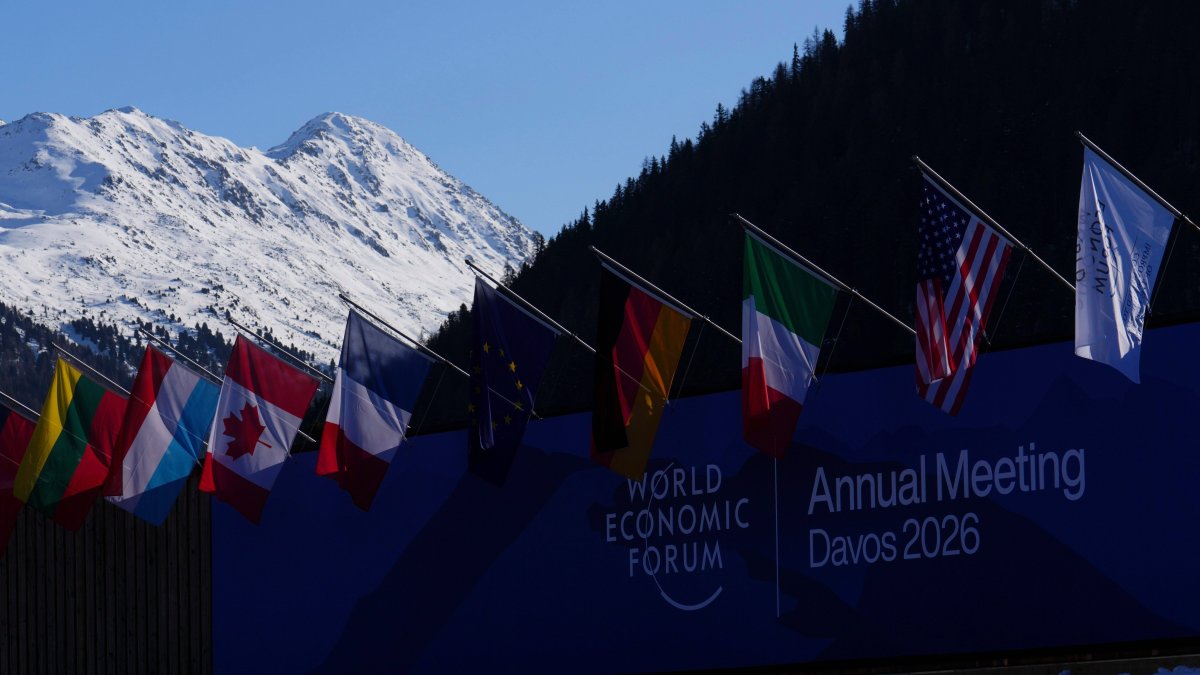
Davos 2026 Associate Press/ LaPresse Only Italy and Spain
This week, the World Economic Forum, aka Davos, is holding its 56th meeting under the theme, "The Spirit of Dialogue." Paradoxically, the meeting will be remembered for everything but dialogue, a direct consequence of absences and confrontations marked by the control of Greenland.
Although the convening brings together nearly 3,000 leaders from more than 130 countries, highlighted by a record of nearly 400 high-level political leaders, more than 60 heads of state, nearly a thousand CEOs of global and technology corporations, there is one absence in particular that gets all the attention, that of Denmark.
The story of U.S. interest in Greenland and Trump's particular intention to take over the island has been covered here before, but Trump's statements have heated up the run-up to Davos dramatically in recent days. The President far transcended the cautious plane of rhetoric by announcing that he will impose an additional 10% tariff on eight European countries as of February 1, conditioning its withdrawal on reaching an agreement to purchase Greenland, and included an escalating timeline that would raise the penalty to 25% on June 1 if the territorial transaction does not materialize.
The European response already speaks of massive tariff countermeasures on U.S. products. On Sunday the eight countries issued a categorical joint statement backing Denmark, while denouncing the degradation of trans-Atlantic relations.
The picture has become muddled on the military front, with a "symbolic" deployment of troops from some European countries to the region as part of the "Arctic Endurance" exercise although versions of a rapid withdrawal of some of these endowments added further murkiness to the maneuver. Trump, of course, assessed these deployments negatively, although on Monday the 19th, he adopted a more cautious tone regarding how far he would be willing to go to take control of the semi-autonomous Danish territory. A proposal continues to circulate in the White House that the United States would allegedly acquire Greenland through a commercial transaction and that this payment would go directly to each Greenlandic inhabitant, probably leaving Denmark out of the equation. What is certain is that the meeting is kicking off with Europeans outraged with Trump, after a year in which they tried their best to get along with the Republican.

World
Trump announces big meeting over Greenland and EU pledges 'firm' response in Davos
Diane Hernández
It is reasonable for Trump to seek to defend U.S. interests in the Arctic, especially under the expansive intentions of China and Russia. However, with the right diagnosis, it is worth questioning whether it was necessary to put allies on the ropes and on the verge of humiliation, forcing them to react in a dynamic that is hardly in the best interests of U.S. interests themselves. This seems to be a constant in a number of Trump’s plans, the Greenland project has logic, but the execution is counterproductive. Especially if the idea was to seduce Greenlandic citizens.
Trump hopes to come out of Davos with a solid breakthrough on Greenland, but the trail of casualties he is leaving in pursuit of a goal he could have achieved by seduction could be a very expensive price. A breakup of NATO is unlikely, but the gradual breakdown of relations in an unnecessary situation can only benefit the enemies, namely China and Russia, the very actors that threaten Greenland.
The issue has become so heated that European politicians allied with the president have found themselves in an uncomfortable position over the weekend, unable to defend Trump's agenda, since the new tariff war is a direct attack on the economies of their own European voters.
One of the most striking public criticisms came from Nigel Farage, the leader of Reform U.K., who said on January 17 that these tariffs "will hurt us" badly. The British politician has a great relationship with Trump, however he warned that the Greenland dispute represents the biggest fracture in the transatlantic relationship since the Suez crisis in 1956. In that regard, Italy's prime minister, Giorgia Meloni, called the tariffs "a mistake," deviating from her administration's frequent alignment with U.S. foreign policy.
Jordan Bardella, leader of France's National Rally party, accused Trump of exercising trade blackmail, and urged suspension of the EU-U.S. tariff agreement, while Germany's Alternative for Germany (AfD) party, another ally of the President, warned of the destabilizing potential of tariff threats. UK Prime Minister Keir Starmer called the decision "completely wrong," and Swedish Prime Minister Ulf Kristersson declared that Sweden would not be blackmailed, while the Norwegian prime minister dismissed the threats.
The diplomatic tension provoked emergency meetings in the European Union, but most notoriously, in an extraordinarily high proportion, demonstrators took to the streets in Nuuk (the capital of Greenland) in protest against U.S. territorial ambitions. In these demonstrations Greenland's prime minister, Jens-Frederik Nielsen, participated. With his statements, Trump has raised the price of the eventual agreement, an unhappy move for an expert negotiator.
The paradox unfolds clearly, Trump is right to identify the strategic importance of Greenland and the need to strengthen U.S. presence in the Arctic in the face of China's and Russia's advance. Concern for Arctic security is legitimate, but his anxiety for immediate results and his strategy of threats and ultimatums may completely ruin his plan and generate resentment that did not previously exist among the Greenlanders he wished to seduce, and in the process generate a negative image among Europeans who shared his interests and values.
There are multiple ways to strengthen the U.S. presence in Greenland without antagonizing those who inhabit it, the question is whether Trump will adjust his approach before, paradoxically, the strange diplomacy deployed in recent days alienates him from the popular support he so badly needs.
LATEST