2,200 more Marines to arrive in Mideast region
Their arrival, along with another Marine unit of similar size on its way from San Diego, will bolster the 50,000 U.S. troops already in the region.
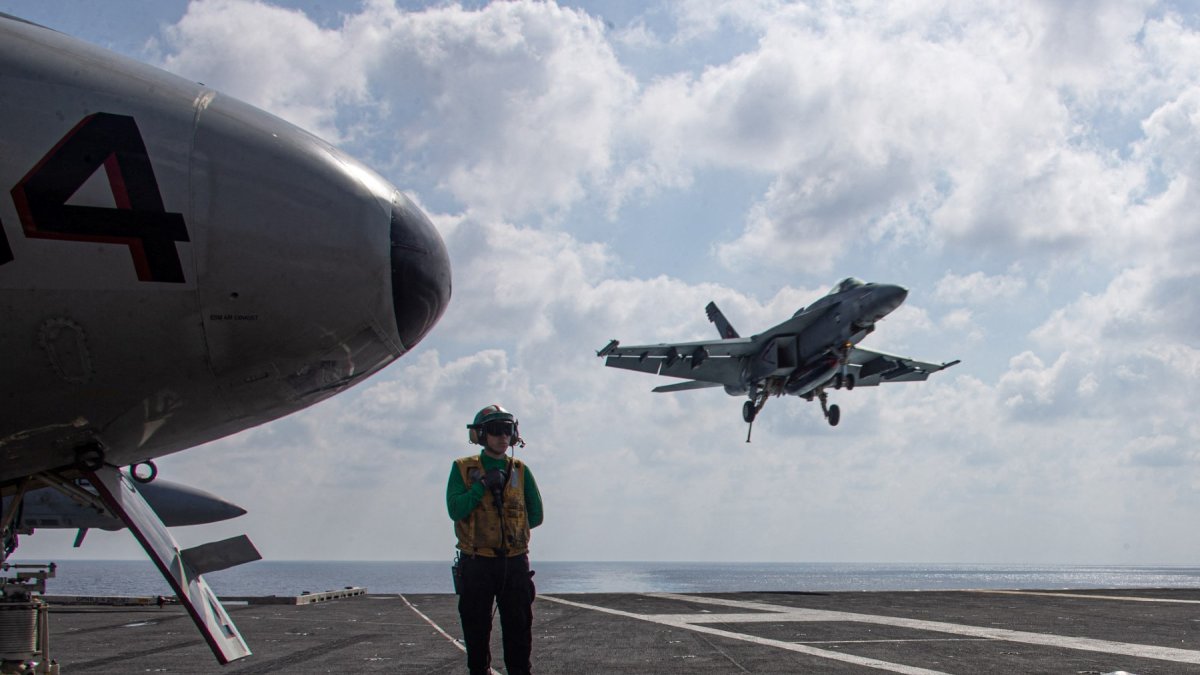
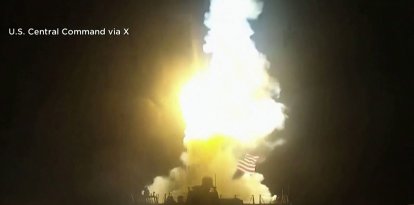
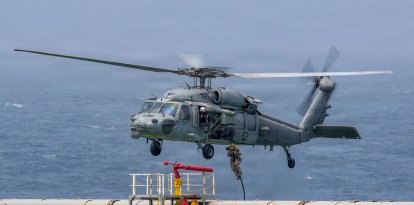
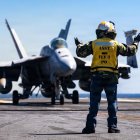
An American aircraft in the eastern Mediterranean Sea (Files)

A group of roughly 2,200 U.S. Marines are expected to enter the U.S. Central Command (CENTCOM) region on Friday, The Wall Street Journal reported on Monday. It will take another few days for them to reach the Strait of Hormuz.
The troops of the 31st Marine Expeditionary Unit, based in Okinawa, Japan, are traveling aboard the USS Tripoli, an amphibious assault ship, and USS New Orleans, an amphibious transport dock. Both ships are designed to transport, land and support Marine Corps forces.

Another group of about 2,200 Marines, the 11th Marine Expeditionary Unit (MEU), departed from San Diego aboard the amphibious assault ship USS Boxer on March 18, about three weeks ahead of schedule, according to multiple reports. It will arrive in the CENTCOM region in a few weeks.
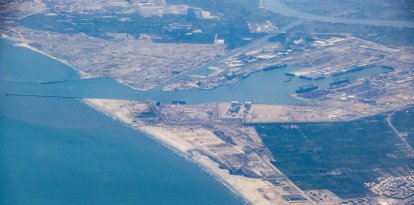
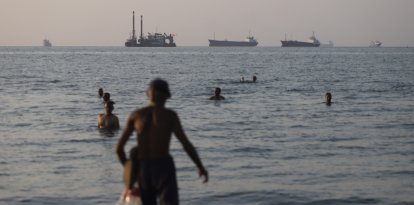
The two Marine units will supplement the 50,000 U.S. troops already in the region and bolster U.S. President Donald Trump’s ability to put boots on the ground. One scenario is to land troops along the shoreline of the Strait of Hormuz to secure that key oil supply chokepoint.
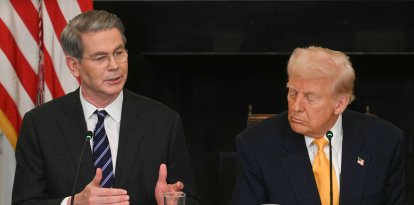
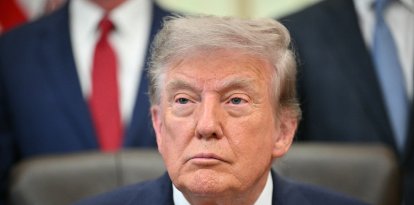
Despite accelerating the Marine deployments, Trump told a reporter last Thursday at the White House, “I’m not putting troops anywhere. If I were, I certainly wouldn’t tell you.”
The Pentagon is deliberating a deployment of a combat brigade of about 3,000 soldiers from the Army’s 82nd Airborne Division, which would include elements of the division’s headquarters staff, The New York Times reported on Sunday, citing anonymous senior military sources. The soldiers could be used to seize Kharg island, Iran’s main oil export hub, the paper said.
Military officials said the preparations were “prudent planning” and did not reflect any orders sent by the Pentagon or U.S. Central Command.
On Monday, in a surprise announcement, the president said that “very good and productive” talks—“in depth, detailed, and constructive” —were taking place with Iran. To give the negotiations a chance, he placed a five-day pause on military strikes he had earlier threatened against Iranian energy infrastructure.
On Sunday, Trump issued a 48-hour ultimatum to Iran to lift its blockade of the Strait of Hormuz. If not, the United States would “hit and obliterate their [Iran’s] various power plants, starting with the biggest one first.”
The energy issue has risen to the fore as the U.S. administration attempts to keep a lid on rising oil prices while Iran promises to send prices past the $200-a-barrel mark to weaken the global economy. On Monday, Brent crude, the benchmark for most oil outside the U.S., dropped about 11% to $99.94 a barrel after Trump’s remarks that talks were taking place.
LATEST