Neutrality in the fight against genocidal terror isn’t moral
President Trump should have ignored Pope Leo’s comments, and non-Catholics should respect the papacy’s symbolism. But treating Iran as morally equivalent to Israel or America is still wrong.

Pope Leo XIV and Donald Trump. File archive
It’s always a mistake for politicians to get into arguments with popes. The symbolism of the papacy for Catholics, and even non-Catholics, around the world is potent. Even today, when religion is generally on the decline in the developed world, the pope still matters. Anyone who asks today, as Soviet dictator Josef Stalin did about one of the current heads of the Catholic Church’s predecessors, “how many divisions” the pope has, is demonstrating their cluelessness. The power of faith and the ability of a spiritual figure to command respect and exercise influence are greater than many think.
Whatever you think about the actual policy positions on which Pope Leo XIV and President Donald Trump disagree, the latter would have done well to ignore the former’s rather pointed criticisms. But expecting this president to hold his fire whenever he is publicly attacked is futile. As a result, what followed was a news cycle in which Trump was widely portrayed as an insensitive bully while the first American-born pope basked in the world’s approbation of his moral preachings.
Debating moral issues
The exchange, like every pointless kerfuffle resulting from a Trump comment or social-media post, will soon be forgotten. But to dismiss both Trump’s hyperbole and the pearl-clutching he inspires among his many critics and detractors is not to say that the underlying issues involved in this dispute aren’t important. They are vitally so to our future and deserve a full discussion, even if the back-and-forth between the two men that followed the serious issue of war created more heat than light.
At the heart of this debate are some key questions. One is the right of nations to defend their sovereignty and to decide who may or may not cross their borders, as opposed to those who essentially advocate for no such restrictions. The other is whether there is such a thing as a just war, and what strategies and tactics may be pursued in the conduct of such conflicts.
Presidents and popes have very different responsibilities. A president is tasked with defending the specific interests of the United States and its people. The pope’s job is to enunciate moral positions. In an ideal world, those two stances ought to largely overlap. But we don’t live in such a place, and leaders are often required to make choices that involve the lesser of two evils, rather than a stark choice between good and evil. It is that fact, and not the perceived gap in moral character between this particular pope and the president, which creates disagreements such as the one that just played out in public view.
Pope Leo’s advocacy for illegal immigrants dates back to his time serving as a bishop and cardinal in his native city of Chicago. That position is based on humanitarian concerns for the plight of migrants and opposition to the idea of human suffering. It is directly opposed to Trump’s belief in secure borders and the conviction that illegals should be deported. His stance is in accord with the view of many, if not most, Americans who voted him back into office in 2024. And while this discrepancy is characterized as heartless by those who agree with the pope, it is a defense of the interests and rights of working-class citizens who were harmed by the open borders policies of the Biden administration.
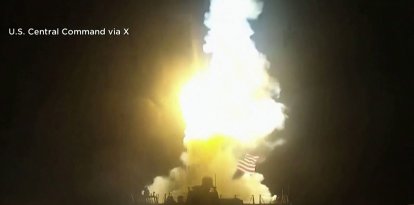
But the immediate cause for conflict between Washington and the Vatican was the war with Iran.
An anti-war pope
As one would expect from any spiritual leader, the pope is always going to say he’s against all wars as a matter of principle. The Vatican’s position is one that seems to deliberately ignore the causes of fighting between countries or populations, as well as arguments in favor of pursuing it. As he and his immediate predecessor, Pope Francis, did with respect to the post-Oct. 7 war Israel fought against Hamas terrorists in Gaza, Pope Leo takes no sides in the conflict between the Islamist regime in Iran, and the United States and Israel. He wanted an immediate ceasefire with Hamas then and wants the same now with Iran, calling for an “end to the thunderous sound of bombs.”
But in the week before the April 7 ceasefire, he went further, saying that “God does not bless any conflict.” And in a statement that seemed to be directly aimed at Trump, he blasted what he called “the idolatry of self” when critiquing what he called the president’s “boasts” about U.S. military strikes and his hyperbolic threat to destroy “a whole civilization” if Tehran’s theocratic tyrants did not give in.
A day later, the following was posted on the pope’s X account: “War does not solve problems; on the contrary, it amplifies them and inflicts deep wounds on the history of peoples, which take generations to heal. No armed victory can compensate for the pain of mothers, the fear of children, or stolen futures. May diplomacy silence the weapons! May nations chart their futures with works of peace, not with violence and bloodstained conflicts!”
In response to this, Trump responded as he usually does, taking it personally and not holding back criticisms of his antagonist, saying the pope was “terrible,” “too liberal,” “weak,” “catered to the radical left” and took positions that amounted to support for Iran getting a nuclear weapon. He then compounded that by posting a ludicrous image of himself looking like Jesus that, uncharacteristically, he chose to delete in response to an overwhelming chorus of denunciations of something that was in terrible taste, as well as deeply foolish.
By saying that he “wasn’t afraid” of Trump, the pontiff may have been engaged in playing a rhetorical trick of his own, since the president never threatened him. But if someone was scoring the debate between the two, even the president’s biggest fans would have to acknowledge that the pope won.
Wars do solve some things
Still, that’s not the same thing as the pontiff actually being in the right on the underlying issue.
It is all well and good for Pope Leo to say he’s against all suffering, but in point of fact, he’s wrong about wars not solving anything. They may cause incalculable pain and are truly horrible. But wars have solved some problems. To take but one example from history in which the Vatican’s professed neutrality about conflicts didn’t cover it in glory, the defeat of Germany and its allies in the Second World War was the only way to defeat Nazism and end the Holocaust.
Not to put too fine a point on it, if a second Holocaust—the goal of Iran’s Islamist regime, as well as its Hamas and Hezbollah allies in Gaza and Lebanon, with respect to the state of Israel and its population—is to be avoided, it’s going to require more than papal sermons on the evil of wars.
And that is the focal point of the debate about the current Iran conflict, just as it was in the war against Hamas.
A just war
Calling for a permanent ceasefire may put a temporary end to the suffering caused by the conflict. And blasting warlike rhetoric from the combatants always makes those denouncing them seem morally superior. But if it means allowing Iran, Hamas and Hezbollah in their strongholds to rebuild and rearm—and to allow Tehran to resume its nuclear project, missile building and spreading terrorism around the globe—it is neither merciful nor just. Appeals to end the fighting while leaving jihadists in power—and capable of continuing their war on the West and non-Islamist civilization—are as inappropriate as they would have been for a ceasefire before the unconditional surrender of the Nazis in 1945.
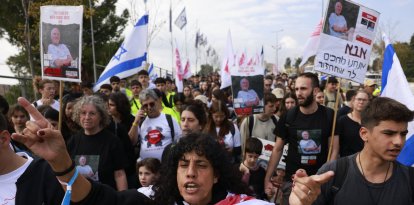
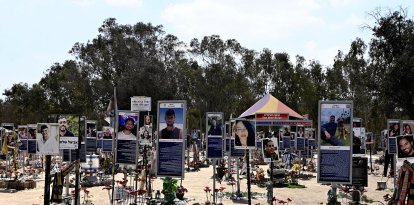
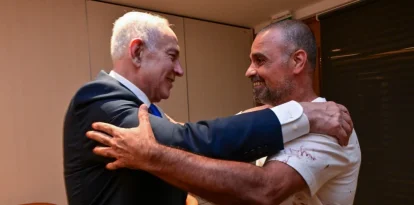
The responsibility of Trump and Israeli Prime Minister Benjamin Netanyahu is to prevent the mullahs in Tehran from persisting in their genocidal plotting and weapons building, which led directly to the horrors of Oct. 7. To merely denounce what happened on Oct. 7, as the pope did, is fine. But to oppose efforts to ensure that the murderers would be stopped from making good on their pledges to repeat those crimes over and over again, as he insinuated, isn’t an example of a higher morality. Treating murderers and those whose task it is to stop them as morally equivalent—and that’s what the pope and many other world leaders, especially in Western Europe, have done with respect to Hamas and Iran—is wrong, even if the motivation for such statements is rooted in an entirely laudable abhorrence of suffering.
Wars are awful and should be avoided if possible. But the battle against the Islamist terrorists running Iran, and their Hamas and Hezbollah minions whose Oct. 7 atrocities were just a trailer for what they wish to do to all Israelis, is a just one.
It is also impossible to separate the preaching against such just wars from the global surge of antisemitism that has spread since Oct. 7.
A legacy of Catholic-Jewish unity
To his credit, the pope has consistently opposed Jew-hatred and bigotry. In that respect, he is standing on the foundation built by his righteous predecessors, Pope John XXIII and Pope John Paul II. They worked tirelessly to end the long tradition in which the church tolerated or encouraged antisemitism. During the papacy of Pope Paul VI, the publication of Nostra Aetate, the 1965 Catholic declaration on the relationship of the Church with non-Christian religions, rejected the deicide myth and established a new norm. The assumption that Catholics hated Jews became a relic of the past. That was followed up by the open philo-semitism of John Paul II and the historic decision of the Vatican to recognize Israel in 1993. That put the unhappy history of relations between the papacy and the Jews firmly behind them.
Sadly, in recent years, the church has often acted as if it is afraid to risk the lives of Christian minorities in the Muslim world if it means doing the right thing with respect to Israel. It has opposed the efforts of the Jewish state and its American ally to defeat those who wish to destroy Israel. And it has essentially validated blood libels about Israel committing “genocide” in Gaza with harsh and unfair criticism of its morally justifiable military efforts. In doing so, the Vatican is letting down its Jewish friends and allies. While no one should criticize a pope for opposing wars in principle, it is also not unreasonable to ask the Church leader to take a more active role in opposing the antisemitism that is spreading, especially among some on the far right who claim to be Catholics.
And as much as it’s easy to bash Trump for his bombastic statements, he deserves credit rather than criticism for being willing to take responsibility for stopping Iran in a way that none of his presidential predecessors or European counterparts had the courage to do.
Moreover, while Pope Leo deserves and ought to get a lot more deference than he does from the president, his recent willingness to be more vocal in denouncing the leader of the free world is equally mistaken. Catholics and non-Catholics alike want popes to avoid politics but to also to speak up against immoral actions, as, alas, some of his predecessors failed to do when Jewish lives were at stake. But taking sides against an effort whose purpose is to save both Jewish and Western lives from Iranian terrorists isn’t in keeping with the highest standards to which all people of faith aspire. However tempting it might be, the last thing the pope should be doing is indulging in virtue-signaling against the president, which gives the world the impression that he is acting as the chaplain of the anti-Trump “resistance.”
The Vatican should acknowledge that it has as much invested in the fight to preserve Western civilization against its Islamist and Marxist foes as Washington and Jerusalem. Preaching about the evils of war is one thing. It is quite another to place themselves in opposition to a war against immoral actors, such as those in Tehran and Gaza. Contempt for Trump and an unwillingness to accept that anti-Zionism is indistinguishable from antisemitism should not be allowed to undo the work of those who sought to bring Jews and Catholics together in the last century. There is too much at stake in the existential conflict against Islamism and in defense of a common Judeo-Christian heritage for people of faith to be divided about this struggle.
© JNS.
LATEST