Washington reportedly convenes first meeting between UN, Gaza Humanitarian Foundation
“Axios” reported that “the only decision in the meeting was for both sides to de-escalate public attacks in the media against each other.”

A truck with humanitarian aid at the border between Israel and Gaza

After months of sniping with the Gaza Humanitarian Foundation and weeks of rejecting its calls for cooperation, the United Nations accepted a meeting on Wednesday with the foundation at the U.S. mission to the global body in New York City, Axios reported.
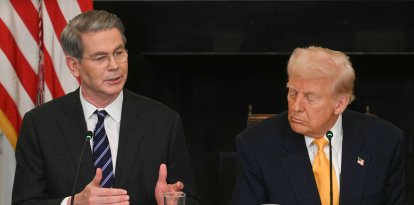
Washington, which reportedly brokered the gathering, has been pushing for the delivery of more aid in Gaza. Morgan Ortagus, an adviser to the U.S. mission who was deputy U.S. special envoy to the Middle East, and foundation leader Johnnie Moore attended the meeting, in which the U.N. World Food Programme, U.N. Children’s Fund, International Organization for Migration, U.N. Office for Coordination of Humanitarian Affairs and International Red Cross were represented, according to Axios.
The meeting was the first publicly known direct talks between U.N. and foundation leaders. The latter began operating in Gaza in late May.

“Sources with knowledge of the meeting said the political and personal sensitivities led to unusual ground rules: No phones were allowed in the meeting, and it was held under Chatham House rules, meaning nothing in the meeting could be attributed to its participants,” Axios reported. “No decision was made on cooperation in Gaza, according to the sources. The only decision in the meeting was for both sides to de-escalate public attacks in the media against each other.”
The United Nations has admitted that some 89% of its trucks bearing aid for Gazans have been looted since May 19. It has also stated that only its agencies can adequately provide the necessary items in Gaza. The Gaza Humanitarian Foundation has said that it welcomes collaboration with the United Nations to better aid Gazans.
Ross Smith, director of emergency preparedness and response at the World Food Programme, told JNS on July 29 that the U.N. program “talks to all potential partners.”
“We have indeed spoken at the operational level with GHF. We do not have an operational partnership with GHF. They have a different model than we have,” he said.
“We can work in parallel,” he added. “We need all actors on board to provide support inside Gaza.”
JNS asked Tommy Pigott, the principal deputy spokesman at the U.S. Department of State, about the reported meeting between the United Nations and the foundation. “I refer you to GHF for more details on meetings they may or may not be having with different organizations or the United Nations,” he said.
“We’ve been clear that we want to see as much aid as possible go to the people of Gaza without it being looted by Hamas,” he told JNS. “We’ve been clear that we want to see creative solutions, that there’s a mechanism in place that has been able to deliver 110 million meals without it being looted by Hamas.” (The foundation has said that it delivered that many meals.)
“We’ve also been clear on our concerns about how other different delivery systems have seen issues when it comes to the diversion of aid,” Pigott said. “We’ll see what specifics come out in terms of future steps, but there are many options being discussed.”
A senior Trump administration official told JNS this week that the foundation is “chaotic” and “it is not pretty, but it works.”
“Anybody who thinks that this is going to be the solution is wrong,” the official said. “Anybody who thinks that this can’t be part of the solution is equally disillusioned, and I would say is more fundamentally wrong.”
US plan seeks to disarm Hezbollah by year-end, IDF to leave Lebanon
The plan by U.S. envoy Tom Barrack, which was discussed at a Lebanese Cabinet meeting on Thursday and which Reuters received a copy of, calls for Hezbollah to be stripped of its weapons before the end of the year.
On Nov. 26, Jerusalem and Beirut reached a deal aimed at ending more than a year of cross-border clashes between the Israel Defense Forces and Hezbollah. The terrorist group began attacking the Jewish state in support of Hamas following its terrorist attacks in southern Israel on Oct. 7, 2023.
Since the ceasefire, the IDF has carried out regular strikes to prevent Hezbollah from rebuilding its capabilities in violation of the truce.
Hezbollah Secretary-General Naim Qassem has rejected demands to disarm in line with the deal. Last month, he warned that Hezbollah terrorists were “recovering and ready now” to confront Jerusalem.
© JNS
LATEST