ANALYSIS
Who will buy Warner Bros.? Everything we know about the bids from Netflix, Paramount... and what Trump wants
A historic sale pits two streaming giants against each other, as Donald Trump watches every move and the future of CNN is up in the air.
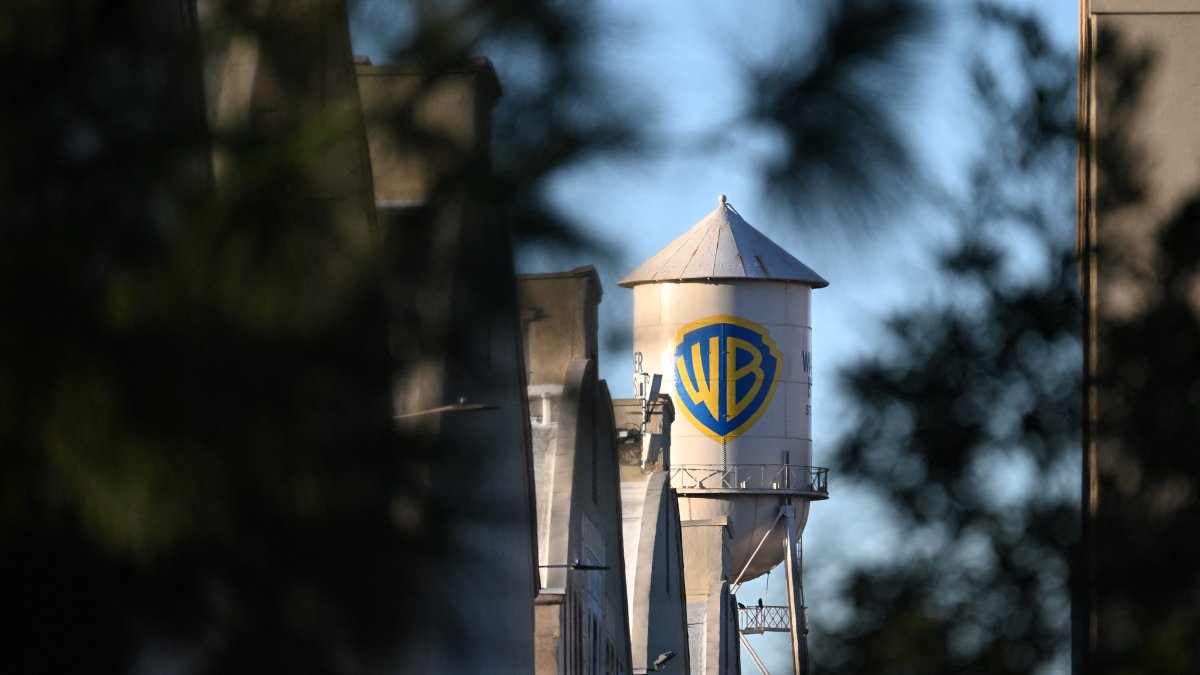
Warner Bros.' iconic water tower.

Hollywood, Wall Street and Washington are watching the potential multibillion-dollar sale of Warner Bros. Discovery (WBD) with a close eye.
The deal centers on two main bids: one from Netflix and another from Paramount Skydance. The former was approved by WBD's board of directors, while the latter is a "hostile takeover": a direct offer to shareholders, bypassing the management of the company to buy.
This bidding war has very different implications for the future of the media, and also of politics: President Donald Trump has taken matters into his own hands with several statements in recent hours and days.
Warner Bros. sale: What does President Trump want?
The news network CNN is part of the assets of Warner Bros. Discovery (WBD), a factor that elevated the acquisition of a business deal to a matter of high political interest for the White House.
The initial plan for WBD prior to the sale agreed with Netflix was to split the company into two entities:
- Warner Bros.: It will have the production studio and streaming service HBO Max, including key franchises such as "Harry Potter" and the DC catalog.
- Warner Bros. Discovery Global (WBDG): A spin-off company that would keep cable channels, including CNN and TNT.
Netflix wants to buy the former. That is: the production studio and HBO Max, but not WBDG; i.e. not CNN.
Trump appeared to speak out against this proposal on Wednesday, asserting that it was "imperative" that the news outlet be sold, either as part of the Warner Bros. package or separately.
However, Netflix's offer also includes the sale of WBD. Although it would be done on its own, and to unknown owners for the moment.
Beyond the method of sale, Trump's goal is a change of ownership: "I think the people that have run CNN for the last long period of time are a disgrace."
The president has been criticizing CNN's coverage for more than a decade, even taking it to court over its coverage of the 2020 election. During his second term, the White House has frequently taken aim against the network, most recently including it in a section on media "Repeat Offenders" regarding the spread of fake news.
Criticism of Trump's intervention
Critics of the president claim that he prefers Paramount Skydance's offer because its CEO is David Ellison, son of Oracle co-founder and Trump ally Larry Ellison. Friendly coverage would thus be guaranteed, they assure.
According to The Washington Post, Ellison Jr. promised administration representatives "sweeping changes" at CNN.
One of the figures who gave voice to that criticism was Democratic Sen. Elizabeth Warren, who assured that "Trump has been trying to muzzle CNN for years."
"Surprise, surprise: Paramount's bid for Warner Bros. includes control over CNN—and is backed by Jared Kushner's private equity firm and billions from Saudi Arabia," she said. "This reeks of corruption in service of squashing free speech."
Paramount's offer
Paramount on Monday launched a bid to buy all of Warner, including Warner Bros Discovery Global. Hence, also CNN.
The father of David Ellison, Larry, one of the richest people in the world, has provided the money to fund the proposal, according to AFP. Another investor is Affinity Partners, the private equity firm founded by Trump's son-in-law, Jared Kushner.
"We’re really here to finish what we started," David Ellison told CNBC, as his company submitted its sixth bid for Warner Bros. since September.
The bid values the entertainment giant at $108.4 billion and represents a 139% premium over WBD's September share price of $12.54.
"We believe we have the superior offer. We’re taking that directly to shareholders. And we think that’s what they’re going to vote for," Ellison stated.
Paramount argued that its deal offers greater regulatory certainty than the Netflix transaction, which it claimed would give Netflix a 43% share of global streaming subscribers and face regulatory challenges around the world.
The combined company would bring together Paramount's portfolio, which includes Paramount Pictures, CBS, Nickelodeon and the streaming platform Paramount+, with WBD's assets, such as HBO Max and major sports broadcast rights.
Paramount claimed the merger would generate more than $6 billion in savings.
It also includes attractions for Hollywood: it would maintain movie releases in theaters and increase investment in content. Keeping movies in theaters is a touchy subject for the creative industry.
Netflix already has a negative image in some Hollywood circles, largely due to its reluctance to release content to theaters and its impact on the industry. Many veterans see theatrical releases as essential to the appeal and prestige of film, and also essential to maintaining Hollywood jobs and a vibrant economy.
Netflix's offer
Netflix announced on Dec. 5 that it would buy Warner Bros. Discovery for nearly $83 billion. "Together, we can give audiences more of what they love and help define the next century of storytelling," Netflix co-CEO Ted Sarandos said at the time.
The deal would give it access to its immense movie catalog and the prestigious streaming service HBO Max. It would be the largest acquisition in the entertainment sector since Disney bought Fox for $71 billion in 2019.

Each WBD shareholder would receive, under that deal, $23.25 in cash and $4.50 in Netflix common stock for each outstanding share of WBD common stock at the closing of the transaction. The transaction values Warner Bros. Discovery at $27.75 per share, implying a total equity value of approximately $72 billion and an enterprise value of approximately $82.7 billion.
However, the companies themselves expressed at the time that they still required regulatory approval. The deal would bring together the first and third largest streaming services. Trump himself had expressed doubts on this point, asserting that Netflix already had a "a very large market share," which "could be a problem."

LATEST