Trump says the next Fed chair "should" consult him on interest rates
"I’m a smart voice and should be listened to", the Republican pointed during an interview granted to 'The Wall Street Journal'.

Trump in the Oval Office/Alex Wroblewski

Donald Trump said that the next president of the Federal Reserve "should" consult him on raising or lowering interest rates. A few months before Jerome Powell leaves his post at the helm of the Fed, the president unveiled one of the main requirements for choosing his successor.
Since his return to the White House, Trump has harshly criticized Powell, whom he himself nominated in 2016. Indeed, he publicly called for his resignation. Their conflict came because the Republican intended a steep drop in interest rates, with which Powell disagrees.
In this context, and with Powell's term ending in May next year, Trump told the Wall Street Journal that the next Fed chairman should consult him on rates.

"Typically, that’s not done anymore. It used to be done routinely. It should be done. It doesn’t mean—I don’t think he should do exactly what we say. But certainly we’re — I’m a smart voice and should be listened to," the Republican said. "We should have the lowest rate in the world," he added.
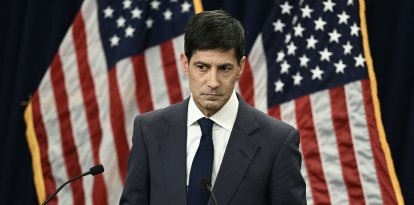
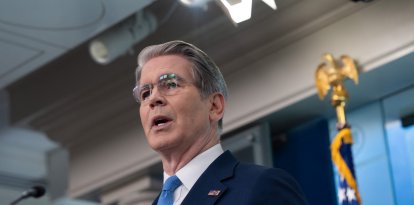
Powell's term at the helm of the Fed ends in May 2026, so Trump will be in charge of nominating his successor. As reported by The Wall Street Journal in August, top names under consideration include Kevin Warsh, a former Fed governor; Kevin Hassett, director of the National Economic Council; David Malpass, former World Bank president; and Christopher Waller, current Fed governor.
Among them, Trump assured that both Warsh and Hassett are among the finalists for the job: "The two Kevins are doing well, and I have two other people who are also doing well. I think it will be one of those four people."
How is the Fed chairman chosen?
The term as chairman of the Federal Reserve lasts four years and he can be re-elected indefinitely. For example, Alan Greenspan was nominated by Ronald Reagan in1987 and remained in office until 2006, being reappointed during the terms of George H.W. Bush, Bill Clinton and George W. Bush.
The Federal Reserve is also headed by a Board of Governors composed ofseven members, all nominated by the president and confirmed by the Senate. Each governor has a 14-year term, intended to expire one every two years, which seeks to ensure continuity and institutional independence.
The Fed chairman serves simultaneously as one of these governors for the duration of his term as chairman.
LATEST