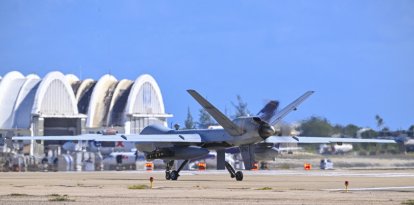
Middle East: Oil prices soar again amid a new escalation in the region due to clashes between the Houthis and the Saudis and an exchange of threats between Trump and Iran
The tension is of particular concern to Saudi Arabia, the world's leading crude oil exporter, because the Houthis have targeted airports, civilian facilities, and sites linked to the country's energy and maritime infrastructure, even striking its capital, Riyadh.

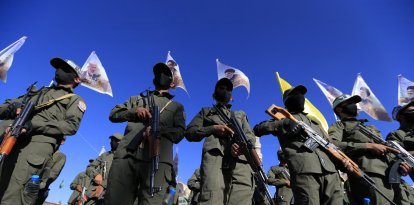
Houthi terrorists in Yemen—File photo

Oil prices rebounded on Thursday amid the deteriorating situation in the Middle East, following Houthi attacks on Saudi airports, Riyadh's military response, and renewed tensions between the United States and Iran. Brent rose nearly 3.8%, to about $104 per barrel, and West Texas Intermediate (WTI) gained about 3.8%, to about $91.70.
Attacks on Saudi Airports
The Houthis in Yemen claimed responsibility for attacks on King Khalid International Airport in Riyadh and Abha Airport, in southwestern Saudi Arabia, which left three dead and 36 injured between Tuesday and Wednesday.
World
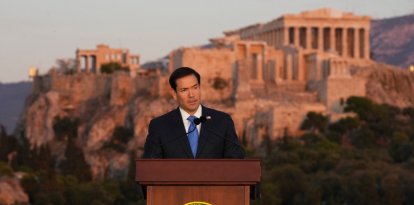
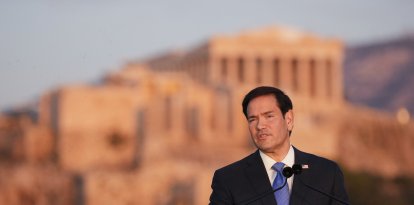
Rubio urges Europe to emerge from 'long slumber' in speech at the Acropolis in Athens
Carlos Dominguez
In Abha, two residents—one Moroccan and one Algerian—were killed, and 28 were injured. In Riyadh, a Sudanese citizen was killed, and eight others were injured, including five Saudis, two Egyptian residents, and one Pakistani resident.
The Houthi military spokesperson, Yahya Saree, wrote on X that the group attacked Abha Airport with a ballistic missile on Tuesday and King Khalid Airport in Riyadh with another on Thursday. In that second message it announced a new attack on the terminal in the Saudi capital and repeated, as a "final warning," its request that international airlines not use the kingdom's airspace, except for that of Mecca and Medina.
U.S. Embassy issues new security alert for Saudi Arabia
The U.S. Embassy in Saudi Arabia issued on Wednesday a new security alert security alert in light of the escalation between the Iran-backed Houthis and the Riyadh-backed Yemeni forces.
The U.S. Mission urged its citizens to exercise the utmost vigilance due to the situation in the kingdom and the Houthis' public threats against airports and airspace. It noted that the group has attacked Saudi Arabia, including civilian airports, and that the conflict could escalate. It warned of possible flight cancellations, airspace closures, and travel disruptions, and recommended confirming departures directly with the airline and the airport.

U.S. government personnel are prohibited from traveling within 20 miles of the border with Yemen. The Embassy also advises citizens against approaching that area.
The State Department maintains Saudi Arabia at Level 3, "Reconsider Travel," with some areas at Level 4, "Do Not Travel." These warnings were issued on September 15.

Risk to oil supplies
The attacks and the possibility of the conflict spreading regionally have reignited fears regarding energy supplies and maritime traffic in the Persian Gulf, the Strait of Hormuz and the Red Sea. The rise in crude oil prices is also due to higher costs for war insurance, freight, and alternative transport routes, despite the partial recovery of exports from the Gulf.
The tension is particularly significant for Saudi Arabia, the world's leading crude oil exporter, as the Houthis have targeted airports, civilian facilities, and sites linked to the country's energy and maritime infrastructure.
Approximately 40% of crude oil now bypasses the Strait of Hormuz via pipelines, particularly Saudi Arabia's East-West gas pipeline, which resumed operations on September 22 after being hit by attacks launched from Iraq on September 11.
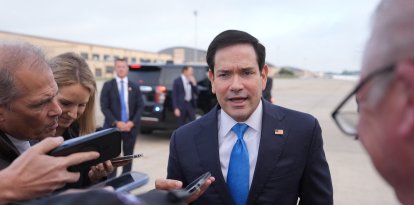
For his part, Secretary of State Marco Rubio, stated on Wednesday in Athens that the Iranian regime has lost control of the Strait of Hormuz—the strategic sea lane through which approximately one-fifth of the world's oil passes—and that the flow of crude oil through that route has returned to nearly pre-conflict levels.
World
US withdraws all its B-1 bombers from UK base at Fairford following alleged foiled terrorist plot
Emmanuel Alejandro Rondón
Trump promises an imminent end
President Donald Trump stated on Wednesday that the war with Iran will end "very soon" and maintained that oil prices "will plummet" once the conflict is over. Trump said that the price of crude oil could even fall below pre-war levels.
"As soon as we're done with the war—which will be very soon, it's going to be very soon," the president said. "One way or another, we'll have gotten through it, but the price of oil will drop to levels that, I think, may even be lower than they were before the war began."
His remarks coincided with reports that the White House asked the Pentagon to develop options for possible strikes against Iran ahead of the November midterm elections. No final decision on a military operation has been announced.

Iran warns Washington
Iran warned on Wednesday of possible preemptive strikes. Iranian Army spokesman Brigadier General Mohammad Akrami Nia told the Fars News Agency that Tehran is prepared to attack U.S. positions if it believes an attack against the country is being planned.
The military official asserted that Iran has already carried out such operations against U.S. bases using drones and stated that the Islamic Republic has "significant weapons reserves" after maintaining its military production. He also maintained that Iranian military doctrine has shifted from a defensive posture to an offensive one, with the aim of preempting any attack.
LATEST