Day two of UNGA begins: All eyes on Pezeshkian, Milei and Zelensky
The assembly enters its second day of high-level debate. On Tuesday, some 130 heads of state and government kicked off the week; Trump took the podium. Speaking today are Iranian President Masoud Pezeshkian; Ukrainian President Volodymyr Zelensky, on the same day the Security Council addresses the war in Ukraine; and Argentine President Javier Milei, who is aligned with Washington.
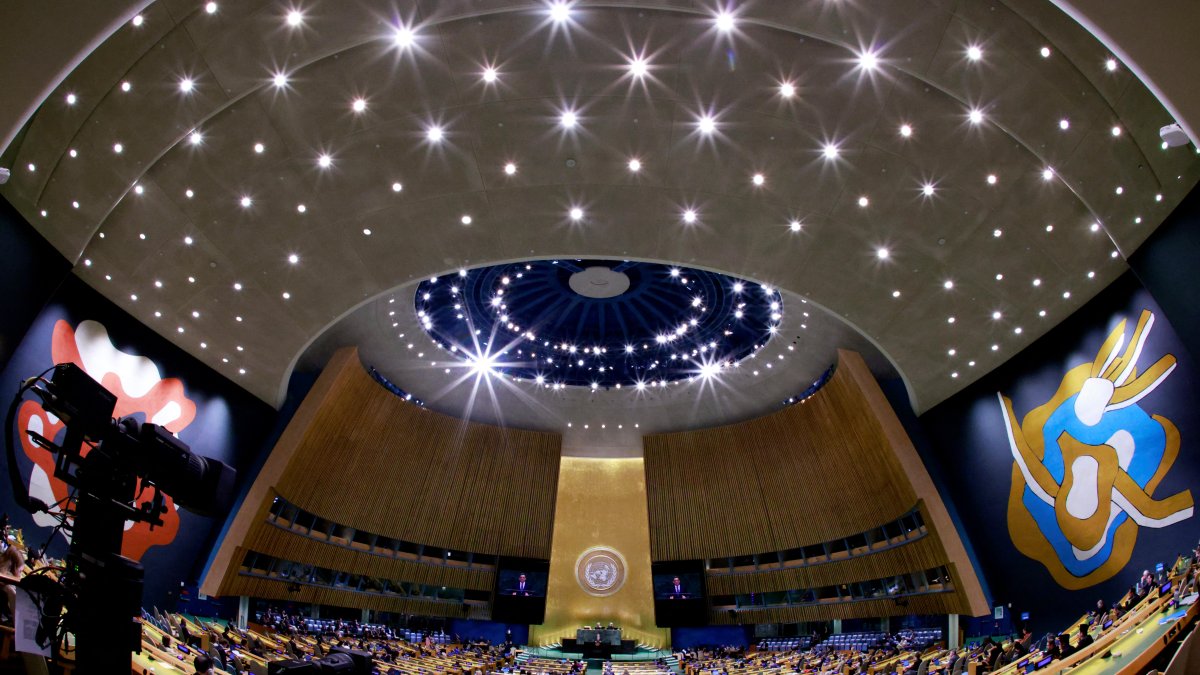
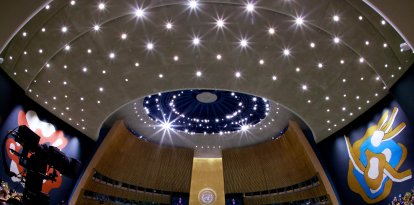
United Nations General Assembly at United Nations Headquarters in New York

The 81st U.N. General Assembly begins its second day on Wednesday with an agenda marked by three speeches that could shape the course of conflicts in the Middle East, Eastern Europe and Latin America. The president of the Iranian regime, Masoud Pezeshkian, will deliver his first speech at the U.N. since the United States and Israel launched their military offensive against Iran in February, in an appearance expected to be a direct response to Donald Trump's warning that he could "annihilate" the Islamic Republic if an agreement is not reached soon.
Hours later, Ukrainian President Volodymyr Zelensky will take the podium to present Kiev's case to the international community, just as the U.N. Security Council holds a special session on the war Russia has been waging against Ukraine for more than four and a half years.
Between these two speeches, Argentine President Javier Milei's remarks will be closely watched by markets and conservative governments in the region, after the libertarian leader solidified his alliance with the Trump administration and positioned himself as one of the strongest advocates for free markets and national sovereignty in the hemisphere.
Iranian President Masoud Pezeshkian claims that his country is "a victim of terrorism"
Iranian President Masoud Pezeshkian stated on Wednesday before the U.N. that his country is a victim of terrorism, refuting President Donald Trump's earlier accusation that Tehran was guilty of committing such crimes.
"We are victims of terrorism. ... I come from an Iran where our esteemed supreme leader was assassinated without any legal framework or reason. I come from an Iran where, in truth, they bombed a school," said the Iranian regime leader.
Pezeshkian stated that Tehran would not allow the Strait of Hormuz to be used to carry out acts of aggression against his country. "We cannot allow some to have free access and promote their interests through that waterway, while at the same time using it to impose their aggression on us," he said.
"Iran has never been an aggressor, has never started a war, and has always demonstrated its commitment to the negotiating table. War was imposed on us, but we have shown that we are not afraid to fight," he stated.
Pezeshkian struck a defiant tone on Wednesday before the U.N.: "[U.S. President Donald Trump] must know that the Iranian people's resistance will only grow in the face of sanctions, increased pressure and escalating harassment. We will never bow our heads or kneel," he said.
Al-Sharaa claims the annexed Golan Heights
Syrian President Ahmed al-Sharaa insisted on Wednesday at the U.N. that the Golan Heights "will remain Syrian territories," hours after Damascus once again rejected Colombia's recognition of Israeli sovereignty over the plateau.
"Any attempts that violate our sovereignty, violate international law, will be stopped. Golan will remain Syrian territories," al-Sharaa told the leaders gathered in New York.
Israel captured the Golan Heights from Syria in the 1967 Six-Day War, following years of attacks from those heights against communities in northern Israel, and in 1981 applied its law, jurisdiction and administration to the territory. The annexation is considered by Jerusalem as essential to its security. In August, Colombia's new government recognized Israeli sovereignty over the Golan Heights. Until then, only the United States—in 2019, under Donald Trump—had endorsed that annexation.
The U.N. continues to describe the plateau as Syrian territory under Israeli occupation. Israel, the United States and now Colombia treat it as part of the Jewish state.
LATEST