‘There will be elections in Venezuela’: Delcy Rodríguez's announcement at UN, with no date set, amid growing pressure for transition
At no point in her speech did the Chavista leader mention the arrest of Nicolás Maduro and his wife, Cilia Flores, who are awaiting trial in New York on charges of narcoterrorism and money laundering.
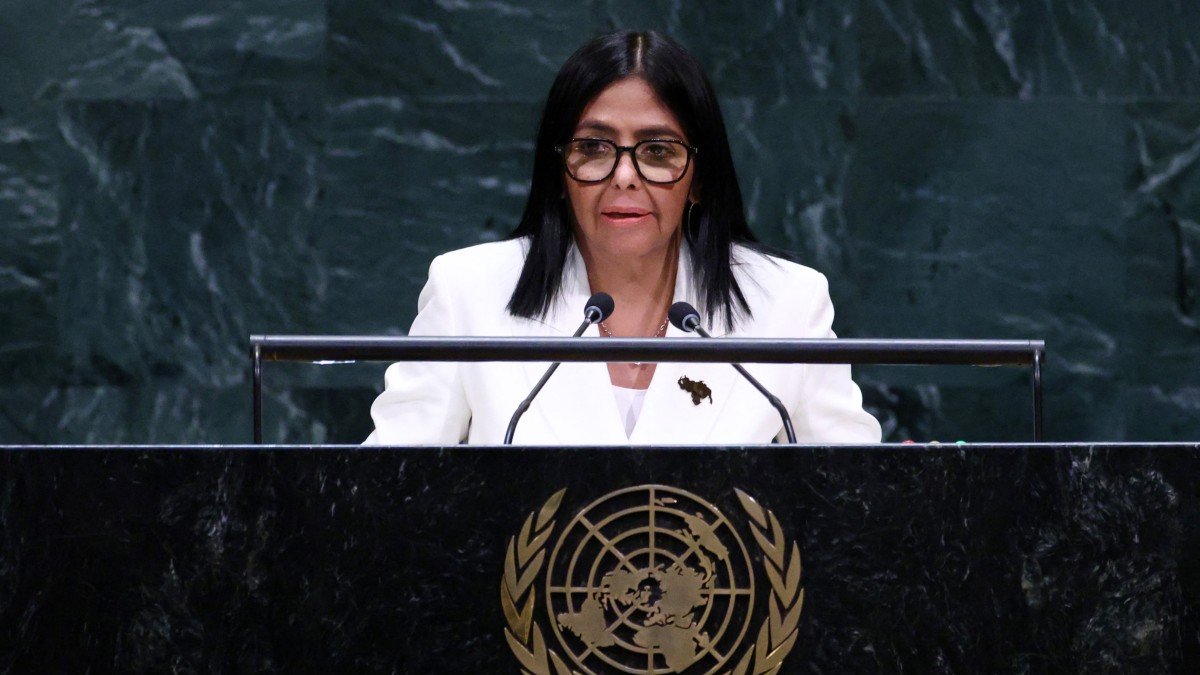
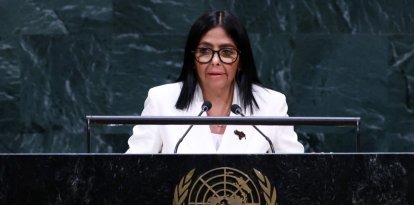
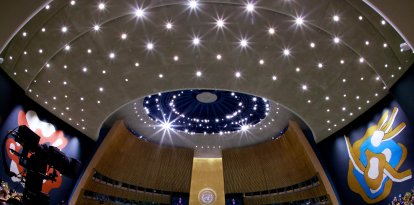
Delcy Rodríguez addresses the UN General Assembly

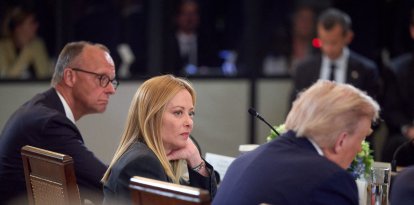
Venezuela's interim leader, Delcy Rodríguez, took the podium at the U.N. General Assembly on Tuesday with a message calculated for Washington 24 hours after her meeting with President Donald Trump and senior White House officials, including Marco Rubio.
As a key point, Rodríguez announced that Venezuela "has begun a process of democratic transformation" and made a surprise announcement: "I want to be very clear: there will be elections in Venezuela."
The high-ranking Chavista official, backed by Washington following the capture of former dictator Nicolás Maduro, explained that her administration is holding talks with a sector of the opposition, referring to the National Assembly elected in 2015 — the last legislative body the White House recognizes as legitimately elected in the country.
The other key issue in her address was not what she announced, but what Rodríguez omitted. At no point in her speech did she mention the capture of Nicolás Maduro and his wife, Cilia Flores, who are awaiting trial in New York on charges of narcoterrorism and money laundering. Nor did she mention the late dictator Hugo Chávez, or socialism or communism — historical hallmarks of Chavismo at the General Assembly of the U.N.
In contrast, Rodríguez resorted to platitudes about the global economy, artificial intelligence, energy security, affordability and international trade, avoiding any topic Washington might find uncomfortable. In the eyes of the world, it was a stance bordering on total submission to the United States — a fact that has been generating discontent within the Chavista base, which is uncomfortable with Rodríguez's increasingly accommodating tone toward the White House. Nor was there any lack of gratitude toward Trump, whom she thanked for his administration's efforts to repair bilateral relations between Caracas and Washington, also mentioning the recent energy agreements signed between the two countries.
The speech comes amid growing anxiety within Venezuela. María Corina Machado, a Nobel Peace Prize laureate and the opposition leader with the highest poll numbers in Venezuela, has been out of the country for months, unable to return despite multiple failed attempts by sea and air.
The lack of a clear electoral calendar, coupled with the widespread rejection of both Rodríguez and the rest of the Chavista leadership, fuels the feeling that the promised democratic transition lacks a clear direction. In this context, Rodríguez's undated announcement — even if it remains purely rhetorical — also serves as an attempt to ease the pressure caused by this uncertainty.

World
X-ray of power in Caracas: New documentary exposes Delcy Rodríguez's ties to extremism, Spanish socialism
Andrés Ignacio Henríquez
World
Siete intentos frustrados, tres en 24 horas: así se le ha negado a María Corina Machado el regreso a Venezuela
Emmanuel Alejandro Rondón
Her meeting with Trump on Tuesday, during the assembly, confirms that the electoral issue is on the table, though no specific date has been set. According to a report by Axios, Trump told Rodríguez directly: "You have to have elections at the end of the day," though he did not insist on a specific timeline during the meeting. Officials consulted by the outlet noted that, almost by process of elimination, an election around the summer or fall of 2028 appears to be the most plausible option, as it would give Venezuela more time to repair its financial and electoral systems. The underlying obstacle is Venezuela's sovereign debt, estimated at about $300 billion, which, according to sources within the administration, must be restructured before the country can hold elections.
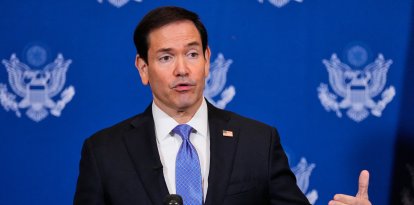
Secretary of State Rubio publicly confirmed this after the meeting: "There's a lot that needs to be fixed in order for Venezuela to be successful... Debt restructuring is key to that." Although the Republican senator Bernie Moreno had called for elections to be scheduled for July 2027, administration officials consider that date, for now, too premature. "If it can be in '27, that would be great. We would like that," an official told Axios, though he clarified that Venezuelans themselves must first take the lead in the process and resolve the debt issue.
The other unresolved issue is, precisely, Machado's return. The Department of State, including Rubio, has publicly maintained that the opposition leader has every right to return to her country and that Washington has not placed any obstacles in her way. However, when asked directly about the timeline for that return and her failed attempts to return, Rubio avoided answering the question. In other words, Washington recognizes Machado's right to enter Venezuela whenever she wishes, but refrains from actively supporting her return, while the negotiations spearheaded by the White House are proceeding exclusively with the opposition faction linked to the 2015 National Assembly.
LATEST