ANALYSIS
Iran's Revolutionary Guard Corps threatens new targets and weapons if US strikes again, as two ships attacked in Strait of Hormuz
In statements reported by Iranian media, IRGC spokesman Hossein Mohebbi said there will be "significant changes" in their defense and counteroffensive, and that they are prepared for a "protracted war." For his part, Treasury Secretary Scott Bessent warned that as of Sept. 23, all Iranian airlines will be effectively cut off from the international financial system.
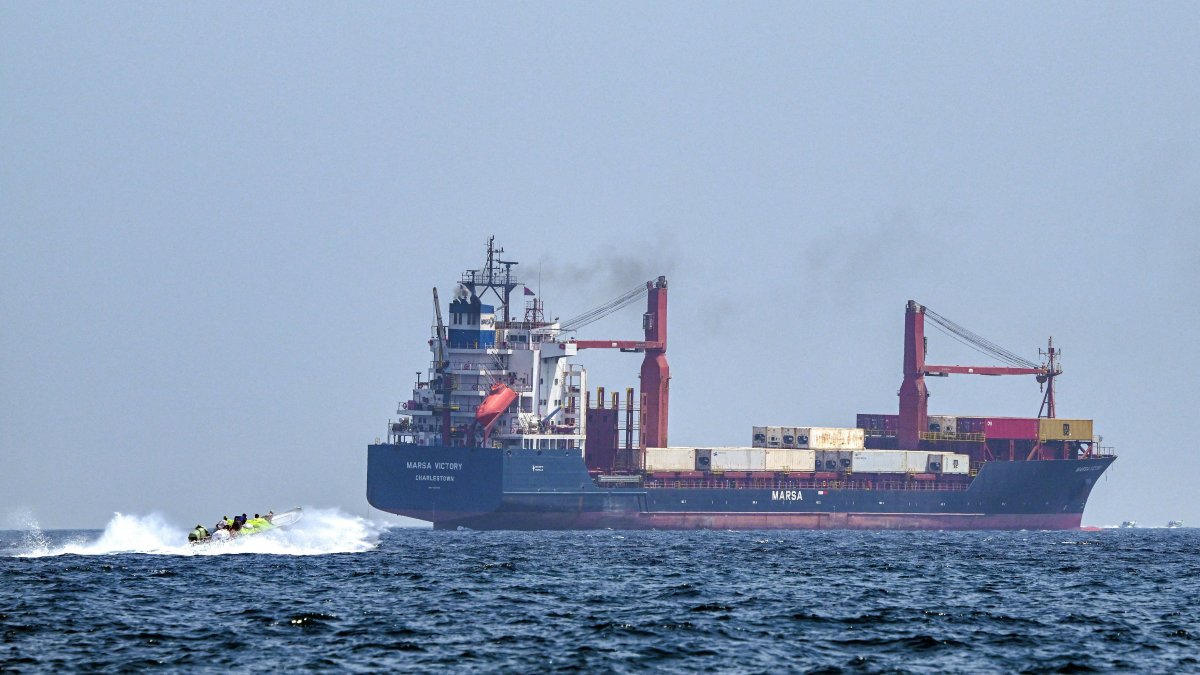
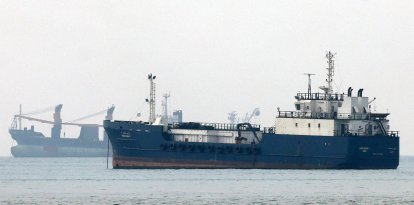
An oil tanker navigates the waters of the Strait of Hormuz

Iran's Islamic Revolutionary Guard Corps (IRGC) warned on Monday that if the United States launches new attacks against its territory, it will respond with new weapons and different targets, including ones that have not yet been attacked. In statements reported by Iranian media, IRGC spokesman Hossein Mohebbi said there will be "significant changes" in their defense and counteroffensive, and that they are prepared for a "protracted war."
On Saturday, according to the regime's state television, the Iranian Army's Central Command had warned that Washington was planning new actions against Tehran, though without providing details.
World
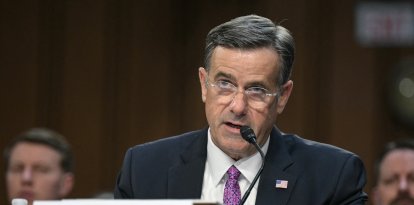
CIA Director John Ratcliffe meets with Egyptian president in Cairo amid regional escalation
Carlos Dominguez
Oil tankers attacked in Strait of Hormuz: Two ships hit, two injured
According to AFP, tensions in the Strait of Hormuz escalated on Monday with two incidents involving ships. The British maritime security agency UKMTO stated that, in the first incident, an oil tanker entering the strait was struck by an "unidentified projectile": two crew members sustained minor injuries, and the ship was able to continue to its next port under its own power. The British firm Vanguard Tech identified the vessel as the British oil tanker La Stephanie, which was struck by a drone while en route to the Gulf.
Later that same Monday, a liquefied petroleum gas (LPG) tanker was struck by debris from unidentified projectiles, according to UKMTO. There were no injuries in this second attack, and the tanker also continued on its route to its next port of call.
Iran, which controls part of this strategic waterway, does not authorize ships to transit without its permission and frequently attacks those that do. Washington, for its part, maintains a counter-blockade against Iranian ports, in a war of mutual pressure over the most important maritime route for oil transportation.
Treasury tightens financial straightjacket on Iran
Treasury Secretary Scott Bessent warned that as of Sept. 23, all Iranian airlines will be effectively cut off from the international financial system. "If they land, you cannot provide them with fuel. You cannot provide them with landing services, you cannot sell them tickets, or you will be knocked out of the dollar system," he said Monday in an interview.
This measure comes on top of sanctions imposed this month against all Iranian airlines that had not yet been penalized, as well as foreign companies that support Iran's aviation sector.
Visa denials and war spreading to Yemen
On the diplomatic front, Tehran denounced the U.S. for denying visas to part of its presidential delegation to travel to the U.N. General Assembly, including members of its communications team, in a move it described as "hostile and unprecedented."
The conflict has also spread to Yemen, where Iran-backed Houthis have gained ground against the Saudi-backed government and launched attacks on Saudi targets, including the capital, Riyadh.
Although direct fighting between the U.S. and Iran has subsided in recent days, both sides maintain rival blockades in the Strait of Hormuz and a dynamic of pressure that has left the conflict at a stalemate, with no clear signs of a return to full-scale war or a definitive de-escalation.
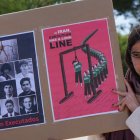
Iran's economy shrinks by more than 10% amid the war
The conflict, which erupted following the Feb. 28 attacks on Tehran, has hit an economy already dependent on hydrocarbon exports and burdened for years by hyperinflation and the sharp devaluation of the rial, exacerbated by international sanctions against the regime.
The U.S. maintains a blockade on Iranian ports that, between April and June, prevented the export of "not a single barrel of oil," as Parliament Speaker Mohammad Bagher Ghalibaf stated at the time. Today, exports are minimal, but not zero.
LATEST