Starship mega-rocket reaches Earth's orbit for the first time
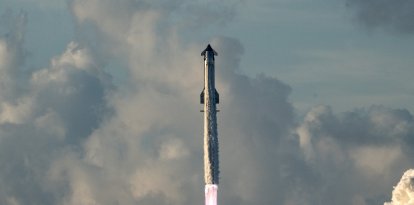
SpaceX's black-and-silver behemoth, standing over 400 feet tall, soared into the sky amid a thick cloud of smoke shortly after 8:48 a.m. E.T. on what is its 14th test flight.
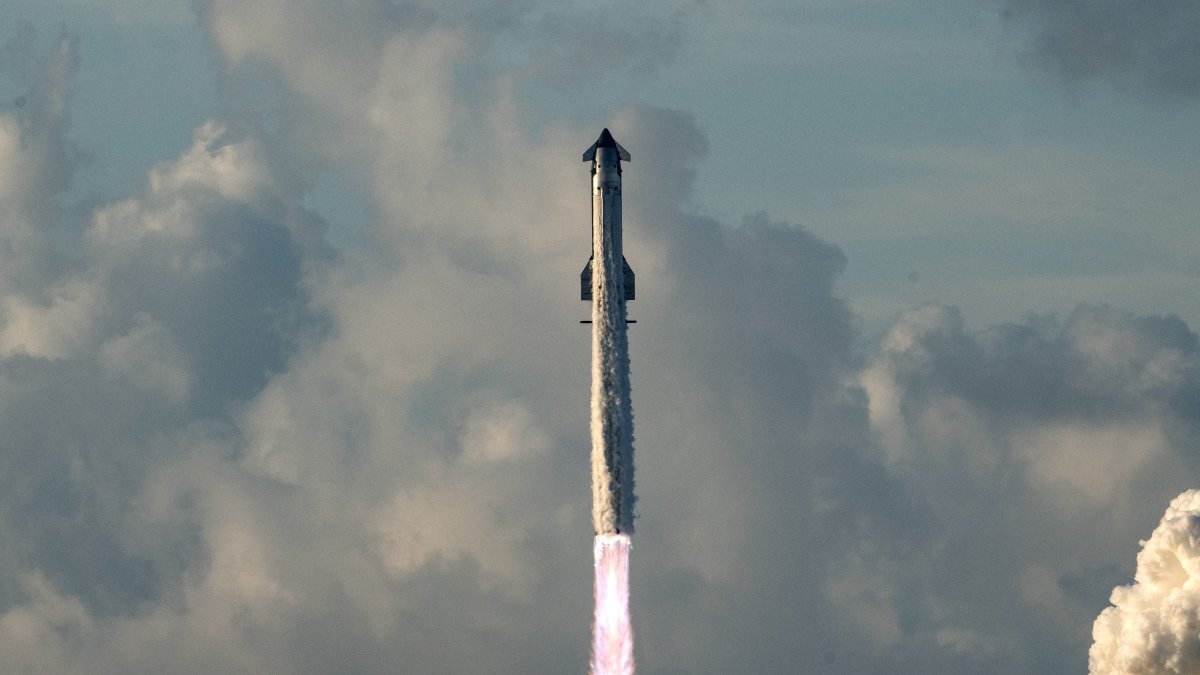
SpaceX's Starship spacecraft launched on its 14th flight from Texas

The Starship mega-rocket from Elon Musk reached Earth's orbit for the first time on Monday following a successful launch from Texas, a key milestone in the development of this giant designed for future missions to the moon and Mars.
The black-and-silver behemoth from SpaceX, standing over 400 feet tall, soared into the sky amid a thick cloud of smoke shortly after 8:48 a.m. GMT, on what is its 14th test flight.
Then the rocket's upper stage—the largest and most powerful ever built—reached Earth's orbit, a risky but essential step for the project's continuation, according to the company's live video feed.
Shortly thereafter, it began deploying the 26 next-generation Starlink satellites into orbit—one of the missions planned for this test flight.
Economy
Elon Musk becomes world's first trillionaire following successful IPO of SpaceX: Shares rise to $150
Williams Perdomo
After years of development and testing in Texas, Musk's company began flying the rocket in its full configuration in 2023, following suborbital trajectories, which are safer and less complex. Several previous tests ended in spectacular explosions.
Following both successes and failures, the rocket underwent numerous modifications.
However, enormous technical challenges remain before Starship—which Musk hopes will be fully reusable—can be considered ready for commercial flights or for missions to the moon and Mars.

Speed of 17,000 miles per hour
With this new test, SpaceX plans to usher in an "exciting new phase" of development, which will include tests of refueling the rocket once in orbit.
As a precaution, the spacecraft was first launched on a suborbital trajectory and then performed a second burn to reach orbit—the most difficult part of the maneuver.
To reach a circular orbit about 170 miles above the Earth's surface, a speed of approximately 17,000 miles per hour is required.
The rocket is expected to end its journey in the Pacific Ocean after orbiting Earth six times.
Its first stage, called Super Heavy, which powered the entire system, is expected to splash down in the Gulf of Mexico shortly after liftoff. This time, SpaceX has no plans to recover it using massive robotic arms.
A successful launch would in itself be "a success," Kathleen Curlee, a space analyst at Georgetown University, had told AFP before liftoff.
But for the public and SpaceX's new investors, expectations are undoubtedly very different.
"They need to have flashy tests," because anything less would be perceived as a failure by the general public, Curlee said.

This is especially true given that the development of Starship—a modified version of which is intended for NASA's lunar program—has suffered numerous delays, and that a Chinese company has made recent advances in the field of reusable rockets.
Nevertheless, SpaceX continues to dominate the global space launch market thanks to its partially reusable Falcon rockets, and has made risk-taking its motto.
This fourteenth test flight will be followed, later that same week, by three other SpaceX rocket launches, one of which will carry a crew of astronauts to the International Space Station (ISS).
LATEST