Nvidia is looking for a successor to Jensen Huang: Here are the candidates to become the company's next CEO
Replacing Huang will not be an easy task for a company whose growth and leadership in the artificial intelligence industry are closely tied to him.
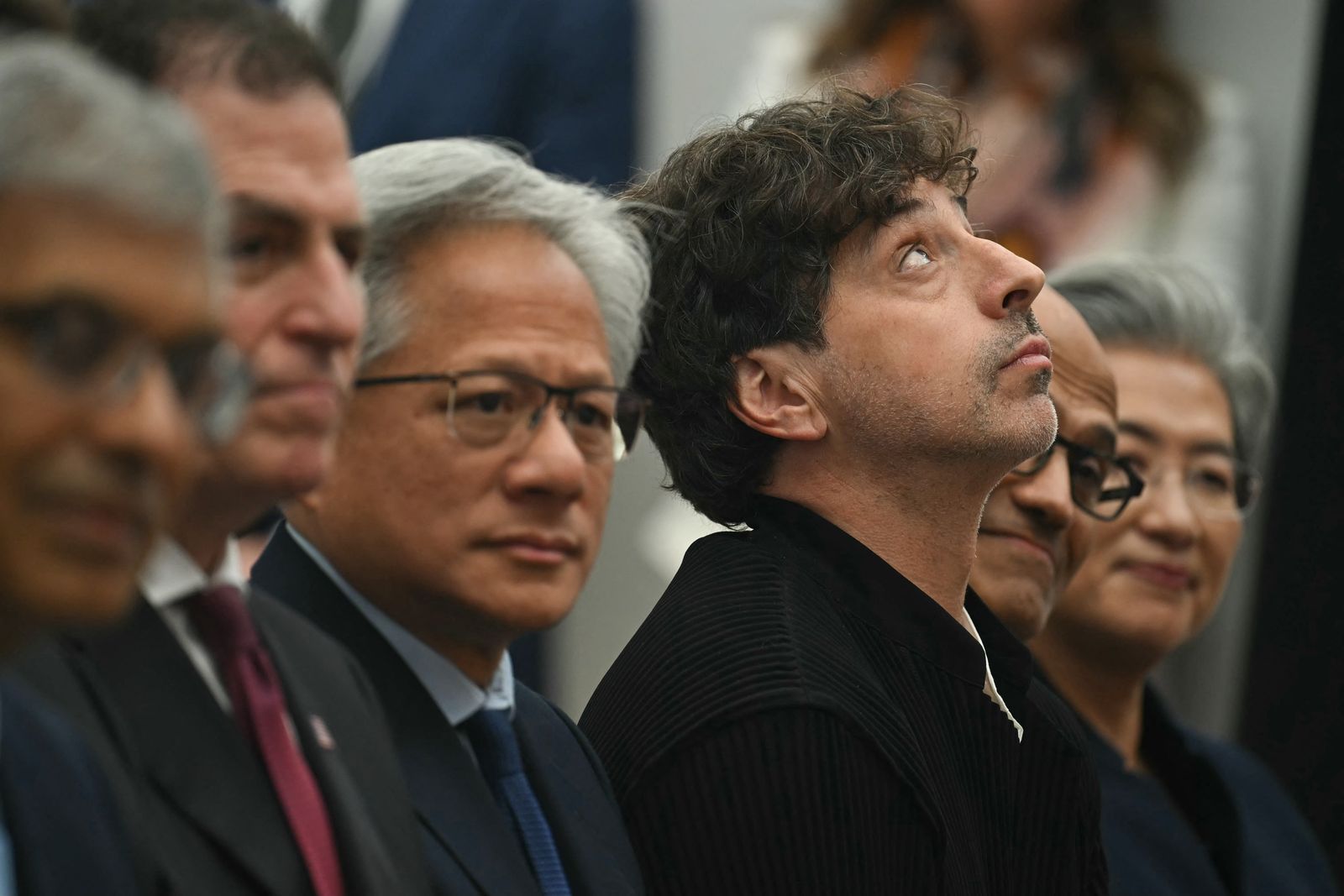
Jensen Huang in a file photo.
Revelations about Jensen Huang's alleged extramarital affairs have placed Nvidia's CEO at the center of a controversy that threatens to mark a turning point for the company. The allegations regarding his personal life have heightened uncertainty about his future at the helm of the tech giant, which is already considering the search for a permanent successor. Replacing Huang, however, will not be an easy task for a company whose growth and leadership in the artificial intelligence industry are closely tied to his leadership. Potential candidates include executives from Nvidia and other major tech companies.

One name that could come up in the discussion is Forrest Norrod, executive vice president of Advanced Micro Devices (AMD), Nvidia's main competitor in the artificial intelligence processor market. Norrod heads the data center chip business, a segment in which AMD has established itself as the second-largest company behind Nvidia. According to several analysts, his track record and leadership skills make him an attractive candidate to take the reins.
Another prominent candidate to replace Huang is Charlie Kawwas, president of Broadcom's semiconductor division. The executive has extensive experience in the sector and is intimately familiar with the development of artificial intelligence technologies. Broadcom has also gained prominence by collaborating with companies such as Google on the design of its own processors, an alternative to purchasing chips from Nvidia.
Another potential candidate is Rene Haas, 64, currently CEO of Arm Holdings and knows Nvidia inside and out, having worked there from 2006 to 2013. He also maintained close contact with Huang and other executives during the negotiations for Nvidia's acquisition of Arm in 2020. The deal ultimately fell through two years later due to opposition from regulatory authorities.
Other options within Nvidia and Apple
Within Nvidia itself, Ian Buck stands out as one of the executives with the deepest technical expertise. The vice president was one of the key figures behind the development of CUDA, the software platform that enabled the company's processors to shift from a focus primarily on video game graphics to becoming essential tools for artificial intelligence applications. He currently oversees relationships with large companies that use thousands of Nvidia chips in their data centers. Although he lacks extensive executive experience, he has testified before Congress and has established contacts in Washington.
Johny Srouji, head of Apple's hardware division, is another option because of his semiconductor design experience. The Israeli engineer has played a key role in developing Apple's in-house processors and integrating artificial intelligence features. However, his experience has focused primarily on personal devices, such as computers and phones, rather than on the data centers that underpin much of the AI infrastructure.
Former Apple CEO Tim Cook has also been mentioned as a possible replacement, after President Donald Trump went so far as to single him out as an obvious choice to fill Huang's position. However, Cook has not played a prominent role in the development of artificial intelligence, and his age could be a factor. One possibility would be for him to temporarily assume the role while Nvidia searches for a longer-term successor.
For now, the interim leadership is in the hands of Colette Kress, Nvidia's chief financial officer, who was appointed to the position while the search is underway. At 59, she has in-depth knowledge of the company's operations and maintains a strong relationship with Wall Street. However, her main drawback is a lack of specialized technical experience in developing artificial intelligence technologies.
Far from being a simple task, the truth is that choosing Huang's successor will also pose an organizational challenge, given that he established an unconventional structure in which about 60 people reported directly to him. On this point, some experts have noted that this model will need to be modified quickly, adding that the next leader will have to inspire employees and attract talent—qualities that have been fundamental to Nvidia's growth.
🛠 Do you think there is an error in this article?
Recommendations


LATEST