ANALYSIS
From local roots to strategic asset: The era of major sports empires
Local investors are giving way to investment funds and global conglomerates that manage teams and facilities as an interconnected financial ecosystem.
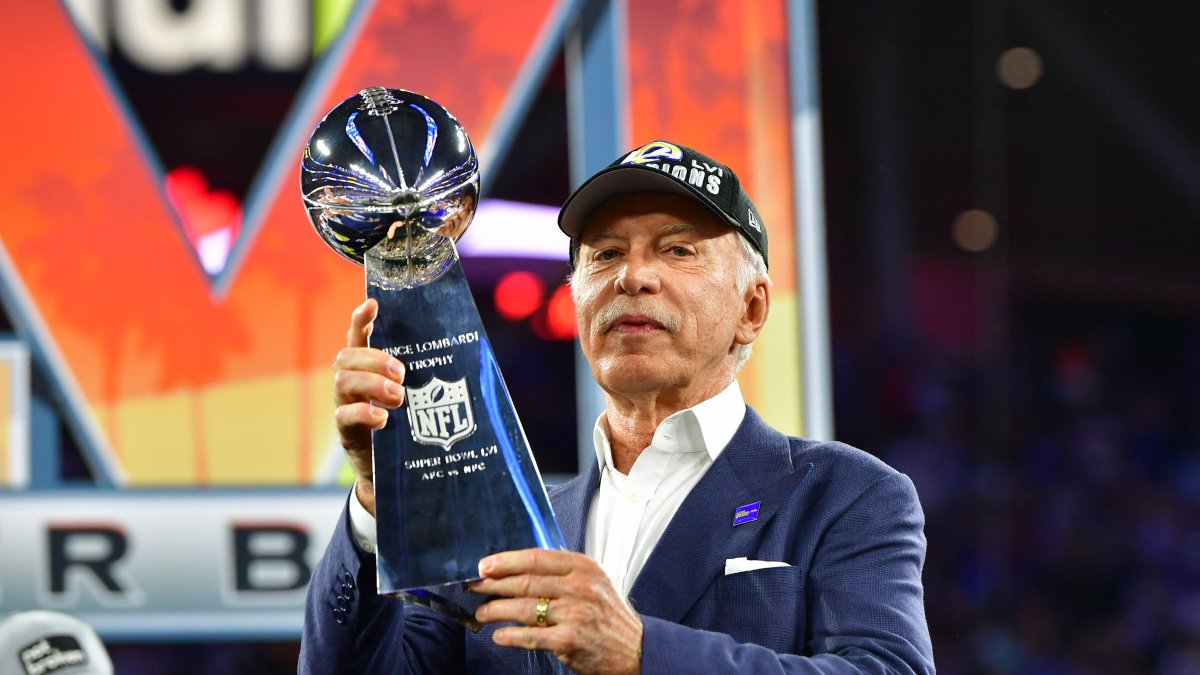
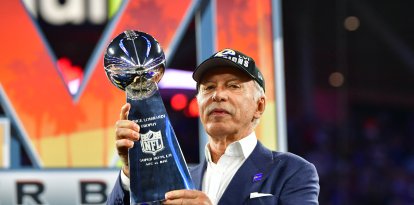
Stan Kroenke with the Vince Lombardi Trophy won by the Los Angeles Rams in Super Bowl LVI

The ownership model in professional sports is undergoing a radical transformation. The traditional profile of the local investor—the businessman who acquired his city's team driven primarily by a sense of local roots—has given way to the emergence of large financial conglomerates and global investment funds. These corporations do not view sports organizations as isolated projects, but rather as strategic assets with which to grow and become stronger than the competition, aware of the media and economic power that drives sports. By acquiring both minority and majority stakes in multiple teams across various sports and leagues around the world, these groups have built veritable sports empires.
The goal of these corporations is clear: to maximize revenue, optimize talent acquisition and generate commercial synergies that an independent team could hardly achieve on its own. All of this is aimed at cementing a dominant position that is difficult to dislodge.
City Football Group (CFG)
It is perhaps the most powerful conglomerate in the world. Founded in 2013 by the royal family of the United Arab Emirates—specifically by Sheikh Mansour bin Zayed Al Nahyan—the City Football Group (CFG) built a multinational network of soccer teams that radically transformed the traditional ownership model.
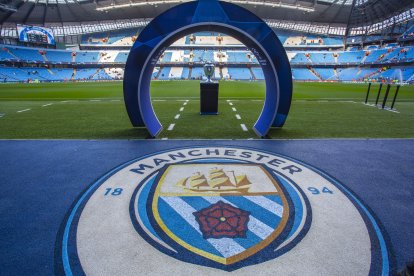
Etihad Stadium, home of Manchester City. File photo
Manchester City, which won its only UEFA Champions League title to date in the 2022–2023 season, is its flagship team and financial driving force. In addition to the English team, CFG owns majority or minority ownership of 11 other soccer teams strategically distributed across the world's major leagues and emerging markets: Girona FC (Spain), Lommel SK (Belgium), ESTAC Troyes (France), Palermo FC (Italy), Melbourne City FC (Australia), Shenzhen Peng City FC (China), Yokohama F. Marinos (Japan), New York City FC (MLS, United States), Montevideo City Torque (Uruguay), Esporte Clube Bahia (Brazil), and Club Bolívar (Bolivia).
Kroenke Sports & Entertainment (KSE)
In 1999, real estate magnate E. Stanley Kroenke founded Kroenke Sports & Entertainment (KSE), a corporation that has established itself as one of the world's greatest sports empires. It boasts a portfolio filled with successful teams and state-of-the-art sports venues.
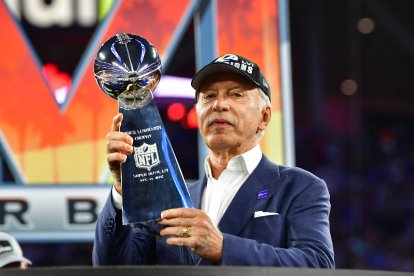
Stan Kroenke with the Vince Lombardi Trophy won by the Los Angeles Rams in Super Bowl LVI
Its portfolio spans various sports and the world's most influential leagues: KSE owns the Los Angeles Rams (NFL), the Denver Nuggets (NBA), the Colorado Avalanche (NHL), the Colorado Rapids (MLS), the Colorado Mammoth (NLL) and Arsenal FC (soccer, Premier League). In addition, it has built and manages venues such as SoFi Stadium (Los Angeles), Ball Arena (Denver), and Emirates Stadium (London, United Kingdom). Its franchises have won titles such as the Super Bowl, the Larry O'Brien Trophy and the Stanley Cup, making it a leader in corporate sports engineering.
Red Bull Group
Unlike others, Red Bull Group transformed corporate sponsorship into a comprehensive sports empire built on brand promotion. Its structure spans everything from some of the most common sports to so-called extreme sports.
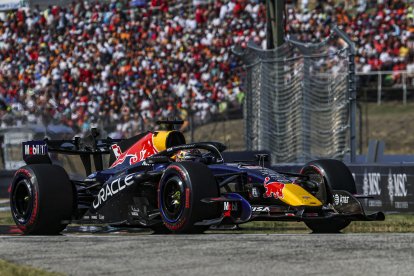
Oracle Red Bull Racing Team single-seater ahead of a Formula 1 Grand Prix. File photo
This Austrian group owns Oracle Red Bull Racing (Formula 1) and European ice hockey and cycling teams. In soccer, it has a broad portfolio: RB Leipzig (Germany), FC Red Bull Salzburg (Austria), New York Red Bulls (MLS, United States), Red Bull Bragantino (Brazil), and RB Omiya Ardija (Japan). It is also a minority partner in Paris FC (France) and Leeds United (England). Red Bull Group is known for operating under a philosophy of early talent scouting and big data. This model has made it one of the most efficient and cohesive sports organizations in the world.
Fenway Sports Group (FSG)
In 2001, businessmen John W. Henry and Tom Werner founded Fenway Sports Group (FSG), one of the largest corporations managing sports assets around the globe. It all began with the acquisition of one of Major League Baseball's (MLB) most prominent franchises.
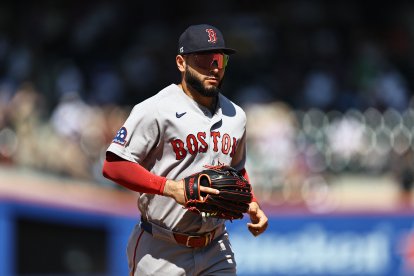
Wilyer Abreu, a player for the Boston Red Sox, during a game in 2026
Specifically, FSG acquired ownership of the Boston Red Sox. From there, it expanded its business into areas beyond MLB: Liverpool FC (soccer, Premier League), the Pittsburgh Penguins (NHL) and RFK Racing (NASCAR). It also has some investments in the PGA Tour through the Strategic Sports Group consortium. The conglomerate is known for prioritizing the optimization of operating income and financial sustainability, steering clear of large investments unless they have been thoroughly analyzed beforehand. This is something for which it has, on certain occasions, been criticized.
Liberty Media
In its case, it does not own any teams, but it does own the two major competitions in the world of motorsports. Liberty Media has focused its strategy on direct ownership, commercial exploitation and the global expansion of championships. In addition, it has successfully reached a younger audience.
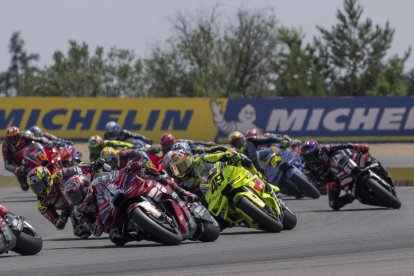
2026 Czech Republic MotoGP Grand Prix
Under its control are Formula 1 and MotoGP. Liberty Media acquired ownership of the former in 2017, through a deal valued at more than $4 billion. In recent years, it has boosted the series through its expansion into the U.S. market by creating two new street circuits (Miami and Las Vegas). As for MotoGP, the corporation completed its acquisition in 2025. It has established itself as the world's leading force in the exploitation of sports commercial rights.
Harris Blitzer Sports & Entertainment (HBSE)
Founded in 2017 by entrepreneurs Josh Harris and David Blitzer, Harris Blitzer Sports & Entertainment (HBSE) operates as a key player in the sports industry, managing a diverse portfolio that includes high-profile sports franchises in the United States.
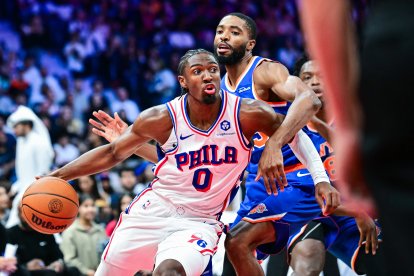
Tyrese Maxey (0, Philadelphia 76ers) during a game. File photo
Among its assets are the Philadelphia 76ers (NBA), a team that in the summer of 2026 has signed no less than two stars from the world's top basketball league: LeBron James and Jaylen Brown. HBSE also owns the New Jersey Devils (NHL) and oversees the operation of their arena, the Prudential Center. It has established itself as a corporate powerhouse focused on innovating fan experiences, strategic sponsorships, and investments in media and technology applied to sports.
LATEST