Extreme heat hits the south-central region: Warnings of temperatures up to 115 °F and risk of flash floods through Tuesday
A high-pressure ridge is keeping intense heat in the south-central United States, with highs of up to 115 °F and nights that offer little relief. At the same time, the monsoon and an active front are increasing the risk of severe storms and flash flooding from the Southwest through the Midwest and the Southeast.
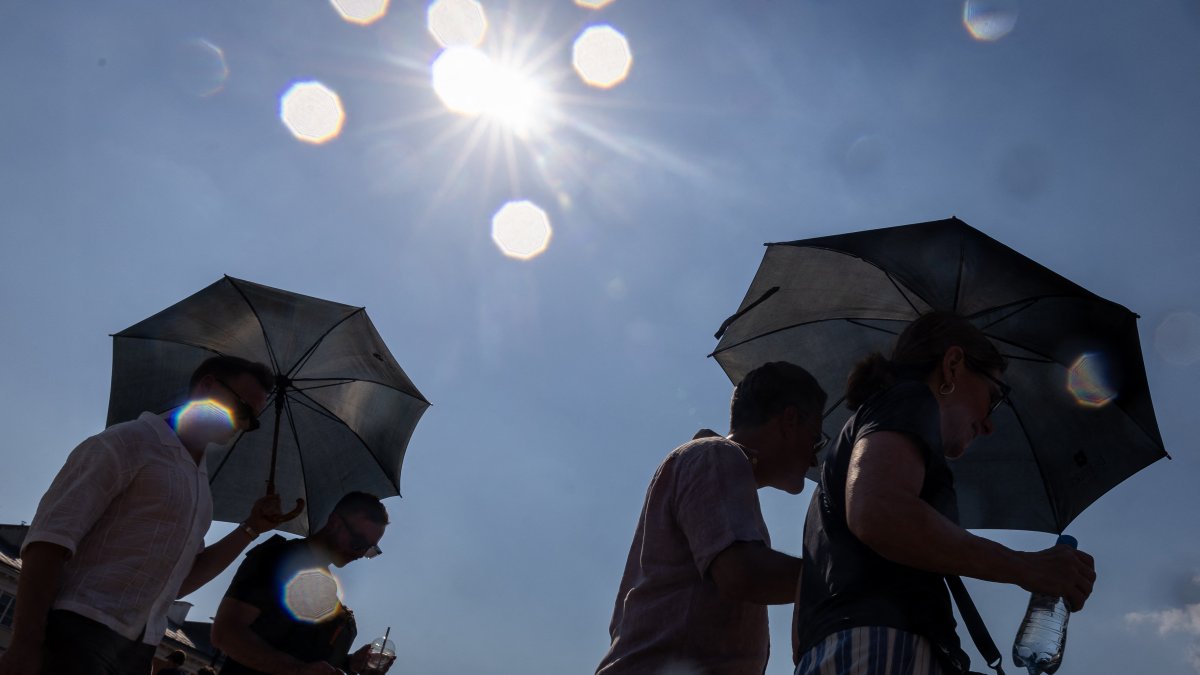
People seek shelter from the sun—File photo

The south-central part of the country remains under a high-pressure ridge that is bringing extreme and dangerous heat at least through the middle of the week. The National Weather Service (NWS) warns of highs ranging from 100–110 °F in the southern plains and up to about 115 °F in parts of the Southwest.
High humidity and very warm nights will offer little relief. The HeatRisk will remain from high to extreme across much of the southern Plains, the lower Mississippi Valley and, progressively, the Southwest.
Society
Lake Powell drops to record low, putting pressure on water and energy supplies in the West
Diane Hernández
Thunderstorms, wind-driven hail and flooding
On the western flank of that same ridge, monsoon-like moisture will fuel scattered showers and thunderstorms from the Southwest and the Four Corners region to the Great Basin and the central Rocky Mountains. The strongest cells may bring intense gusts and flash flooding through Tuesday, especially where there is sufficient atmospheric instability.
Further north, a westerly flow and a moving front will bring rain and thunderstorms from the Rockies and the Plains toward the Upper Midwest. In the central and southern High Plains, the risk of locally heavy rain and severe thunderstorms also persists through Tuesday.
In the Northeast, the main system is moving away, but there may still be residual showers on Monday in the Lower Great Lakes and New England. Toward the southeastern and southern Plains, the trailing front will continue to bring rain and thunderstorms; the most organized storms may produce damaging winds and localized flooding, especially along the Gulf Coast, the lower Mississippi Valley and the southeastern coast.
LATEST