Lake Powell drops to record low, putting pressure on water and energy supplies in the West
The Colorado River's main reservoir is now about 30 feet from the minimum level needed to generate electricity at the Glen Canyon Dam, as federal authorities work to avert a major crisis.
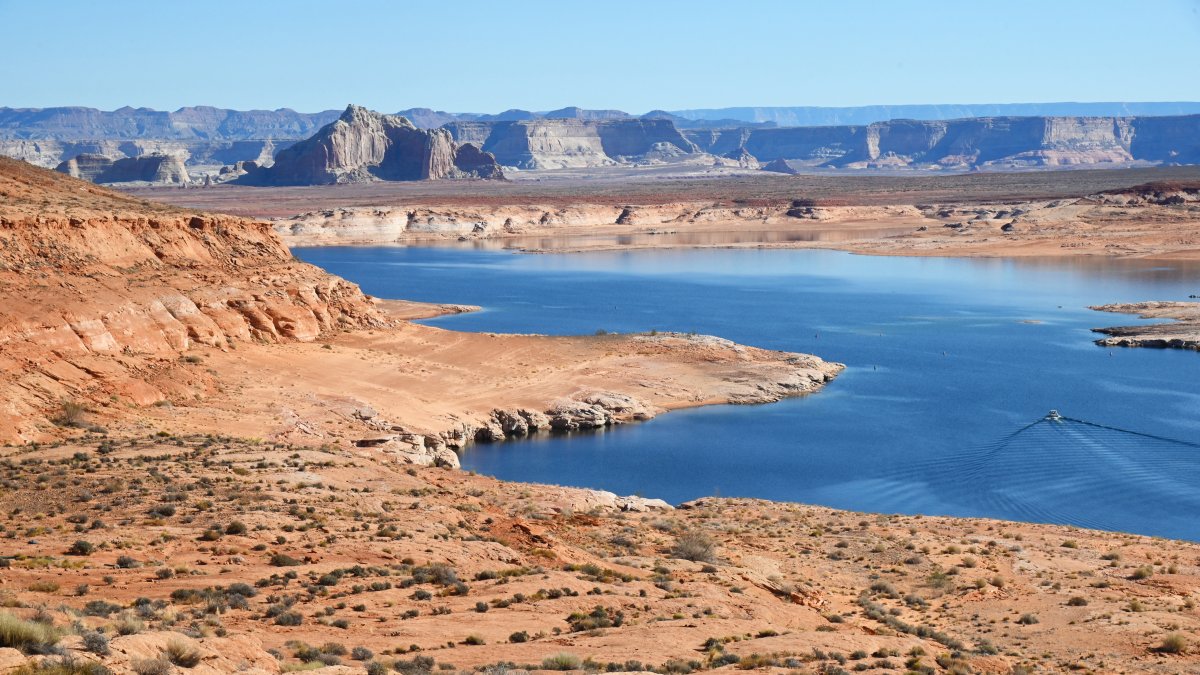
Images of a boat on Lake Powell

Lake Powell, one of the country's major reservoirs, dropped to a new all-time low and came dangerously close to a level that could jeopardize electricity generation at Glen Canyon Dam, a strategic infrastructure for the Colorado River system.
Over the weekend, the reservoir level stood at around 3,520 feet above sea level, slightly below the record low set in 2023. The Bureau of Reclamation (USBR) itself identifies approximately 3,520 feet as the previous all-time low recorded since the lake was last filled.
This level leaves the lake approximately 30 feet from the so-called "minimum power pool," set at 3,490 feet, below which the Glen Canyon hydroelectric plant can no longer operate normally.
The situation represents yet another warning sign for the Colorado River system, on which some 40 million people in seven U.S. western states depend, in addition to vast agricultural areas. The federal government had already warned earlier this year that low storage levels posed risks to the region's water supply and energy infrastructure.
An extremely dry year for the Colorado River
The deterioration comes after a particularly unfavorable season for the upper Colorado River basin.
According to the Bureau of Reclamation, the forecast published in July estimates that during the 2026 hydrological year, approximately 3.5 million acre-feet of water will reach Lake Powell, barely 36% of the historical average.
A lack of snow and high temperatures significantly reduced the runoff that feeds the reservoir from the Rocky Mountains.
Earlier this year, the situation became even more concerning. In April, the Department of the Interior warned that, without "significant intervention," Powell could drop below 3,490 feet during August, which would have pushed the system to the limit of its hydroelectric generation capacity.
The government diverted water to prevent Powell from falling below the critical threshold
Faced with this scenario, the federal government implemented several extraordinary measures.
The Bureau of Reclamation announced a plan to transfer water from the upstream Flaming Gorge Reservoir while simultaneously reducing the amount released from Lake Powell into Lake Mead.
The government proposed transferring between 660,000 and 1 million acre-feet from Flaming Gorge between April 2026 and April 2027. At the same time, it reduced the projected annual release volume from Powell during the 2026 hydrologic year from 7.48 million to 6 million acre-feet.
Authorities initially estimated that the combination of measures could raise Powell's water level by up to about 54 feet compared to the scenario that would have occurred without intervention and keep it at least around 3,500 feet by April 2027.
The most recent projections actually show an improvement compared to the alarming scenarios from earlier this year.
The 24-month study published by Reclamation in July projects that Powell will end the 2026 hydrological year at around 3,516 feet, with approximately 5.05 million acre-feet in storage, equivalent to just 22% of its capacity.
As of Dec. 31, the most likely scenario places the reservoir at around 3,507.7 feet, still above the 3,490-foot threshold for electricity generation. Even the minimum likely scenario from July projected it at around 3,503.7 feet by the end of the year.

What would happen if the level drops below 3,490 feet?
The Bureau of Reclamation warned that if Lake Powell were to fall below that level, discharges would have to be made solely through the dam's other outlet structures, which would increase operational uncertainty and could cause problems for downstream users, in addition to drastically reducing electricity production.
Glen Canyon has eight generating units and is a key component of the U.S. West's electric system.
The problem could be even more serious if the lake were to drop to approximately 3,370 feet, known as the "dead pool." At that level, the dam's configuration would essentially prevent water from continuing to flow normally downstream.
However, Lake Powell is still about 150 feet from that extreme scenario, so it does not pose an immediate threat.

Just The News
Congresswoman says Mexico still not delivering water to South Texas, despite claims
Just The News/ Bethany Blankley | The Center Square contributor
A crisis affecting seven states
The importance of Lake Powell extends far beyond electricity generation.
Together with Lake Mead, it forms the heart of the massive Colorado River storage system, which supplies Arizona, California, Colorado, Nevada, New Mexico, Utah and Wyoming, in addition to providing water to Mexico through international agreements.
The river provides water to approximately 40 million people and supports millions of acres of agricultural production.
The low levels in Powell and Mead come as the states in the basin continue to negotiate new rules for managing the Colorado River after 2026, given the need to adapt the system to a scenario of reduced water availability.
Data from the Bureau of Reclamation show just how much the situation has changed: at the start of the 2000 hydrologic year, the Colorado River system was at nearly 94% of its capacity. By the start of the 2026 hydrologic year, that figure had fallen to approximately 37%.
Lake Powell's new record low does not yet mean that the western United States is on the verge of running out of water or electricity. However, it confirms that one of the fundamental components of the Colorado River system continues to operate very close to levels that until just a few years ago were considered exceptional.
LATEST