





Reports reveal that the White House is preparing plans to launch the 'mother of all bombs' against Iran
The Pentagon has finalized operational plans that call for the deployment of the most powerful non-nuclear munition in the U.S. arsenal to neutralize the nuclear threat and military infrastructure of the regime in Tehran.
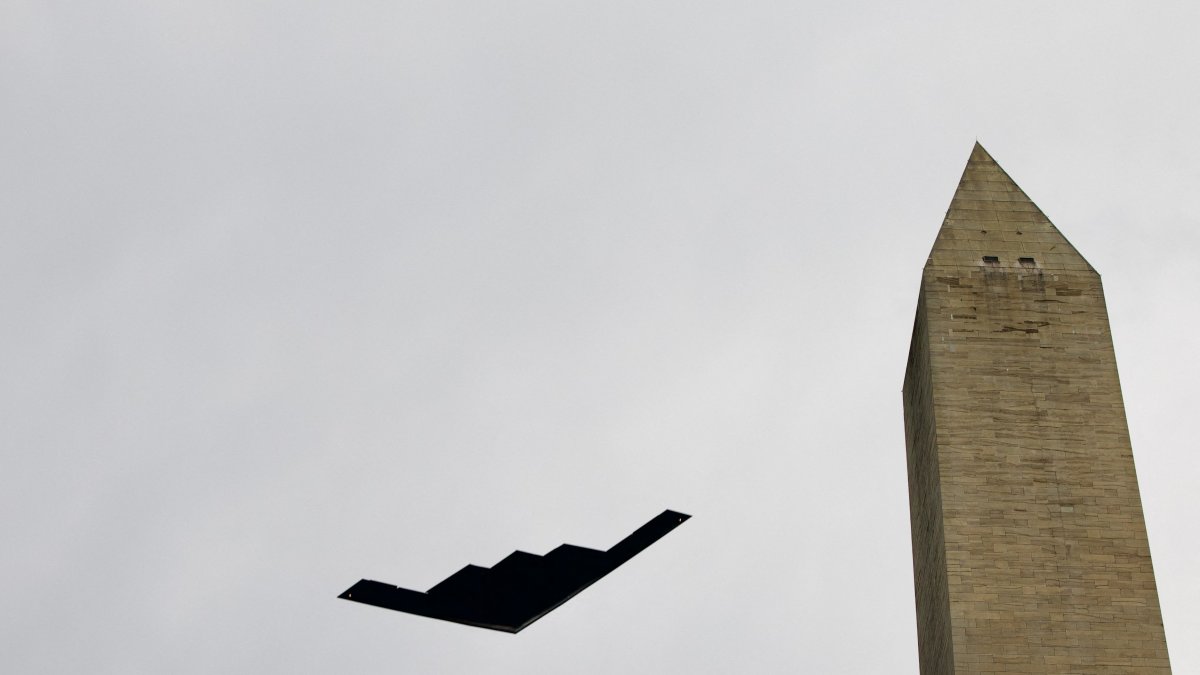
A U.S. B-2 bomber flying over Washington (file photo).

The White House and the Department of Defense have prepared operational plans to use the Massive Ordnance Air Blast (MOAB) bomb, popularly known as the "mother of all bombs," against military installations in Iran if President Donald Trump issues the order.
The information, initially revealed by CNN and corroborated by reports from CBS News, details preparations for military deterrence against the Iranian regime.
The munition is the largest non-nuclear weapon in the U.S. arsenal, weighing over 30,000 pounds and costing an estimated $170,000 per unit. Its history of operational use dates back to 2017, when the Trump administration approved its launch against a complex of caves and tunnels belonging to the Islamic State in Afghanistan.
Deterrence strategy and Washington's official stance
In response to the leak of contingency plans, a White House spokesperson told CBS News that the administration remains firm. "We do not comment on sensitive military plans that may or may not exist. President Trump keeps all options on the table to ensure that Iran can never possess a nuclear weapon," the spokesperson said.
For his part, a Pentagon official explained that the Department of Defense "plans for a wide range of operational scenarios to carry out directives at the presidential and Secretary levels, ensuring the success of the mission in any operational environment."
Although President Trump recently indicated that he was not considering immediate military action before the midterm elections and highlighted the existence of informal talks, he has made it clear that the conflict could escalate if Tehran does not agree to a satisfactory deal.
During his address to the United Nations General Assembly last month, the president stated that he faces a "big decision" between reaching a deal or "annihilating" the Islamic Republic.
Naval tensions in the Strait of Hormuz and strategic objectives
The military is developing plans amid constant friction in the region. The United States maintains a blockade on Iranian ports to protect the flow of oil through the Strait of Hormuz, a key maritime chokepoint where Iranian forces have continued to threaten commercial shipping, keeping international crude oil prices high.
Over the summer, forces from U.S. Central Command focused their airstrikes on weakening Iran's conventional military capabilities near the strait, destroying air defense systems, missile depots, and drone platforms.
However, the new options being analyzed by military commanders open up the possibility of attacking high-density underground infrastructure, including the Pickaxe Mountain facility, a heavily fortified underground base that intelligence analysts directly link to Iran's nuclear program.



Economy
PPI soars in September amid war with Iran, putting the resilience of Trump's economy to the test
Carlos Dominguez
LATEST