





ANALYSIS
A federal report confirms that banks used 'reputational risk' under the Biden administration to punish conservatives and Christians
The document, titled "Guaranteeing Fair Banking for All Americans," was produced in compliance with President Trump's August 2025 executive order, which directed regulators to combat politicized or illegal "banking exclusion."

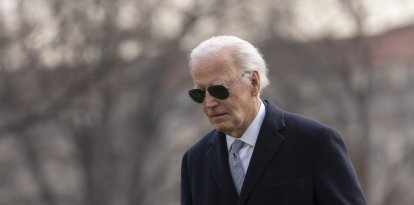
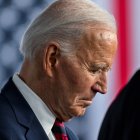
Joe Biden—File Photo

A report from the Office of the Comptroller of the Currency (OCC) confirms that the nine largest national banks maintained policies and practices that, between 2020 and 2025, could have denied or limited financial services to Americans based on their political or religious beliefs.
The regulator concluded that "reputational risk" policies, lacking clear and objective criteria, harmed customers based on their opinions and economic sectors considered politically inconvenient.
Just The News
These five states are putting transgender sports, gender-medicine questions before voters next month
Just The News
Nine banks under review
The OCC examined JPMorgan Chase, Bank of America, Citibank, Wells Fargo, U.S. Bank, Capital One, PNC, TD Bank and BMO Bank. The report, titled "Guaranteeing Fair Banking for All Americans," was prepared in compliance with President Trump's August 2025 executive order, which directed regulators to combat politicized or illegal "banking exclusion."
According to the OCC, the nine banks maintained public or internal policies that restricted access to financial services for sectors such as oil and gas exploration, mining and coal-fired power plants, the manufacture and distribution of weapons and ammunition, detention centers, tobacco, e-cigarettes and digital assets.
The regulator explained that these reputational risk policies incorporated "value judgments" from activists, the media, politicians, regulators and lobbyists into the banks' business decisions.
Cases revealed by the report
The New York Post detailed several specific cases cited in the OCC report that illustrate the scope of the problem. Among them is WePay, the former payment platform acquired by JPMorgan Chase, whose system flagged terms such as "MAGA," "Make America Great," or "America First" in merchant profiles, websites and transaction information.
According to the report, WePay closed the account of a merchant selling products supporting Trump and the MAGA movement, claiming that it "promoted hatred, violence, or racial intolerance." It also reportedly closed accounts of sellers of conservative T-shirts, hats and flags, including items such as "Biden-Illegitimate-T-shirt," "The-Big-Lie-Sticker" and "Trump-Won."
The OCC confirmed that WePay maintained an alert system that flagged those terms and that it closed the accounts of several merchants selling MAGA- or Trump-related products. It also noted that some of these alert terms were added to WePay's system following the events of Jan. 6, 2021, at the Capitol.

Christians and religious organizations
The report reveals that banks relied on the Southern Poverty Law Center's (SPLC) "hate group" designations to justify exclusions.
According to the document, in June 2021, WePay closed the account of a religious organization that its employees internally described as a "conservative, right-wing religious nonprofit with strong anti-LGBTQ rhetoric."
The case was escalated to JPMorgan's reputational risk team, which recommended closing the account after citing the Southern Poverty Law Center's designation as a "extremist hate group" and negative media coverage of the organization's stance on hate crime legislation.

The report indicates that WePay also closed another account intended to raise funds to challenge anti-discrimination laws, which was spearheaded by a devout Christian.
The Southern Poverty Law Center (SPLC) was formally charged in April with federal crimes of fraud and money laundering. According to the U.S. Attorney's Office, the organization allegedly deceived its donors and obtained millions of dollars through improper means. FBI Director Kash Patel has described the group as a "partisan smear machine."
Furthermore, the OCC confirms that Wells Fargo exerted influence to have one of its independent sales organizations close the account of a religious entity, citing the organization's positions on same-sex marriage during the process.

Politics
Trump lashes out at Fox News for giving more airtime to 'Jihadist and Dumocrat candidates'
Alejandro Baños
Sectors facing penalties
The New York Post adds that Wells Fargo rejected loans to two companies in the arms industry out of fear of regulatory retaliation and criticism from activists and lawmakers. It also states that Bank of America closed accounts held by private prison companies, citing "changes in the attitudes of policymakers," and that it attempted to reinstate one of those accounts months after the Trump administration took office.
Furthermore, the report notes that Capital One implemented a "reputational risk" policy that penalized organizations deemed "partisan," regardless of their political orientation. Under that policy, the bank denied services to both pro-abortion-rights and Democratic organizations, as well as a gun rights organization, citing "perception" concerns and fears that the public would interpret the bank as endorsing their positions.
Just The News
Watchdog concludes Biden risked security by letting millions overstay visas, including threats
John Solomon
The government's response
The OCC announced that it is evaluating additional measures to prevent discrimination on political or religious grounds. The Consumer Financial Protection Bureau (CFPB) also announced a new initiative to investigate the "banking exclusion" practices identified by the OCC and address any harm to consumers.
The acting director of the CFPB, Mark Paoletta, called the tactics "abhorrent" and pledged to investigate compliance with federal financial protection laws.
LATEST