





Elon Musk clarifies Pentagon, White House decide on restrictions on Starshield satellite network in Ukraine
After experiencing unexpected disruptions in their defense systems, Ukrainian authorities questioned the speed limits imposed on the service, while the entrepreneur noted that the military infrastructure reports directly to the U.S. government.
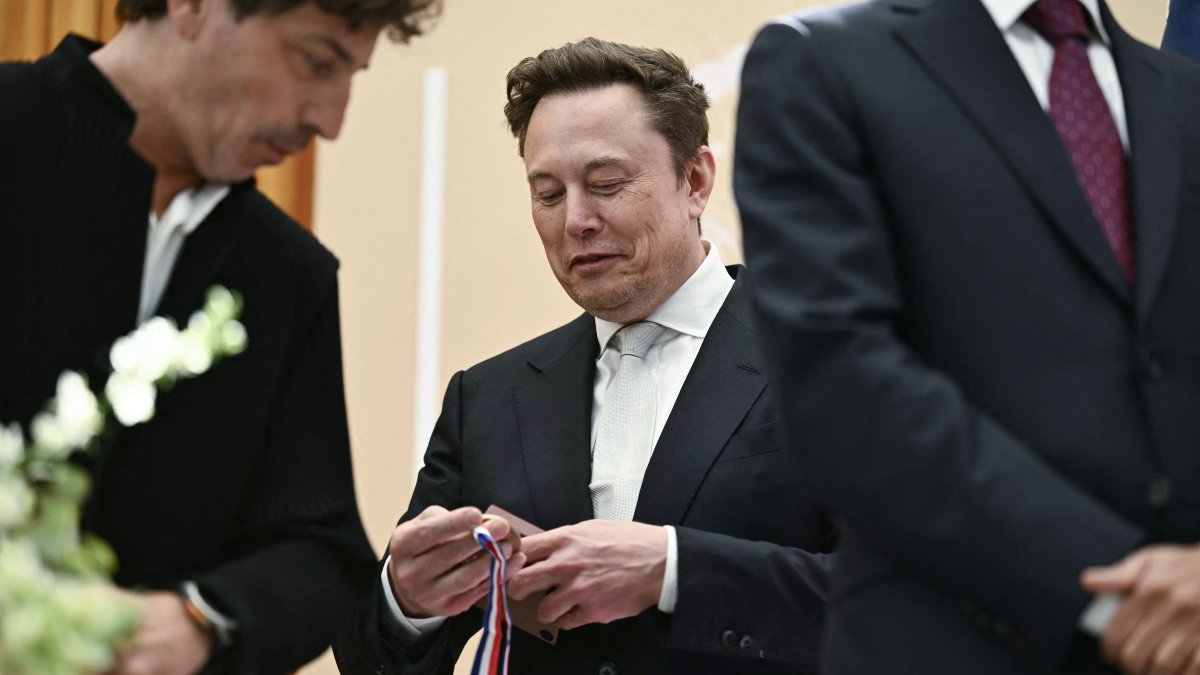
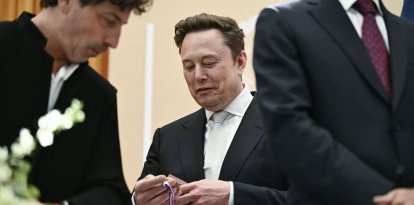
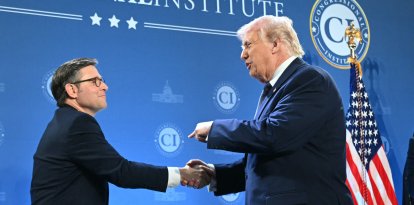
Elon Musk at the Institute of Peace in Washington, D.C., on Oct. 8, 2026.

SpaceX CEO Elon Musk pointed to President Donald Trump's administration and the U.S. Armed Forces as those directly responsible for setting the operational limits on the Starshield satellite system.
The entrepreneur's remarks came after military commanders in Ukraine reported sudden connectivity failures on the front lines, which affected the ability to intercept Russian attack drones.
Although the underlying technology for Starshield was developed by SpaceX, the satellites and infrastructure adapted for military use are owned and operated by the U.S. government through contracts with the Space Force.
"Any limits on speed or usage are decided by the U.S. military and, ultimately, by the President," Musk posted on his X account.
Speed restrictions and their impact on the front lines
According to sources familiar with the matter cited by Fox News Digital, Ukrainian forces experienced signal outages overnight without prior notice, even though the provision of the service is covered by contractual agreements with the U.S. government that remain in effect through May 2027.
When contacting the company's technical support to verify the outages, they were informed that the Starshield service would be restricted on platforms traveling at speeds equal to or greater than 100 miles per hour (approximately 160 kilometers per hour).
Former Ukrainian Defense Minister Mykhailo Fedorov confirmed that the signal at speeds below the new threshold began to be restored, though he emphasized the need to remove the speed limit entirely.
"Restoring Starlink connectivity at speeds of up to 160 km/h is a step forward. Removing the Starshield speed limit entirely is now critical for Ukraine's defense," Fedorov stated on X.
Diplomatic and strategic tensions over airstrikes
For his part, Serhii Beskrestnov, defense technology advisor to President Volodymyr Zelensky, warned that the restriction hinders the ability to stop Russian Shahed drones, powered by jet engines, by limiting "one of the few opportunities to defend the country" against the bombings.
On the front lines in Huliaipole, Ukraine's 7th Rapid Response Corps reported the cancellation of unmanned unit missions due to signal instability.
The operational adjustment coincides with increasing tensions between Washington and Kiev due to Ukrainian strikes against energy infrastructure on Russian territory. A few days before the connection failures were reported, Musk retweeted criticism of the Ukrainian president regarding those attacks.
The issue also sparked legislative reactions in the U.S. Congress. Republican Senator Thom Tillis requested clarification from SpaceX via a post on X, expressing his confidence that the measure does not represent a deliberate alteration of defensive capabilities.
Likewise, European ministers such as Polish Foreign Minister Radoslaw Sikorski criticized the move, noting that Warsaw funds more than 2,900 satellite terminals deployed in the conflict zone.
Politics
Tensions escalate between Zelensky and Trump: Ukrainian leader calls US president 'weak' over deal with Putin
Luis Francisco Orozco
World
Hours after Trump announced 'energy ceasefire,' Zelensky says Russia attacked power plant in Kharkiv
Emmanuel Alejandro Rondón
LATEST