





Cost of living hits Trump, Republicans: President's approval rating drops to 36%, Democrats extend lead in race for House
According to the data, if the election were held today, 54% would vote for the Democratic candidate in their district and 45% for the Republican. A month ago, the margin was 51% to 44%. Among those who say they are certain to vote, the gap narrows to 52% to 46%.
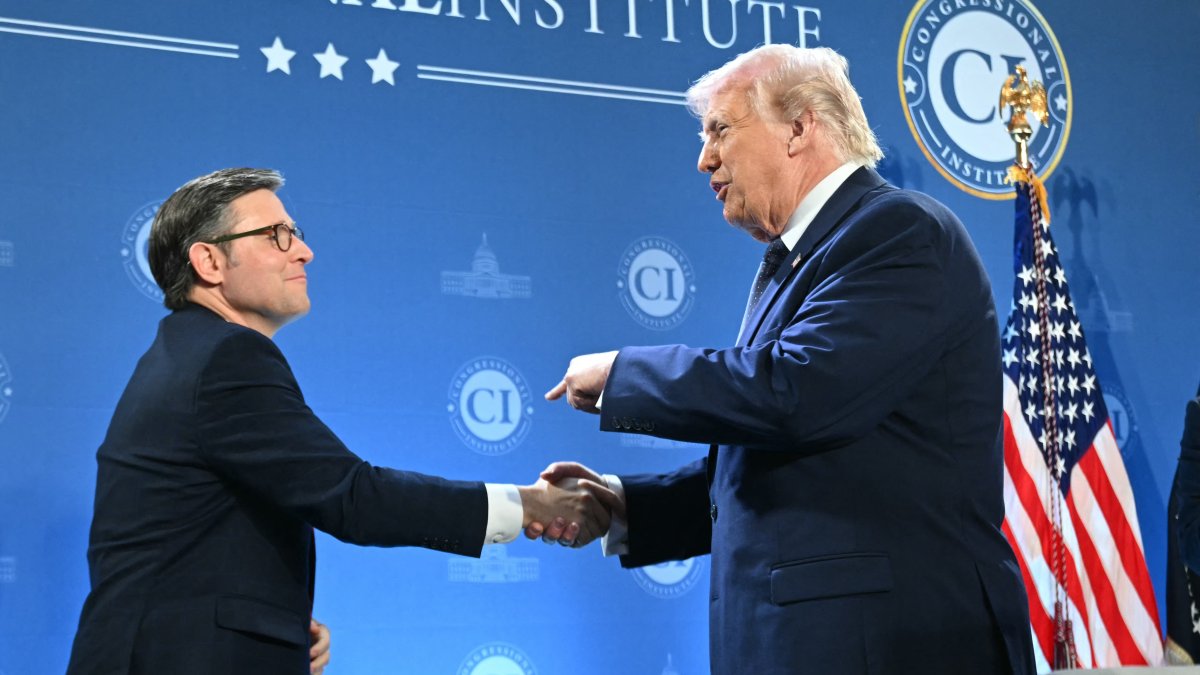
Donald Trump with Mike Johnson in Doral, Florida / Saul Loeb

With three weeks to go before the midterms, financial concerns and the cost of living are dominating the mood of American voters, with Republicans paying the price in the polls so far.
According to the latest Fox News poll, conducted Oct. 9-12, the Democrats expanded their lead in voting intentions for the House of Representatives, while President Donald Trump's approval rating hit an all-time low.
According to the data, if the election were held today, 54% would vote for the Democratic candidate in their district and 45% for the Republican. A month ago, the margin was 51% to 44%. Among those who say they are certain to vote, the gap narrows to 52% versus 46%.
The "punishment" factor looms large. Seven out of 10 voters say their vote will be a message to Trump, and nearly twice as many view it as a rejection (47%) rather than an endorsement (25%). Party loyalty remains strong on both sides, with 98% of Democrats and 94% of Republicans loyal to their candidates, so the difference is driven by independents, who favor the Democrats by 26 points.
The demographic landscape has also shifted. Democrats are leading among women, those under 45, white college graduates, unionized households and Hispanics — a demographic that had swung in favor of Republicans in recent elections.
Politics
Midterms: Trump does not guarantee that the GOP will retain its majority in Congress
Alejandro Baños

Economy
The cost of living tops Americans' concerns one month before the midterm elections
Williams Perdomo
Republicans maintain their lead among white voters without a college degree, those over 65, veterans, white evangelicals and those who regularly attend religious services. Among Hispanics, the shift is particularly noticeable. In 2024, 43% supported Trump. Today, only 31% favor the Republican candidate.
Behind these numbers lies the economy. Sixty percent of voters cite the cost of living as their top economic concern, ahead of government spending (15%), employment and inequality (7% each), tariffs (6%) and taxes (5%). Seventy-four percent view the economic situation negatively, 53% expect it to worsen next year, and just 18% feel their family is better off than two years ago. Additionally, 55% believe inflation is "not at all" under control — 10 points higher than at the start of the year.
This climate is taking its toll on the president. His overall approval rating dropped to 36%, the lowest figure recorded by Fox News during either of his two terms, after remaining stable at 39% for months. The decline is primarily driven by voters under 45, households with annual incomes below $50,000, non-white voters and those without a college degree. Even among Republicans, support has fallen to 76%, down 16 points from March 2025.
By issue, inflation is his weakest point. Only 22% approve of his handling of it, down from 36% last summer and below the 29% that Joe Biden on that same issue before the 2022 elections. Disapproval stands at 70% on the economy, 69% on tariffs and 64% on foreign policy. Border security is the only issue where his handling of the matter is evenly split, with 50% in favor and 50% against.
In a comparison between the parties, Democrats are preferred on 10 of the 13 issues evaluated. They hold significant leads on healthcare (22 points), inflation (16) and gas prices (12). Republicans maintain the lead on crime (10 points) and the border (8), though this is far from the 21-point lead they held on border security four years ago. Additionally, voters believe by a 14-point margin that Democrats will better defend "people like you."
Neither party comes out looking good, however. Only 35% believe the Democrats have a clear plan for the country, and 33% feel the same way about the Republicans. Congress barely reaches a 15% approval rating, and both parties have a net negative image — 16 points for the Democrats and 23 for the Republicans.
Daron Shaw, a Republican pollster who conducts the survey alongside Democrat Chris Anderson, warned that the race is not yet over. “When the country is this closely divided in terms of partisanship, slight differences in defection and turnout rates can make all the difference,” he said. “Republicans have time to close these apparent gaps, but it’s getting late.”
LATEST