Does democracy work? Most believe it to be the best form of government, but 51% consider it to work 'poorly' or 'very poorly'
According to a recent poll, while 67% believe democracy is the best form of government and there is broad consensus on values such as freedom of speech, only 24% are satisfied with its current functioning in the U.S.

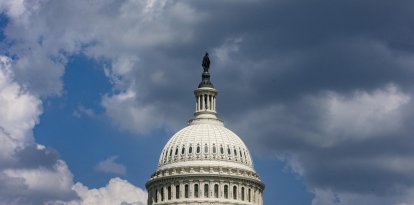
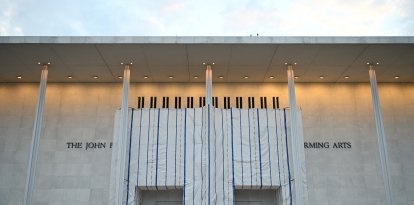
Facade of Congress (Photo by Drew ANGERER / AFP)

A new joint report from the Charles F. Kettering Foundation and Gallup, entitled Does Democracy Work? and corresponding to the Democracy for All Project, reveals a paradox in the American perception of its political system.
Although 67% of citizens still consider democracy to be the best form of government and there is broad consensus on values such as freedom of expression, diversity, and the importance of citizen engagement, only 24% are satisfied with the current functioning of democracy in the United States.
Moreover, 51% rate it outright as performing "poorly" or "very poorly," while 25% are moderate in their response and state that democracy performs simply "okay."
The study (the first annual report of this national initiative) shows that the view on democracy is closely linked to the economic and social situation of each person: young people, people with less education, and those with fewer social contacts are notably more pessimistic.
Division on the pace of cultural change
Americans are virtually tied in rating the speed of cultural change over the past two and a half decades: 49% believe it has been "too fast" and another 49% consider it "at a reasonable pace" or slower.
On multiculturalism
Even among those who see multiculturalism as a strength of the country (84% of this group), opinions are split almost 50/50 on whether the pace has been adequate or excessive.
Overall, 45% of Americans consider multiculturalism a strength and are comfortable with the speed of change, while 39% also see it as a strength, but believe the change has been too fast.
Who should guarantee basic needs?
Another finding appears when asking who should be responsible for ensuring that people have their basic needs met. The 48% say the government, while 50% say the individuals themselves.
The partisan difference is pronounced
- 72% of Republicans: individuals.
- 69% of Democrats: government.
There are also generational and income gaps:
- 63% of adults 18-29 attribute responsibility to the government.
- Nearly 60% of those 50 and older attribute it to individuals.
- People from lower-income households are more inclined to favor the government's role.
For her part, Sharon L. Davies, president of the Kettering Foundation, stresses that “democracy cannot be fully realized without the commitment and participation of all.”
In that regard, Jim Clifton, president of Gallup, stresses that the goal of the project is to "provide the most accurate current trends of the state of American democracy, including a deeper understanding of its meaning, from the very voice of the citizens themselves.”
About the project, sample and methodology
The survey captured the views of 20,338 American adults and was conducted between July-August 2025. The margin of sampling error: ±0.9 percentage points at the 95% confidence level.
LATEST