Trump Administration announces total aid to Argentina could reach 40 billion dollars
The U.S. Treasury Secretary, Scott Bessent, had already announced a currency exchange or "swap" for an amount of 20 billion to support the peso, battered in the markets.

Scott Bessent, in Madrid (Spain) before meeting with China's vice-premier.

U.S. Treasury Secretary, Scott Bessent said Wednesday that the government is working with the private sector on a new $20 billion aid plan to support Argentina..
"We are working on a $20 billion facility that would complement our swap line, with private banks and sovereign funds that, I believe, would be more focused on the debt market," he told reporters in Washington.
"So that would total $40 billion for Argentina," he summarized.
Bessent already announced six days ago a currency exchange or "swap" in the amount of 20 billion to support the peso, pummeled in the markets.
Purchase of Argentine pesos
On Wednesday he stated that these direct U.S. interventions in the foreign exchange market were continuing, with purchases "this very morning."
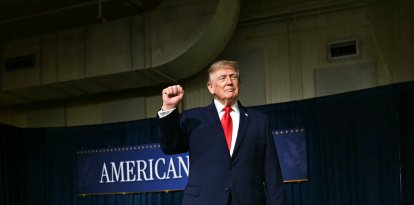
The day before, President Donald Trump rattled markets by threatening to cut support for Argentina if his ally, President Javier Milei, suffered a setback in legislative elections at the end of the month.
Bessent punctuated those statements with reporters: U.S. support will be maintained as long as Milei can exercise his veto on legislative initiatives.

Milei meets with Trump in Washington in the midst of the Argentine crisis
Argentine President Javier Milei held his first official meeting with the U.S. president at the White House on Tuesday.
The Argentine leader arrived in Washington in the midst of a political-economic crisis that threatens to destabilize his government. During the meeting, both presidents exchanged compliments and reaffirmed their ideological harmony.
The situation in Argentina
Meanwhile, in Buenos Aires, political and economic tension continues to mount.The recent legislative setback in an opposition-dominated Congress sparked a crisis of confidence in the markets. Voters in Buenos Aires province expressed their frustration at the economic contraction and corruption scandals surrounding the Argentine leader, eroding his political capital.
Investors' reactions were immediate: massive selling of Argentine bonds and a strong outflow of the peso, which accelerated the loss of Treasury reserves. In response, the government intervened to defend the currency within the exchange rate band established in the recent $20 billion agreement with the International Monetary Fund (IMF).
LATEST