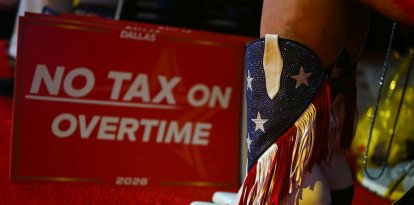
Interview with NRCC Chairman: "Hispanic voters are the most important voting block"
Congressman Richard Hudson discussed the keys to the midterm elections, the current state of the Democratic Party, and the national debt.
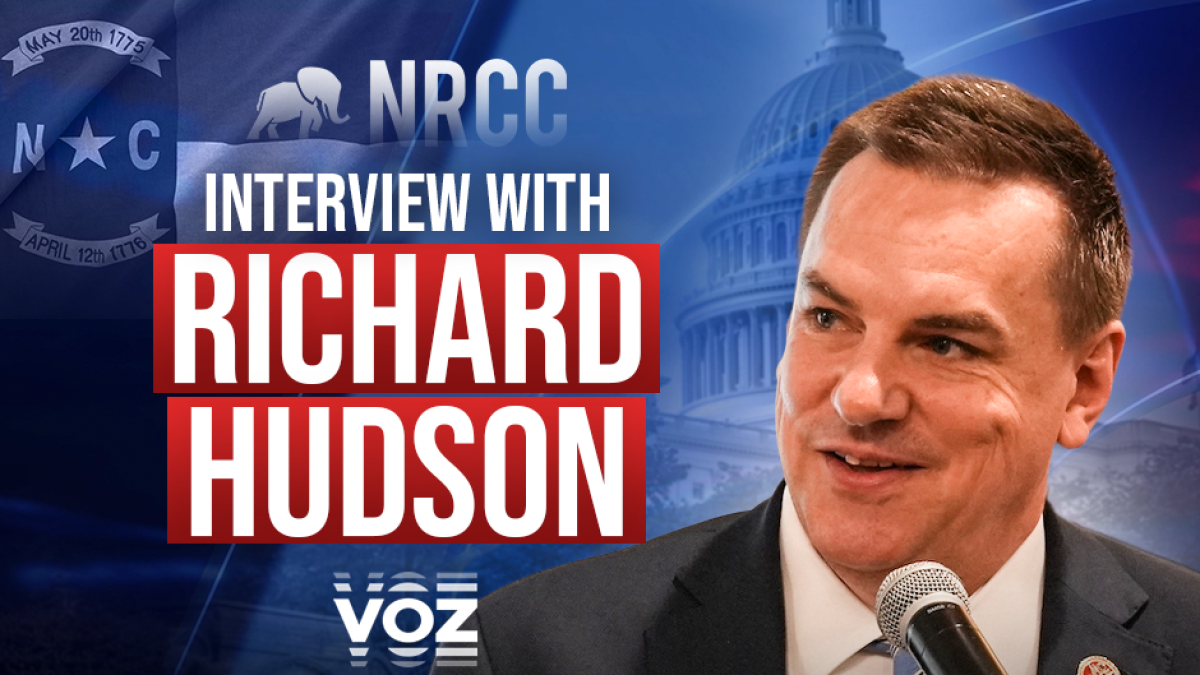
Richard Hudson/ VOZ Design

Heading into the 2026 midterm elections, the primary challenge for Donald Trump and Mike Johnson may be to retain the majority in the House of Representatives. The task is not simple. Not since George W. Bush in 2002 has any president managed to do so. Yet the man charged with carrying out that one brims with optimism, confident that the president's agenda and Hispanic voters could end a 20-plus-year pattern.
The man in question is Richard Hudson, a North Carolina congressman and chairman of the National Republican Congressional Committee (NRCC), precisely the body charged with protecting and growing the Republican majority in the House.
Hudson, who came to Congress in 2013, was elected to lead the NRCC ten years later thanks to the vote of his colleagues, becoming the highest-ranking Republican from North Carolina in history.
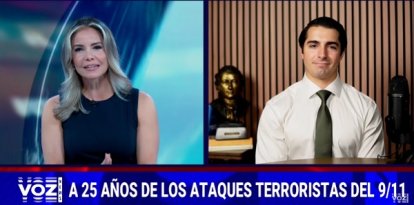
In an interview with VOZ, the NRCC chairman explained the strategy to retain the majority in 2026, defended Trump's agenda, and assured that the Hispanic vote could be one of the electoral keys of the cycle.
The assassination of Iryna Zarutska
As a member of North Carolina's congressional delegation, Hudson spoke out about the murder of Ukrainian Iryna Zarutska. The young woman was sitting on a train when she was stabbed by Decarlos Brown, who had already been arrested repeatedly and for multiple crimes.
For the congressman, the case demonstrated a flaw in the system that should push authorities to review their policies regarding crime.
"This is a repeat offender, violent criminal with a mental health background. He should have never been walking the streets and, you know, I think it's a it's a failure of democrat soft on crime policies. You know, we've got a magistrate in Charlotte and judges who, continue to turn this individual loose. (...) The system failed and, you know, I think we're gonna be taking a careful look at how we can make sure this doesn't happen again," he began.
In addition, he emphasized the policies that Democrats have pursued in big cities, describing them as "lenient." "When you've got folks who are violent and dangerous, they need to be locked up. When you've got individuals with mental health issues, they need to be addressed, and in this case, you know, someone who'd been arrested fourteen times and shouldn't have been on the street in the first place," he added.
How does he plan to keep the Republican majority in 2026?
Despite the tough task, Hudson was confident that the Republican Party would be able to hold on to its majority in the House of Representatives.
According to his analysis, one of the substantial differences with Trump's predecessors is that he has been president before. In 2024, voters had a choice between retaining the policies of Joe Biden (represented by Kamala Harris) or returning to Trump's agenda, opting for the latter option.
Moreover, the strategy will be to build on what has been achieved so far and communicate it effectively.
"Seventy seven million Americans, record numbers of Hispanic voters, record numbers of young voters, record numbers of African Americans voted for Donald Trump because they believe his policies will make their lives better. That gave him a very specific agenda, and, and I'm very proud that the Republican in congress, we have delivered on that agenda, with the working families tax cut. And so I think the American people wanted to see change, and we are delivering that change for them. We're keeping those promises. And I think because of that, voters will reward our party," he continued.
"Hispanic voters are the most important voting block"
In 2024, Donald Trump became the best-performing Republican presidential candidate among Hispanic voters. His message of common sense, a secure border, and economic prosperity resonated strongly with this community. Two years later, Hudson expects even more Hispanics to turn to the GOP. He even called them the "most important voting bloc."
"We want you to be part of our party because Hispanics in general share the same values. We care about family. We care about faith. We want safe streets. We want good schools. You know, we care about the same things. And if you look at the two parties in Washington today, you know, the Democrat party is not focused on the problems of hardworking Americans and families and small businesses, but the Republican party is," the NRCC chairman noted.
In addition, he highlighted some of the provisions passed in the 'Big Beautiful Bill,' such as tax breaks for working families (overtime and tips) and tax breaks for small businesses.
Thanks to these policies, he said the average American will have about $11,000 more a year in his or her pocket.
"The Democratic Party is represented by AOC and Mamdani"
When it came to talking about the Democrats, Hudson said there have never been so many differences between the two major parties before.
"My grandfather is my greatest hero in life. He's one of the biggest influence on me. He was a Democrat, grew up in Eastern North Carolina, you know, but but he was a you know, he believed in second amendment. He believed in a strong defense. He voted for Ronald Reagan. But, you know, back in his day, the Democrat party was different, and and it it was very diverse. Today, the Democrat party is is is controlled by the extreme left, and they just don't share the values of regular people in America anymore" he analyzed.
In addition, he identified Zohran Mamdani and Alexandria Ocasio-Cortez (AOC) as the most visible faces of the Democratic Party at the national level.
"The national debt is our most existential threat"
Finally, Hudson spoke about the national debt, calling it the "most existential threat to the country."
On the fiscal impact of the 'Big Beautiful Bill,' he noted that it is a step in the "right direction," but that there is still a long way to go.
"It's our crisis; it's the crisis we ought to really be paying attention to. It's not today. It's in the future. It may not be you and me, but it'll be our children who'll have to deal with this. And if we don't deal with it, what it means is our children and our grandchildren will have a lower standard of living, and it means that we may not have the money we need in the future to deal with disasters, to fund a very strong defense so that other countries don't want to go to war with us, and we can prevent wars," Hudson said.
LATEST