US backs Bukele's constitutional reform allowing indefinite reelection in El Salvador
Trump's Department of State rejected the comparison to dictatorships, stating, "We reject the comparison of El Salvador's democratically based and constitutionally sound legislative process to illegitimate dictatorial regimes elsewhere in our region," EFE reports.

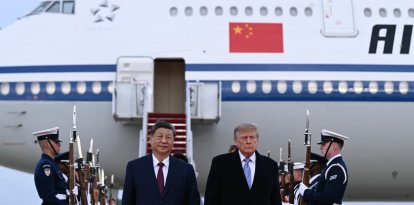
President Donald Trump with his counterpart from El Salvador (Archive).

The U.S. government expressed its support Tuesday for the constitutional reform approved in El Salvador, which eliminates presidential term limits and allows President Nayib Bukele to be reelected indefinitely.
A Department of State spokesperson told EFE: "El Salvador's Legislative Assembly was democratically elected to advance the interests and policies of its constituents. The decision to make constitutional changes is theirs. It is up to it to decide how its country should be governed."
In addition, as reported by the news agency, the Department of State rejected comparisons to dictatorships, stating, "We reject the comparison of El Salvador's democratically based and constitutionally sound legislative process to illegitimate dictatorial regimes elsewhere in our region."
For his part, Bukele echoed the news and on his X account:
"Official U.S. position on constitutional reform in El Salvador:
"The Legislative Assembly of El Salvador was democratically elected to promote the interests and policies of its constituents. The decision to make constitutional changes is theirs. It is up to them to decide how their country should be governed. We reject the comparison of El Salvador's democratically based and constitutionally sound legislative process with illegitimate dictatorial regimes in other parts of our region."
Posición oficial de los Estados Unidos sobre la reforma constitucional en El Salvador:
— Nayib Bukele (@nayibbukele) August 5, 2025
“La Asamblea Legislativa de El Salvador fue elegida democráticamente para promover los intereses y las políticas de sus electores. La decisión de realizar cambios constitucionales es suya. Les… https://t.co/mEGschMobx
The amendment, approved Thursday by the Legislative Assembly, controlled by Bukele's Nuevas Ideas party, also abolishes runoff elections, breaking a precedent in place since 1841.

World
El Salvador approves a constitutional reform that allows indefinite reelection and extends presidential terms to six years
Emmanuel Alejandro Rondón
Then, in a message disseminated on Sunday through his social media, President Bukele justified the constitutional reform that allows indefinite reelection, pointing out that most developed countries accept this mechanism for their leaders without question. He criticized that, on the other hand, in El Salvador, a country with limited resources, the legitimacy of its democracy is questioned. Bukele denounced the hypocrisy of his detractors, stating that nations like his are expected to follow external orders instead of adopting the practices of more advanced countries.
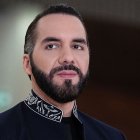
The relationship between Bukele and President Donald Trump has been a key pillar in this context. Since 2019, during Trump's first term, Bukele strengthened bilateral ties by signing migration agreements, including a "safe third country" agreement that aligned El Salvador with Trump's migration policies.
In 2025, with Trump back in the White House, this alliance remains solid. One example is the agreement between the two countries to send illegal immigrants to the Salvadoran mega-prison CECOT, designed to strengthen security and immigration control, a priority issue for both leaders.
Trump's backing
The Department of State statement, however, supports the decision and emphasizes the strategic cooperation between Washington and San Salvador on security, migration and governance issues, as they have been doing so far.
LATEST